
Vivo V80 price in Pakistan
Vivo V80 price in Pakistan is Rs. 184,999 (last updated 22 Oct 2026). See all Vivo phones.
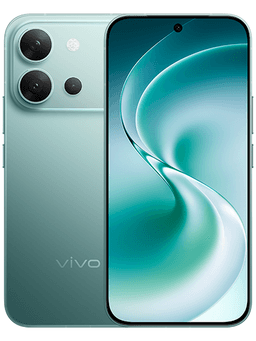
The Vivo V80 is a careful update rather than a reinvention. Its biggest gain is battery: a 7200mAh cell with 90W charging, fitted without making the phone thicker than before, so heavy users get extra screen time without a bulkier phone. The 6.59-inch AMOLED screen now peaks at 5000 nits, and an ultrasonic fingerprint scanner unlocks quickly with damp fingers and without lighting up a dark room. The camera hardware, however, is the same proven setup Vivo has used before, so this is a phone for buyers who value endurance, brightness and design over a new camera.
Who it's for
- Heavy users: a bigger battery with fast charging suits long days of video, maps and social media.
- Portrait and selfie fans: a 50MP 3x telephoto with stabilisation and a 50MP front camera cover people shots well.
- Design-conscious buyers: the new full-width camera bar, flat sides and aluminium frame give it a premium look and feel.
Where it falls short
There is no real camera upgrade, and the 8MP ultrawide is the weak link of the setup. The new camera bar makes the phone feel slightly bulkier, and because Vivo replaces its V series every six months or so, resale value drops quickly.
Worth comparing
The Oppo Reno 16 (Rs. 159,999) uses the same Snapdragon 7 Gen 4 chip for less money and adds a sharper 50MP ultrawide, though its battery is smaller. The Samsung Galaxy A57 (Rs. 165,495) is cheaper still and promises six major Android updates, but has a 5000mAh battery, slower 45W charging and no telephoto camera.
| Network | Technology | GSM / HSPA / LTE / 5G |
|---|
| Launch | Announced | 2026, October 06 |
|---|---|---|
| Status | Available. Released 2026, October 13 |
| Body | Dimensions | 157.5 x 74.3 x 7.7 mm |
|---|---|---|
| Weight | 203 g | |
| Build | Glass front, aluminum frame, glass back | |
| SIM | Nano-SIM + Nano-SIM + eSIM (max 2 at a time) |
| Display | Type | AMOLED, 1B colors, 144Hz, HDR10+, 4320Hz PWM, 1800 nits (HBM), 5000 nits (peak) |
|---|---|---|
| Size | 6.59 inches (~90.7% screen-to-body ratio) | |
| Resolution | 1260 x 2750 pixels, 19.5:9 ratio (~459 ppi density) | |
| Protection | Schott Xensation Core |
| Platform | OS | Android 17, up to 4 major OS updates, OriginOS 7 |
|---|---|---|
| Chipset | Qualcomm SM7750-AB Snapdragon 7 Gen 4 (4 nm) | |
| CPU | Octa-core (1x2.8 GHz Cortex-720 & 4x2.4 GHz Cortex-720 & 3x1.8 GHz Cortex-520) | |
| GPU | Adreno 722 |
| Memory | Internal | 128GB 8GB RAM, 256GB 8GB RAM, 512GB 8GB RAM |
|---|---|---|
| Card Slot | No |
| Main Camera | Modules | 50 MP, f/1.9, 23mm (wide), 1/1.56", 1.0µm, PDAF, OIS 50 MP, f/2.7, 73mm (periscope telephoto), 1/1.95", 0.8µm, PDAF, OIS, 3x optical zoom 8 MP, f/2.2, 15mm, 115˚ (ultrawide) |
|---|---|---|
| Features | Zeiss optics, Ring-LED flash, panorama, HDR | |
| Video | 4K@30/60fps, 1080p@30/60fps, gyro-EIS, OIS, HDR, LUT |
| Selfie Camera | Modules | 50 MP, f/2.0, 21mm (wide), 1/2.76", 0.64µm, AF |
|---|---|---|
| Features | Zeiss optics, HDR | |
| Video | 4K@30fps, 1080p@30/60fps |
| Sound | Loudspeaker | Yes, with stereo speakers |
|---|---|---|
| 3.5mm Jack | No |
| Comms | WLAN | Yes |
|---|---|---|
| Bluetooth | 5.4, A2DP, LE | |
| GPS | GPS, GLONASS, GALILEO, BDS, QZSS, NavIC | |
| NFC | Yes | |
| Radio | No | |
| USB | USB Type-C 2.0, OTG |
| Features | Sensors | Fingerprint (under display, ultrasonic), accelerometer, gyro, compass, proximity |
|---|
| Battery | Type | Si/C Li-Ion 7200 mAh |
|---|---|---|
| Charging | 90W wired, PD, 50% in 30 min Reverse wired Bypass charging |
| Misc | Colors | Sunrise Anthem, Horizon Blue, Stellar Black |
|---|---|---|
| Models | V2648 |
Similar Price Range


Top Trending Mobiles
More from Vivo
See more






Other Vivo models
- Vivo V70 Lite 5GRs. 99,999
- Vivo V70 ProRs. 209,999
- Vivo V70 SERs. 94,999
- Vivo V70eRs. 127,999
- Vivo V80This phone
- Vivo V80 FERs. 115,999
- Vivo V80 Lite 5GIn storesRs. 110,999
- Vivo V FlipRs. 252,999
- Vivo X7Rs. 19,999
Vivo V80: Buyer's Guide
Is It Value for Money?
At Rs. 184,999, the Vivo V80 asks a premium for three things: the biggest battery in its class (7200mAh with 90W charging), a very bright 144Hz AMOLED screen, and Android 17 out of the box with up to four major OS updates. A 50MP periscope telephoto, a 50MP selfie camera, stereo speakers and an ultrasonic fingerprint scanner complete a strong package.
The problem is the competition. The Oppo Reno 16 costs Rs. 159,999 with the same Snapdragon 7 Gen 4 chip and a better 50MP ultrawide, and the Samsung Galaxy A57 costs Rs. 165,495 with a longer six-update promise.
- Buy it if battery life, screen brightness and a telephoto camera matter most, and you want the newest software.
- Look elsewhere if you want the best value for this chip, or you upgrade every year: Vivo refreshes the V series about every six months, so resale value falls quickly.
Verdict: a well-rounded phone, but hard to justify over the cheaper Reno 16 unless the bigger battery is your priority.
How Is the Display?
The V80 has a 6.59-inch flat AMOLED screen with 1260 x 2750 resolution (about 459 ppi), a 144Hz refresh rate and HDR10+. Text and video look sharp, and the high refresh rate keeps scrolling and supported games smooth.
Brightness is a highlight: up to 1800 nits in high-brightness mode and a 5000-nit peak, up from 4500 nits on the V70, so outdoor visibility should be strong. 4320Hz PWM dimming helps people who get eye strain from flicker at low brightness.
The bezels are very thin with rounded corners, and the front uses Schott Xensation Core glass. The ultrasonic fingerprint scanner sits under the screen and works better than optical scanners with wet fingers.
How Is the Performance?
The Vivo V80 uses the Qualcomm Snapdragon 7 Gen 4 (4 nm), an octa-core chip running at up to 2.8GHz with Adreno 722 graphics, paired with 8GB of RAM and 128GB, 256GB or 512GB of storage. There is no memory card slot, so choose storage carefully.
This is an upper mid-range chip. It should handle social media, multitasking, the camera and popular games comfortably. GSMArena's results for the Oppo Reno 16, which uses the same chip, put it at about 1.1 million in AnTuTu 10, a useful guide to the class it belongs to.
Verified gaming, heating and long-session results for the V80 itself are not yet available, and 8GB is the only RAM option, so heavy multitaskers may want more headroom.
How Is the Camera?
The rear has three cameras with Zeiss optics: a 50MP main camera (f/1.9) with OIS, a 50MP periscope telephoto (f/2.7) with OIS and 3x optical zoom, and an 8MP ultrawide. The front has a 50MP autofocus selfie camera. The rear records up to 4K at 60fps with stabilisation, and the front also records in 4K.
The two stabilised 50MP rear cameras are the strength: the 3x telephoto is well suited to portraits and distant subjects without losing much detail. The 8MP ultrawide is the weak spot and will fall behind the other two in detail, especially indoors and at night.
The camera hardware is largely carried over from earlier V models, so do not expect a big jump if you already own one. Daylight, low-light and video results have not yet been published.
How Is the Battery?
The Vivo V80 has a 7200mAh silicon-carbon battery with 90W wired charging, which can reach 50% in about 30 minutes. It also supports reverse wired charging for topping up earbuds or another phone, and bypass charging, which powers the phone directly while gaming to reduce heat.
The extra capacity over the V70 is expected to add roughly half an hour to an hour of screen-on time, and Vivo fitted it without making the phone thicker. Vivo also says its battery technology is designed to stay healthy for years.
Verified screen-on time results are not yet available.
How Is the Software?
The V80 ships with Android 17 and OriginOS 7 out of the box, so you start on the newest version rather than waiting for an update. Vivo lists up to four major OS updates, a good commitment for this class, though the Samsung Galaxy A57 promises six.
The new software brings Vivo's latest AI features, which make better use of the newer hardware.
There is no verified information yet on pre-installed apps or ads in this version.
Vivo V80: Questions Buyers Ask
Is the Oppo Reno 16 better than the Vivo V80?
It depends on your priorities. Both use the Snapdragon 7 Gen 4 chip, and the Oppo Reno 16 costs less at Rs. 159,999 while adding a sharper 50MP ultrawide camera. The Vivo V80 answers with a bigger 7200mAh battery, faster 90W charging, a 144Hz screen and Android 17 out of the box.
How much zoom does the Vivo V80 camera have?
The Vivo V80 has 3x optical zoom from its 50MP periscope telephoto camera, which also has optical image stabilisation. That makes it well suited to portraits and distant subjects. Beyond 3x, the zoom is digital, so detail drops the further you go.
Should I buy the Vivo V70 or wait for the Vivo V80?
Buy the V80 if battery life matters most: its 7200mAh battery adds extra screen time, and its screen is brighter at up to 5000 nits. The camera hardware is largely the same, so if the V70 is available at a clear discount, it remains the better-value choice.
