



Vivo Y11d price in Pakistan
Vivo Y11d price in Pakistan is Rs. 51,499 (last updated 27 Oct 2026). See all Vivo phones.
The Vivo Y11D focuses on long battery life, fast charging and software features, but its overall hardware is modest for its price segment. The 6,500mAh battery is designed for extended daily use, with reported screen-on time of 11–12 hours, while the included 44W charger can fully recharge it in around 1 hour and 15–20 minutes. Its 6.7-inch IPS display offers a 120Hz refresh rate and 1,200-nit brightness, helping with outdoor visibility, although the HD+ resolution limits sharpness. The Unisoc T7225 processor handles basic tasks, but performance can feel slow when opening apps or navigating the interface. On the software side, Android 16 with OriginOS 6 brings customisation options, AI features, call recording and a brief always-on display effect. The 50MP rear camera can capture reasonable photos in suitable lighting, while the 5MP selfie camera is basic. IP65 protection, a headphone jack, a customisable rear notification light and Vivo's resale appeal add practical benefits for buyers who prefer the brand.
Who it's for
- Battery-focused users: The 6,500mAh capacity and 44W charging suit people who want long usage with less time spent charging.
- Basic smartphone users: Calling, messaging and social media are more suitable workloads than demanding gaming or intensive multitasking.
- Vivo loyalists: OriginOS 6, customisation features, IP65 protection and familiar brand support may appeal to buyers prioritising the Vivo experience.
Where it falls short
The Unisoc T7225 processor is the main weakness, with sluggish app launches and limited suitability for demanding games or heavy multitasking. The HD+ IPS display feels underwhelming for this price segment despite its high brightness and refresh rate. The 5MP selfie camera is basic, video stabilisation is limited, and the single speaker lacks bass depth. The plastic construction also feels less premium, while the higher-memory variant carries a substantial price increase for just additional RAM.
Worth comparing
The Honor X6c offers a MediaTek Helio G81 Ultra processor, a 120Hz HD+ display, a 50MP rear camera, a 5MP selfie camera and a 5,300mAh battery with 35W charging. It also provides IP64 protection and drop-resistance features. Compared with the Vivo Y11D, the Honor has a smaller battery and slower charging, but its processor is a useful alternative to consider if everyday performance is a priority. The Vivo counters with 6,500mAh capacity, 44W charging, Android 16 and IP65 protection. Both have entry-level selfie cameras and HD+ LCD displays, so neither is ideal for buyers prioritising screen sharpness or photography.
| Network | Technology | GSM / HSPA / LTE |
|---|
| Launch | Announced | 2026, June |
|---|---|---|
| Status | Available. Released 2026, June |
| Body | Dimensions | 167.4 x 77.1 x 8.4 mm |
|---|---|---|
| Weight | 209 g | |
| Build | Glass front, plastic frame, plastic back | |
| SIM | Nano-SIM + Nano-SIM |
| Display | Type | IPS LCD, 120Hz, 1200 nits (HBM) |
|---|---|---|
| Size | 6.74 inches (~85.0% screen-to-body ratio) | |
| Resolution | 720 x 1600 pixels, 20:9 ratio (~260 ppi density) | |
| Protection |
| Platform | OS | Android 16, OriginOS 6 |
|---|---|---|
| Chipset | Unisoc T7225 (12 nm) | |
| CPU | Octa-core (2x2.0 GHz Cortex-A75 & 6x1.8 GHz Cortex-A55) | |
| GPU | Mali-G52 MP1 |
| Memory | Internal | 64GB 4GB RAM, 128GB 4GB RAM, 128GB 6GB RAM |
|---|---|---|
| Card Slot | microSDXC (dedicated slot) |
| Main Camera | Modules | 50 MP, f/1.8, (wide) Auxiliary lens |
|---|---|---|
| Features | LED flash | |
| Video | 1080p@30fps |
| Selfie Camera | Modules | 5 MP, f/2.2, (wide) |
|---|---|---|
| Features | ||
| Video | Yes |
| Sound | Loudspeaker | Yes |
|---|---|---|
| 3.5mm Jack | Yes |
| Comms | WLAN | Wi-Fi 802.11 a/b/g/n/ac, dual-band |
|---|---|---|
| Bluetooth | 5.2, A2DP, LE | |
| GPS | GPS, GALILEO, GLONASS, BDS | |
| NFC | No | |
| Radio | No | |
| USB | USB Type-C 2.0, OTG |
| Features | Sensors | Fingerprint (side-mounted), accelerometer, proximity, compass |
|---|
| Battery | Type | 6500 mAh |
|---|---|---|
| Charging | 44W wired, 50% in 40 min Reverse wired |
| Misc | Colors | Horizon White, Pearl Black |
|---|---|---|
| Models |
Vivo Y11d
Similar Price Range


Top Trending Mobiles
More from Vivo
See more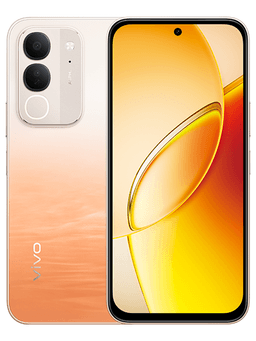



Other Vivo models
- Vivo Y6aRs. 81,999
- Vivo Y11Rs. 17,999
- Vivo Y11 5GRs. 51,999
- Vivo Y11 2023Rs. 39,999
- Vivo Y11dThis phone
- Vivo Y12Rs. 24,999
- Vivo Y12 2023Rs. 49,999
- Vivo Y12ARs. 21,999
- Vivo Y12GRs. 20,999
Vivo Y11d: Buyer's Guide
Is It Value for Money?
The Vivo Y11d is listed from Rs. 51,499 for the 128GB model. Pakistan gets two versions, 4GB + 128GB and 6GB + 128GB, which differ only in RAM. The phone is built around one strength, its battery, and it is weak almost everywhere else for the money.
What it does well:
- A 6500 mAh battery with 44W charging and the charger in the box
- IP65 dust and water resistance, a 3.5mm headphone jack and a dedicated microSD slot
- OriginOS 6 on Android 16 with call recording, plus a customisable notification light on the back
- Vivo's service network and good resale value in Pakistan
What holds it back:
- A slow Unisoc T7225 chip, also used in much cheaper phones, with eMMC 5.1 storage
- A 720p IPS screen with a waterdrop notch
- No real loudspeaker: the earpiece doubles as the speaker
- A 5 MP selfie camera and no NFC
The Itel Super 26 Ultra costs less at Rs. 47,499 and offers an AMOLED screen, the faster Unisoc T7300, 8GB of RAM and a 32 MP selfie camera, though its 6000 mAh battery charges at only 18W. The Infinix Hot 60 Pro at Rs. 66,999 adds an AMOLED screen, the Helio G200, NFC and a 13 MP selfie camera, with a smaller 5160 mAh battery.
Verdict: only worth it for buyers who want a Vivo phone mainly for calls, WhatsApp and very long battery life. Anyone who cares about speed, screen quality or sound will get more from the Itel Super 26 Ultra for less money.
How Is the Display?
The Y11d has a 6.74-inch IPS LCD with 720 x 1600 resolution (HD+), a 120Hz refresh rate and 1200 nits brightness.
In everyday use:
- Brightness is the best part: the screen stays easy to see outdoors, even in sunlight
- Scrolling is smooth at 120Hz
- Widevine L1 is supported, so Netflix and other streaming apps can play in HD
- The low resolution makes text and videos look softer than on a Full HD screen
- A waterdrop notch sits at the top, which looks dated next to punch-hole rivals
Opinions on the screen are mixed: some find it below average for the price, others acceptable. There is a short Always-On Display that lights up for a few seconds. For watching videos, the bigger issue is sound, since there is no proper loudspeaker.
How Is the Performance?
The phone uses the Unisoc T7225, a 12 nm chip, with LPDDR4X RAM and eMMC 5.1 storage. This is an entry-level chip that also appears in much cheaper phones, so performance is the Y11d's weakest point.
Real-world findings:
- Basic tasks such as calls, WhatsApp and browsing work, and the display felt smooth to use
- Apps open slowly, and the processor feels clearly slow in daily use
- eMMC storage is slower than UFS, which adds to waiting times when installing or opening apps
- It is not suited to heavy games
Choosing a version: the 4GB and 6GB models have the same 128GB storage and differ only in RAM. Extra RAM helps keep more apps open in the background, but it will not make the slow chip faster.
For better speed, the Itel Super 26 Ultra's T7300 and the Infinix Hot 60 Pro's Helio G200 are both clearly stronger chips.
How Is the Camera?
The back has a 50 MP main camera with an f/1.8 aperture, next to a small auxiliary depth lens, plus an LED flash. The front has a 5 MP selfie camera, which is too weak for the price.
Real-world findings:
- Rear photos are decent, with good colours, depth and detail. Vivo's processing does a lot of the work
- For the most detail, use the separate 50 MP mode in the camera app; zoomed-in photos stay sharp in that mode
- Selfies are low in quality, and Vivo's processing can only partly make up for the small sensor
- Modes include Night, Portrait, Panorama, Document, Slow-mo, Time-lapse, Pro and Live Photo
Video: both cameras record at up to 1080p 30fps. There is no 4K and no proper video stabilisation, so handheld clips can look shaky.
The rear camera is fine for everyday photos, but selfie and video-call users should look at the Itel Super 26 Ultra's 32 MP front camera instead.
How Is the Battery?
This is the reason to buy the Y11d. It has a 6500 mAh battery with 44W fast charging, and the 44W charger comes in the box with a USB-A to Type-C cable and a clear case.
Real-world results:
- Real-world use gives 11 to 12 hours of screen-on time, among the best battery life at this price
- A full charge with the included charger took about 1 hour 15 to 20 minutes; our database lists 50% in 40 minutes
- The slow, efficient chip and 720p screen help the battery last longer
There is no wireless charging. Compared with rivals, the Y11d has the biggest battery of the three and charges much faster than the Itel Super 26 Ultra's 18W. The Infinix Hot 60 Pro charges at a similar 45W but has a smaller 5160 mAh battery.
How Is the Software?
The Y11d runs OriginOS 6 on Android 16, and the software is one of its better points. Vivo's Pakistan page does not list an update promise, while the Infinix Hot 60 Pro is listed with up to 3 major Android upgrades.
Useful features:
- Built-in call recording in Vivo's own dialer
- A dynamic light on the back that flashes for calls, notifications, music and low battery, and can be customised
- Lock screen customisation and the new Control Center
- A short Always-On Display and some AI features
The speaker: Vivo's 200% volume mode makes the earpiece-speaker loud, but sound lacks bass and depth, and quality is poor at high volume. Using the earpiece as a speaker may also wear it out over time, which would affect both calls and media.
It is worth checking the app list for ads and pre-installed apps after setup.
Vivo Y11d: Questions Buyers Ask
Should I buy the Vivo Y11d?
Buy it only if battery life is your top priority. The 6500 mAh battery and 44W charging are excellent, but the slow Unisoc T7225 chip, 720p screen, earpiece speaker and 5 MP selfie camera are weak for the price. The cheaper Itel Super 26 Ultra offers more.
Can the Vivo Y11d's built-in call recorder record WhatsApp calls, and does the other person get told?
The Vivo Y11d's built-in recorder is not a reliable way to record WhatsApp calls, and the other person generally won't receive an automatic recording notification. Follow local consent laws before recording.
How do I turn on the flashlight on the Vivo Y11d?
Swipe down from the top of the screen to open the Control Center, find the Torch or Flashlight icon, and tap it to turn it on. Tap the icon again to turn it off.
