



Samsung Galaxy A16 price in Pakistan
Samsung Galaxy A16 price in Pakistan is Rs. 46,999 (last updated 17 Oct 2026). See all Samsung phones.
Offers dependable everyday performance, a Super AMOLED-style viewing experience, and a familiar software interface for users who prioritize design and routine use over gaming power. Its MediaTek Helio G99 processor handles social media, everyday apps, and moderate gaming without major lag in normal use. The 50MP main camera produces decent results in good lighting, while the 5MP ultra-wide and 2MP macro cameras offer extra shooting options. A 5,000mAh battery with 25W charging supports everyday use, and the phone is expected to receive a newer software version. However, its overall appeal depends on whether you value Samsung’s software experience more than stronger hardware features offered by alternatives.
Who it's for
- Everyday users who mainly browse social media, message, stream content, and use common apps.
- Samsung fans who prefer the brand’s software experience and a familiar interface.
- Casual photographers who want a usable main camera for daylight photos and occasional ultra-wide shots.
Where it falls short
The single speaker gets loud enough for casual listening but lacks bass and clarity, with some distortion at maximum volume. The camera output is decent in good lighting, but the low-resolution ultra-wide lens loses detail, and video recording is limited to 1080p at 30fps. The missing built-in screen recorder is also an inconvenient software omission. Charging is capped at 25W, and the charger may need to be purchased separately.
Worth comparing
The Redmi Note 14 is worth considering if display smoothness, multimedia, and camera detail matter more: it offers a 120Hz AMOLED display, stereo speakers, a 108MP main camera, and a larger battery with faster charging. The vivo Y400 is another alternative to assess for battery and charging priorities, but the available review details do not establish a reliable direct performance or camera comparison. For Samsung buyers, the main decision is whether its familiar software experience outweighs the stronger display and multimedia package available from Redmi.
| Network | Technology | GSM / HSPA / LTE |
|---|
| Launch | Announced | 2024, October 15 |
|---|---|---|
| Status | Available. Released 2024, November 20 |
| Body | Dimensions | 164.4 x 77.9 x 7.9 mm |
|---|---|---|
| Weight | 200 g | |
| Build | Glass front, plastic back, plastic frame | |
| SIM | · Nano-SIM · Nano-SIM + Nano-SIM |
| Display | Type | Super AMOLED, 90Hz |
|---|---|---|
| Size | 6.7 inches (~86.0% screen-to-body ratio) | |
| Resolution | 1080 x 2340 pixels, 19.5:9 ratio (~385 ppi density) | |
| Protection | Mohs level 5 |
| Platform | OS | Android 14, up to 6 major Android upgrades, One UI 7 |
|---|---|---|
| Chipset | Mediatek Helio G99 (6 nm) | |
| CPU | Octa-core (2x2.2 GHz Cortex-A76 & 6x2.0 GHz Cortex-A55) | |
| GPU | Mali-G57 MC2 |
| Memory | Internal | 128GB 4GB RAM, 128GB 6GB RAM, 128GB 8GB RAM, 256GB 4GB RAM, 256GB 6GB RAM, 256GB 8GB RAM |
|---|---|---|
| Card Slot | microSDXC (uses shared SIM slot) |
| Main Camera | Modules | 50 MP, f/1.8, (wide), 1/2.76", 0.64µm, AF 5 MP, f/2.2, (ultrawide), 1/5.0", 1.12µm 2 MP (macro) |
|---|---|---|
| Features | LED flash, panorama, HDR | |
| Video | 1080p@30fps |
| Selfie Camera | Modules | 13 MP, f/2.0, (wide), 1/3.1", 1.12µm |
|---|---|---|
| Features | ||
| Video | 1080p@30fps |
| Sound | Loudspeaker | Yes |
|---|---|---|
| 3.5mm Jack | No |
| Comms | WLAN | Wi-Fi 802.11 a/b/g/n/ac, dual-band, Wi-Fi Direct |
|---|---|---|
| Bluetooth | 5.3, A2DP, LE | |
| GPS | GPS, GALILEO, GLONASS, BDS, QZSS | |
| NFC | Yes (market/region dependent) | |
| Radio | FM radio (market/region dependent) | |
| USB | USB Type-C 2.0 |
| Features | Sensors | Fingerprint (side-mounted), accelerometer, compass |
|---|
| Battery | Type | 5000 mAh |
|---|---|---|
| Charging | 25W wired |
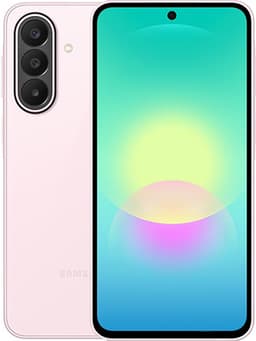
| Misc | Colors | Gray, water green, midnight blue |
|---|---|---|
| Models | SM-A165F, SM-A165F/DS, SM-A165M, SM-A165M/DS, SM-A165F/DSB |
Samsung Galaxy A16
Similar Price Range


Top Trending Mobiles
More from Samsung
See more




Other Samsung models
- Samsung Galaxy A14Rs. 56,999
- Samsung Galaxy A14 5GRs. 58,999
- Samsung Galaxy A15Rs. 52,999
- Samsung Galaxy A15 5GRs. 55,999
- Samsung Galaxy A16This phone
- Samsung Galaxy A16 5GRs. 59,999
- Samsung Galaxy A17In storesRs. 62,995
- Samsung Galaxy A17 5GRs. 64,999
- Samsung Galaxy A18Rs. 57,499
Samsung Galaxy A16: Buyer's Guide
Is It Value for Money?
At Rs. 46,999 for the 6GB + 128GB model, the Samsung Galaxy A16 is one of the few box-pack Samsung phones under 50K, and its biggest selling point is not speed or camera but long software support: Samsung promises up to six major Android upgrades, far more than most phones at this price.
Main advantages
- Six major Android upgrades, so it stays updated and secure for years
- 6.7 inch Super AMOLED Full HD screen with good colours
- Reliable battery life from the 5000 mAh cell
- Samsung's One UI software and brand after-sales support
Main compromises
- No charger in the box, which adds to the real cost
- Plastic build with a dated drop notch and thick bezels
- No 3.5mm headphone jack and no Always On Display
- Average main camera detail and video limited to 1080p 30fps
- Only a 90Hz screen, while many rivals offer 120Hz
Compared with the Redmi Note 14: for Rs. 50,999 the Xiaomi gives a brighter 120Hz AMOLED screen, a bigger 5500 mAh battery, faster 33W charging and a 108 MP main camera on a similar Helio G99 Ultra chip. The Galaxy A16 answers with a lower price and a longer update promise (up to six major upgrades against four).
Verdict: a sensible buy for people who want a dependable, long-lasting phone for calls, WhatsApp, YouTube and social media and plan to keep it for several years. If you care more about camera, charging speed and screen smoothness today, the Redmi Note 14 offers more hardware for a little more money.
How Is the Display?
The Galaxy A16 has a 6.7 inch Super AMOLED panel with 1080 x 2340 (Full HD+) resolution and a 90Hz refresh rate. Colours look rich and vivid indoors, blacks are deep, and the sharp Full HD resolution makes it a good screen for YouTube, dramas and social media.
Outdoor use: daylight visibility is good once auto brightness boosts the panel in sunlight, although manual brightness is fairly low, so it is best left on auto outdoors.
Limitations:
- 90Hz only, with no automatic switching; you pick a fixed smooth or standard mode. Rivals such as the Redmi Note 14 run at 120Hz.
- A drop (teardrop) notch and noticeable bezels make the design look older than competitors with punch-hole screens.
- There is no Always On Display, so you cannot see the time and notifications on a dark screen.
For most buyers moving from an LCD phone, the AMOLED panel will still be a clear upgrade in contrast and colour.
How Is the Performance?
The phone uses the MediaTek Helio G99 (6 nm), the same chip found in most 4G phones from roughly 40K to 80K in Pakistan, paired with UFS 2.2 storage. The efficient 6 nm design also helps battery life.
Everyday use: scrolling through social media, WhatsApp and YouTube runs without noticeable lag on the 6GB and 8GB models. Independent testing found the 4GB model struggles more, with some apps taking noticeably long to load and occasional stutter, so pick 6GB or above if you can.
Gaming: casual games run well at medium settings. PUBG Mobile runs at a capped frame rate similar to other G99 phones, and the phone has no gyroscope, so gyro aiming is not available, a real drawback for serious PUBG players.
Heat and stability: in a sustained stress test it kept 83% of its maximum CPU and 98% of its GPU performance, meaning it does not slow down much during long sessions.
This is a phone for daily tasks and light gaming, not for heavy multitasking or competitive gaming.
How Is the Camera?
The rear setup is a 50 MP main camera with autofocus, a 5 MP ultrawide and a 2 MP macro, plus a 13 MP selfie camera.
Daylight: the main camera takes pleasant photos with natural, not over-boosted colours, and close-up shots of things like flowers are good, with decent depth separation. Opinions differ on detail, though: zoom into a photo and it can look softer than a 50 MP image should, and some rivals in this price band produce sharper results.
Portraits: edge detection is generally good, but around tricky areas like ears and hair it can add extra blur instead of a clean cut-out.
Low light: acceptable rather than impressive; the gap between indoor and outdoor shots is smaller than on many rivals, but it is not a night-photography phone.
Ultrawide and macro: the 5 MP ultrawide has soft detail and limited practical use, and the macro is mainly there to fill out the spec sheet.
Selfies: the 13 MP front camera gives reasonably accurate skin tones and colours in good light and looked better than several box-pack rivals in the same price range.
Video: both cameras record at a maximum of 1080p 30fps, with no 4K or higher frame-rate option, even though the G99 chip could support more. Slow motion is 720p. Stabilisation is decent for casual clips.
How Is the Battery?
The Galaxy A16 has a 5000 mAh battery, and battery life is one of its strengths. With normal use it can last about a day and a half, and one month-long test reported roughly 8 to 10 hours of screen-on time. GSMArena's standardised test gave an Active Use Score of over 14 hours, with strong results in video streaming and gaming.
Charging: the phone supports 25W fast charging, but no charger comes in the box. With Samsung's 25W adapter it reaches about 53% in 30 minutes and charges fully in about 1 hour 19 minutes. A cheap or unbranded charger will charge much more slowly and may not be safe for the battery over time.
Compared with the Redmi Note 14: the Xiaomi has a larger 5500 mAh battery and faster 33W charging, but the A16's efficient chip keeps the gap in real-world endurance smaller than the numbers suggest. There is no wireless charging, which is normal at this price.
How Is the Software?
The Galaxy A16 launched with One UI 6.1 on Android 14 and has since been updated to One UI 7. Samsung promises up to six major Android upgrades for this model, a standout commitment in the sub-50K segment where most brands offer around two years.
What you get: One UI is clean, well organised and easy for first-time smartphone users, and updates have been arriving regularly, both new Android versions and security patches.
Missing or limited features:
- No Always On Display, which many cheaper phones include
- One long-term test noted it could not find a built-in screen recorder at the time, though later One UI versions may change this
A note on the long update promise: the 4GB model will receive the same updates, but newer Android versions tend to need more memory, so the 6GB or 8GB variant is a safer choice if you plan to keep the phone for several years.
Samsung Galaxy A16: Questions Buyers Ask
Is the Samsung Galaxy A16 a 5G phone?
No. The Galaxy A16 sold in Pakistan is the 4G model, powered by the MediaTek Helio G99. It supports 4G LTE but not 5G networks. A separate Galaxy A16 5G exists in some countries, but it is a different phone with a different chip.
Does the Galaxy A16 come with a charger in the box?
No. The box has the phone and a USB-C cable but no power adapter. The A16 supports 25W fast charging, so a Samsung 25W charger is the best match; with it the phone reaches about 53% in 30 minutes and full in about 1 hour 19 minutes.
Which storage type does the Galaxy A16 use?
The Galaxy A16 4G uses UFS 2.2 storage, not eMMC. UFS 2.2 is not the fastest type available, but it is clearly quicker than the eMMC chips used in many budget phones, which helps app installs and file transfers.
Does the Galaxy A16 have Always On Display?
No. The Galaxy A16 4G does not offer an Always On Display feature, so the screen stays fully dark when locked. You need to tap or lift the phone to see the time and notifications, despite its AMOLED panel.
Should I buy the Galaxy A16 or the Redmi Note 14?
Choose the Galaxy A16 (Rs. 46,999) for the lower price and up to six major Android upgrades. Choose the Redmi Note 14 (Rs. 50,999) for a 120Hz screen, a bigger 5500 mAh battery, 33W charging and a 108 MP camera, but with up to four major upgrades.
