


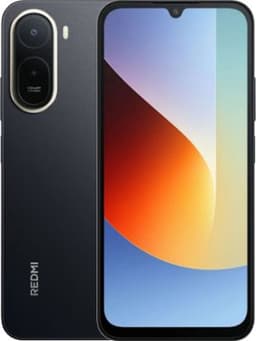
Xiaomi Redmi Note 14 price in Pakistan
Xiaomi Redmi Note 14 price in Pakistan is Rs. 50,999 (last updated 24 Oct 2026). See all Xiaomi phones.
The Redmi Note 14 is worth considering for buyers who prioritize a high-quality AMOLED display, long battery life and everyday multimedia use over heavy gaming or advanced photography. Its 120Hz screen delivers smooth scrolling, vibrant colours and sharp-looking content, while the 5,500mAh battery provides around 8–9 hours of screen-on time with moderate use. The 33W charger takes roughly 1 hour and 15 minutes to recharge it. With HyperOS 2.0 based on Android 15, stereo speakers, Gorilla Glass 5 protection and IP54 resistance, it covers the basics well for daily use and entertainment.
Who it's for
- Multimedia users who watch YouTube, stream Netflix in Full HD and want a vibrant AMOLED display.
- Battery-focused buyers who need dependable endurance for a full day or longer with lighter usage.
- Casual users and gamers who mainly browse, message, use everyday apps and play PUBG casually rather than demanding sustained high performance.
Where it falls short
The Helio G99 Ultra handles routine tasks, but app-opening delays and occasional gaming frame drops limit the overall experience. Heavy WhatsApp usage with large amounts of media may also cause problems. Camera results are acceptable in good lighting but fall short of stronger competitors, particularly for video, where stabilization is weak. The secondary rear cameras offer little practical value, there is no NFC, and the always-on display only stays active briefly. The hybrid SIM slot also means choosing between a second SIM and expandable storage.
Worth comparing
The Infinix Hot 60 Pro and itel S26 Ultra are worth considering if display quality or performance matters more than Xiaomi's software experience. The Infinix offers a sharper, higher-refresh-rate AMOLED display, a Helio G200 processor and faster charging, making it a relevant alternative for smoother everyday use and casual gaming. The itel S26 Ultra also features a higher-resolution curved AMOLED display, a Unisoc T7300 processor and a larger battery, although its charging is slower. The Redmi Note 14 remains appealing for media consumption and battery endurance, but buyers should compare current local prices before choosing between these options.
| Network | Technology | GSM / HSPA / LTE |
|---|
| Launch | Announced | 2025, January 10 |
|---|---|---|
| Status | Available. Released 2025, January 15 |
| Body | Dimensions | 163.3 x 76.6 x 8.2 mm |
|---|---|---|
| Weight | 196.5 g | |
| Build | Glass front (Gorilla Glass 5), plastic back, aluminum frame | |
| SIM | Nano-SIM + Nano-SIM |
| Display | Type | AMOLED, 120Hz, 960Hz PWM, 1200 nits (HBM), 1800 nits (peak) |
|---|---|---|
| Size | 6.67 inches (~85.9% screen-to-body ratio) | |
| Resolution | 1080 x 2400 pixels, 20:9 ratio (~395 ppi density) | |
| Protection | Corning Gorilla Glass 5, Mohs level 5 |
| Platform | OS | Android 14, up to 4 major Android upgrades, HyperOS |
|---|---|---|
| Chipset | Mediatek Helio G99 Ultra (6 nm) | |
| CPU | Octa-core (2x2.2 GHz Cortex-A76 & 6x2.0 GHz Cortex-A55) | |
| GPU | Mali-G57 MC2 |
| Memory | Internal | 128GB 6GB RAM, 128GB 8GB RAM, 256GB 6GB RAM, 256GB 8GB RAM |
|---|---|---|
| Card Slot | microSDXC (uses shared SIM slot) |
| Main Camera | Modules | 108 MP, f/1.7, (wide), 1/1.67", 0.64µm, PDAF 2 MP (macro) Auxiliary lens |
|---|---|---|
| Features | LED flash, HDR, panorama | |
| Video | 1080p@30/60fps |
| Selfie Camera | Modules | 20 MP, f/2.2, (wide), 1/4.0", 0.7µm |
|---|---|---|
| Features | ||
| Video | 1080p@30fps |
| Sound | Loudspeaker | Yes, with stereo speakers (with Dolby Atmos) |
|---|---|---|
| 3.5mm Jack | Yes |
| Comms | WLAN | Wi-Fi 802.11 a/b/g/n/ac, dual-band, Wi-Fi Direct |
|---|---|---|
| Bluetooth | 5.3, A2DP, LE | |
| GPS | GPS, GLONASS, BDS, GALILEO | |
| NFC | Yes (market/region dependent) | |
| Radio | Unspecified | |
| USB | USB Type-C 2.0, OTG |
| Features | Sensors | Fingerprint (under display, optical), accelerometer, gyro, compass, proximity |
|---|
| Battery | Type | 5500 mAh |
|---|---|---|
| Charging | 33W wired, 55% in 44 min |
| Misc | Colors | Midnight Black, Mist Purple, Ocean Blue, Lime Green |
|---|---|---|
| Models | 24117RN76G, 24117RN76O, 24117RN76E |
Xiaomi Redmi Note 14
Similar Price Range


Top Trending Mobiles
More from Xiaomi
See more


Other Xiaomi models
- Xiaomi Redmi Note 13 Pro PlusRs. 146,999
- Xiaomi Redmi Note 13 TurboRs. 84,999
- Xiaomi Redmi Note 13RRs. 42,999
- Xiaomi Redmi Note 13R ProRs. 63,999
- Xiaomi Redmi Note 14This phone
- Xiaomi Redmi Note 14 5GRs. 57,999
- Xiaomi Redmi Note 14 ProIn storesRs. 70,999
- Xiaomi Redmi Note 14 Pro 5GRs. 97,999
- Xiaomi Redmi Note 14 Pro PlusRs. 144,999
Xiaomi Redmi Note 14: Buyer's Guide
Is It Value for Money?
At Rs. 50,999 for the 8GB + 128GB model, the Redmi Note 14 is a sensible all-rounder rather than a bargain. It is strongest for buyers who keep a phone for years, and weakest for gamers.
Main advantages:
- A sharp 120Hz AMOLED screen behind Gorilla Glass 5
- A 108 MP main camera that does especially well in low light
- A 5500 mAh battery with 33W charging
- Aluminum frame, IP54 splash resistance, headphone jack and IR blaster
- A long update promise for this class
Main compromises:
- The Helio G99 Ultra is an ageing chip with modest graphics power
- UFS 2.2 storage and a hybrid SIM tray
- No ultrawide camera, which the Redmi Note 13 had
- Ads inside system apps
Alternatives: the Itel Super 26 Ultra (Rs. 47,499) is cheaper and offers a larger 144Hz AMOLED screen, a 6000 mAh battery and a 32 MP selfie camera, but charges at only 18W. The Infinix Hot 60 Pro (Rs. 66,999) has the stronger Helio G200, 45W charging and a dedicated memory card slot, but costs much more.
Verdict: a safe buy for everyday use, photos and long-term software support, especially for buyers who want a well-known brand with good resale. Gamers and heavy multitaskers should look higher.
How Is the Display?
The Redmi Note 14 uses a 6.67-inch AMOLED panel at 1080 x 2400 resolution with a 120Hz refresh rate. Text looks sharp, blacks are deep, and scrolling feels smooth. On paper it matches the Redmi Note 13's screen.
Brightness: 1200 nits in high brightness mode and 1800 nits peak, which is enough for comfortable outdoor use in this price range.
Eye comfort: 960Hz PWM dimming reduces flicker at low brightness, though some newer rivals use faster dimming.
Protection: the front glass moves up from Gorilla Glass 3 to Gorilla Glass 5, which handles drops much better.
Limitations: the bezels are slightly thicker than on the Redmi Note 13, so the front looks a little dated.
Video and sound: the stereo speakers are not very loud, but they sound clean and natural, which makes video watching more enjoyable than the price suggests. The optical in-display fingerprint scanner is quick to unlock.
How Is the Performance?
The MediaTek Helio G99 Ultra (6 nm) pairs two Cortex-A76 cores at 2.2 GHz with six Cortex-A55 cores and a Mali-G57 MC2 GPU. Against the Redmi Note 13's Snapdragon 685, it is about 30% faster, and the difference shows in daily use and in games.
Everyday use: social media, browsing, calls and streaming run smoothly. It is still an older chip design, so it trails newer rivals in this price range.
Gaming: several games unlock higher graphics settings than on the Redmi Note 13, but the GPU is modest, so expect medium settings in demanding titles.
Heat and sustained performance: reports differ. GSMArena found the CPU holds close to full speed without thermal throttling. In another stress test, performance fell to about 55% after 36 minutes. Either way, the phone stays cool and saves battery.
Storage: UFS 2.2 storage reads at about 1045 MB/s, which is slower than newer UFS 3.1 phones when installing or opening large apps. A memory card is even slower, so buy the 256GB model if you need space.
How Is the Camera?
The rear has a 108 MP Samsung main camera (f/1.7) with two small 2 MP helper sensors. There is no ultrawide camera; the Redmi Note 13 had one, so wide group and landscape shots are now harder.
Main camera: clarity and detail are clearly better than on the Redmi Note 13. Daylight photos sometimes look slightly washed out, with colours less vivid than expected. Low-light shots are the surprise: image quality stays very solid.
Selfies: the front camera moves up to 20 MP and gives great results in good light, with well-managed colours. Bokeh mode is more accurate than before, and AI bokeh lets you change both the amount and the style of the blur after the shot. In dim light, colours wash out and photos can look like an oil painting, but Night mode fixes most of this.
Video: the rear camera records up to 1080p 60fps; the front camera is limited to 1080p 30fps. Selfie video gets muddy against strong backlight.
Editing: AI Erase removes simple objects well but struggles with complex scenes, sometimes leaving parts of a person behind. AI Sky replaces dull skies nicely, but it refuses to work on some photos.
How Is the Battery?
The Redmi Note 14 has a 5500 mAh battery, larger than the Redmi Note 13's. The phone is slightly thicker and heavier as a result, but the difference is hard to notice in the hand.
Battery life: the Helio G99 Ultra draws less power than other G99 phones, and the phone limits performance under heavy load to save energy. The result is long battery backup, comfortably a full day for most users. GSMArena also rates its battery life as strong.
Charging: 33W wired charging reaches 55% in 44 minutes. That is slower than rivals such as the Infinix Hot 60 Pro with 45W charging, so a full charge takes well over an hour.
There is no wireless charging.
How Is the Software?
The phone runs Android 14 with Xiaomi HyperOS. Not every HyperOS feature is included, but the important ones are there.
Updates: our specs list up to four major Android upgrades, and GSMArena reports six years of security updates for the Redmi Note 14 4G. That is one of the longest commitments in this price range, which also helps resale value.
Ads and bloatware: this is the weak point. A "More apps" folder comes with Facebook, TikTok, Binance, inDrive and some games, and a recommendations folder pushes more apps. GSMArena also found ads inside system apps. You can remove these, but only one by one, which takes time.
Useful features:
- Gemini opens with a long press of the home button
- An IR blaster lets the phone work as a remote for ACs and TVs
- Gallery AI tools such as AI Erase and AI Sky
Circle to Search is not available on this model; it is limited to the Pro versions. Haptics are basic: the vibration motor gives little feedback outside calls and typing.
Xiaomi Redmi Note 14: Questions Buyers Ask
Does the Redmi Note 14 have an aluminum frame?
Yes. The Redmi Note 14 has an aluminum frame with a plastic back and Gorilla Glass 5 on the front. The metal frame makes it feel sturdier than most phones at this price, and GSMArena lists the same build.
How long will the Redmi Note 14 get software updates?
The Redmi Note 14 is set to get up to four major Android upgrades. GSMArena reports six years of security updates for this 4G model. It launched on Android 14, so it should reach Android 18, a long commitment for this price range.
Can I use two SIM cards and a memory card at the same time?
No. The Redmi Note 14 has a hybrid SIM tray, so you can use either two SIM cards or one SIM with a microSD card. If you need two SIMs and plenty of space, choose the 256GB model, which is also faster than a memory card.
Is the Redmi Note 14 better than the Redmi Note 13?
Mostly yes. The Redmi Note 14 is about 30% faster, has a bigger 5500 mAh battery, Gorilla Glass 5, a sharper 108 MP main camera and a 20 MP selfie camera. The Redmi Note 13 keeps one advantage: an ultrawide camera, which the Redmi Note 14 drops.
Does the Redmi Note 14 heat up?
No, it stays cool. GSMArena found very good thermals with no CPU throttling. In a longer stress test, performance dropped to about 55% after 36 minutes, which keeps the phone cool and saves battery but means heavy games may slow down in long sessions.
Why does the Redmi Note 14 have three cameras if only one seems to work?
Only the 108 MP main camera is a full camera. The other two are small 2 MP helpers: a macro camera for close-ups, found in the camera's macro mode, and an auxiliary sensor that assists the main camera. There is no ultrawide camera on this model.
