




Xiaomi Redmi Note 15 price in Pakistan
Xiaomi Redmi Note 15 price in Pakistan is Rs. 68,999 (last updated 27 Oct 2026). See all Xiaomi phones.
The Redmi Note 15 combines a curved Full HD+ AMOLED display, a 108MP main camera, and strong battery endurance in a slim, premium-feeling design. Its 6,000mAh battery can deliver around eight to nine hours of screen-on time with medium to heavy use, while 33W charging provides a reasonable balance between speed and battery capacity. The 120Hz display offers vibrant colours, good outdoor visibility, and comfortable viewing for videos, reading, and everyday browsing.
Powered by the MediaTek Helio G100 Ultra, the phone handles social media, routine multitasking, and casual gaming smoothly, although occasional lag can occur under heavier workloads. Its 108MP main camera produces balanced colours and dynamic range, with respectable detail in low light. The 20MP selfie camera suits video calls and everyday self-portraits. Dolby Atmos stereo speakers, customisable software, AI photo-editing tools, and an in-display fingerprint reader add to its everyday appeal.
Who it's for
- Multimedia enthusiasts who want a curved AMOLED screen, immersive stereo speakers, and smooth scrolling for videos and everyday browsing.
- Battery-conscious users who need reliable endurance for long days away from a charger.
- Casual gamers and everyday users who prioritise responsive daily performance, customisation, and useful AI editing features over intensive gaming.
Where it falls short
The 33W charging is relatively slow for a battery of this size, and occasional interface lag can interrupt an otherwise smooth experience. Extreme gaming is not its strength. NFC is absent, and the always-on display only stays active briefly rather than remaining continuously visible. Camera processing can also struggle with portrait edge detection and inconsistent HDR, while front-camera video is limited to 1080p at 30fps.
Worth comparing
The Infinix Hot 60 Pro offers a sharper 1.5K, 144Hz AMOLED display, a Helio G200 processor, and 45W charging, although its battery is smaller. The Tecno Spark 40 Pro also features a 1.5K, 144Hz AMOLED display, a Helio G100 Ultimate chipset, and 45W charging, making it worth considering for display smoothness and charging speed. The Samsung Galaxy A17 4G has a 90Hz Super AMOLED display, a more versatile camera system with optical image stabilisation and an ultrawide lens, plus a longer software-support commitment. The Redmi Note 15 stands out for its larger battery, curved display, and high-resolution main camera.
| Network | Technology | GSM / HSPA / LTE |
|---|
| Launch | Announced | 2025, December 18 |
|---|---|---|
| Status | Available. Released 2026, January 06 |
| Body | Dimensions | 164 x 75.4 x 7.9 mm |
|---|---|---|
| Weight | 183.7 g | |
| Build | ||
| SIM | Nano-SIM + Nano-SIM |
| Display | Type | AMOLED, 68B colors, 120Hz, 3840Hz PWM, 3200 nits (peak) |
|---|---|---|
| Size | 6.77 inches (~89.7% screen-to-body ratio) | |
| Resolution | 1080 x 2392 pixels (~388 ppi density) | |
| Protection | Mohs level 5 |
| Platform | OS | Android 15, up to 4 major Android upgrades, HyperOS 2 |
|---|---|---|
| Chipset | Mediatek Helio G100 Ultra (6 nm) | |
| CPU | Octa-core (2x2.2 GHz Cortex-A76 & 6x2.0 GHz Cortex-A55) | |
| GPU | Mali-G57 MC2 |
| Memory | Internal | 128GB 6GB RAM, 128GB 8GB RAM, 256GB 6GB RAM, 256GB 8GB RAM, 512GB 8GB RAM |
|---|---|---|
| Card Slot | microSDXC (uses shared SIM slot) |
| Main Camera | Modules | 108 MP, f/1.7, 24mm (wide), 1/1.67", 0.64µm, PDAF Auxiliary lens |
|---|---|---|
| Features | LED flash, HDR, panorama | |
| Video | 1080p@30/60fps |
| Selfie Camera | Modules | 20 MP, f/2.2, (wide), 1/4.0", 0.7µm |
|---|---|---|
| Features | ||
| Video | 1080p@30fps |
| Sound | Loudspeaker | Yes, with stereo speakers (with Dolby Atmos) |
|---|---|---|
| 3.5mm Jack | No |
| Comms | WLAN | Wi-Fi 802.11 a/b/g/n/ac, dual-band, Wi-Fi Direct |
|---|---|---|
| Bluetooth | 5.3, A2DP, LE | |
| GPS | GPS, GALILEO, GLONASS, QZSS, BDS | |
| NFC | Yes (market/region dependent) | |
| Radio | No | |
| USB | USB Type-C 2.0, OTG |
| Features | Sensors | Fingerprint (under display, optical), accelerometer, gyro, compass, proximity |
|---|
| Battery | Type | 6000 mAh |
|---|---|---|
| Charging | 33W wired 18W reverse wired |
| Misc | Colors | Black, Forest Green, Glacier Blue, Purple |
|---|---|---|
| Models | 2510DRA23E, 2510DRA23G |
Xiaomi Redmi Note 15
Similar Price Range










Top Trending Mobiles
More from Xiaomi
See more
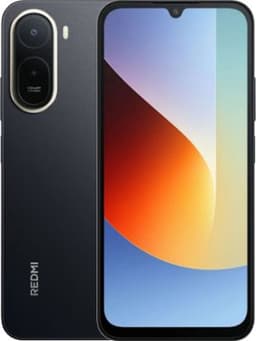



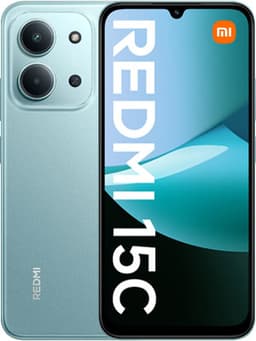


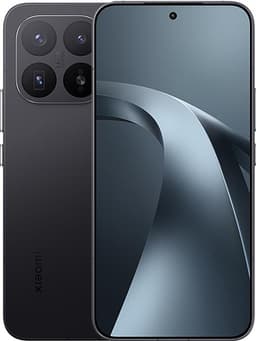
Other Xiaomi models
- Xiaomi Redmi Note 14 SERs. 59,999
- Xiaomi Redmi Note 14RRs. 45,999
- Xiaomi Redmi Note 14R ProRs. 67,999
- Xiaomi Redmi Note 14SRs. 63,999
- Xiaomi Redmi Note 15This phone
- Xiaomi Redmi Note 15 5GRs. 59,999
- Xiaomi Redmi Note 15 ProIn storesRs. 91,499
- Xiaomi Redmi Note 15 Pro 5GRs. 109,999
- Xiaomi Redmi Note 15 Pro PlusIn storesRs. 164,995
Xiaomi Redmi Note 15: Buyer's Guide
Is It Value for Money?
At Rs. 68,999 for the 8GB + 128GB model, the Xiaomi Redmi Note 15 is a sensible buy only if your priorities match its strengths.
Where it earns its price:
- A curved AMOLED screen that is bright enough for Pakistani summers
- A 6000 mAh battery with a 33W charger in the box
- A slim, well-built body with IP64 splash resistance, stereo speakers and an IR blaster
- GSMArena lists up to four major Android upgrades, which is long for this segment
Where it falls short:
- It is 4G only, and the Helio G100 Ultra performs almost exactly like the chips in last year's Redmi Note 14
- There is no ultrawide camera, video stops at 1080p and there is no optical stabilisation
- Pakistani units are reported to ship without NFC, and the SIM tray is hybrid, so a second SIM and a memory card cannot be used together
Against the alternatives: the Infinix Hot 60 Pro costs Rs. 66,999 and offers a Helio G200, a 144Hz AMOLED, 45W charging, NFC and a dedicated card slot, but a smaller 5160 mAh battery. The Itel Super 26 Ultra at Rs. 47,499 matches the 6000 mAh battery and adds a 144Hz AMOLED for far less money, with slower 18W charging.
Verdict: opinions differ on the price. Next to Infinix, Tecno and Itel it feels expensive for the hardware; next to Oppo, Vivo and Samsung phones at the same money it looks like better value. Buy it for the screen, battery life, build and update promise. Skip it if you want gaming power, 5G, NFC or better video.
How Is the Display?
Official specs: a 6.77-inch curved AMOLED panel at 1080 x 2392 pixels, a 120Hz refresh rate, 3840Hz PWM dimming and a quoted peak of 3200 nits.
Real-world use: this is the phone's strongest feature. Outdoor visibility is very good, colours look rich for videos and social media, and viewing angles hold up well. Widevine L1 support means streaming apps can play in full HD, and the touch screen keeps working with wet fingers. A reading mode warms the screen for night-time use, which helps with long reading sessions.
Limitations:
- The always-on display only stays on for about ten seconds after a tap; it is not a true always-on screen
- At this price, the Infinix Hot 60 Pro and Itel Super 26 Ultra both offer a 144Hz refresh rate
- Curved glass makes screen protectors and replacements harder to find and usually costlier than on a flat panel
The in-display fingerprint reader is fast and reliable, though it sits quite low on the screen.
How Is the Performance?
Official specs: a MediaTek Helio G100 Ultra (6 nm) with two Cortex-A76 cores at 2.2 GHz, six Cortex-A55 cores and a Mali-G57 MC2 GPU, paired with 6GB or 8GB of RAM.
Real-world use: everyday tasks feel quick. Apps open smoothly with fluid animations, switching between social media, WhatsApp and the browser is handled well, and small stutters appear only now and then. After five to six months of use the phone is reported to have stayed free of slowdowns or serious bugs.
Gaming: casual and mid-level games run fine, but this is not a phone for heavy gaming at high settings. The G100 Ultra is essentially a renamed member of the same chip family as the G99 used before it, so Redmi Note 14 owners will notice no real speed gain.
Limitations:
- No sustained gaming or heat test results were available, so long sessions are unverified
- Storage is UFS 2.2, which is slower than the UFS 3.1 found in some rivals
- The Infinix Hot 60 Pro's Helio G200 is a newer chip for slightly less money
How Is the Camera?
Official specs: a 108 MP main camera (f/1.7, with a large 1/1.67" sensor) with an auxiliary lens on the back and a 20 MP selfie camera. Both record at up to 1080p; the rear camera manages 1080p at 60fps and the front 1080p at 30fps.
Daylight: the main camera produces sharp, punchy photos with pleasing colours and balanced dynamic range. Portraits can be taken at 1x and 2x, and post-processing has improved over earlier Redmi phones.
Low light: opinions differ. Some find detail is held with little noise, while others say quality drops off clearly at night. Edge detection can slip in dim scenes, and HDR is sometimes over- or under-processed.
Selfies: daytime selfies are very good and low-light selfies remain usable.
Limitations:
- There is no ultrawide or macro camera; the Redmi Note 14 had three rear cameras, this model has two
- Video tops out at 1080p, and there is no optical image stabilisation, so a steady hand or a gimbal helps
- Front video is fine for calls but not for serious content creation
Overall it is a capable daytime camera rather than an all-round one.
How Is the Battery?
Official specs: a 6000 mAh battery (up from 5500 mAh on the Redmi Note 14) with 33W wired charging and 18W reverse wired charging. A 33W charger and cable come in the box.
Real-world use: battery life is one of the phone's biggest strengths. Screen-on time reports differ slightly, ranging from about seven to eight hours to around eight to nine hours with medium to heavy use on Wi-Fi. Either way, most users will get through a full day with charge to spare.
Charging: a full charge takes about an hour and a half with the included charger. That is acceptable, but slower than the 45W Infinix Hot 60 Pro.
Reverse charging: the 18W reverse wired output is unusually fast, so earbuds, a smartwatch or another phone can be topped up quickly through a cable.
The main compromise is charging speed, not endurance.
How Is the Software?
Official specs: Android 15 with Xiaomi HyperOS 2 out of the box. GSMArena lists up to four major Android upgrades; a Pakistan-specific update policy from Xiaomi could not be confirmed, so treat the exact number as unconfirmed until Xiaomi publishes it.
Useful features:
- Deep lock screen and control centre customisation
- AI tools in the gallery, including an AI editor, AI beautify, AI erase, AI sky and bokeh effects
- A software volume boost on top of the stereo speakers, and strong haptics that are among the best at this price
- Fast face unlock alongside the fingerprint reader, plus an IR blaster app for TVs and air conditioners
Ads and bloatware: there are far fewer ads than in older Xiaomi software, but a games folder, a couple of app folders and a recommendations feed still promote third-party apps. These apps can be uninstalled.
Limitations:
- The phone uses the Google dialer, so Xiaomi's own call recording option is not available
- A HyperOS 3 update with Android 16 is expected but had not been confirmed for this model at launch
Xiaomi Redmi Note 15: Questions Buyers Ask
Does the Redmi Note 15 have NFC?
The Redmi Note 15 sold in Pakistan is reported to ship without NFC, so Google Wallet tap-to-pay will not work. GSMArena lists NFC as market dependent, meaning some other regions get it. If NFC matters to you, the Infinix Hot 60 Pro includes it.
Is it a 4G or 5G phone, and is a 5G version coming?
The Pakistani Redmi Note 15 is a 4G phone built on the Helio G100 Ultra, which has no 5G modem. Xiaomi sells 5G Redmi Note 15 models in other markets, but a Pakistani launch of a 5G version had not been announced.
Does the Redmi Note 15 have OIS?
No. The 108 MP main camera has no optical image stabilisation, and video is limited to 1080p at up to 60fps. Handheld clips can look shaky while walking, so a gimbal or a steady grip helps if you record a lot of video.
Redmi Note 14 or Redmi Note 15: which is better?
The Redmi Note 15 is better overall, but not faster. It adds a curved AMOLED screen, a bigger 6000 mAh battery, IP64 instead of IP54 splash resistance and 18W reverse charging. Performance is about the same, and the Note 15 drops the macro camera, so Note 14 owners have little reason to upgrade.
Is the Redmi Note 15 value for money at its price?
It is fair value if you want a curved AMOLED screen, long battery life and a long update promise from a big brand. At Rs. 68,999 it is weak value for gaming, 5G or video, where Infinix and Itel phones give more hardware for the same or less money.
Redmi Note 15 or Infinix Hot 60 Pro: which should I buy?
Pick the Infinix Hot 60 Pro for performance and features: it has a Helio G200, a 144Hz screen, 45W charging, NFC and a dedicated card slot for Rs. 66,999. Pick the Redmi Note 15 for its bigger 6000 mAh battery, brighter quoted peak and longer update promise.
How strong is the screen and body?
The Redmi Note 15 is built to take everyday knocks: it has IP64 dust and splash resistance, and Xiaomi heavily promotes its toughened screen. Our database rates the screen at Mohs level 5. No independent drop test results were available, and a curved screen usually costs more to replace.