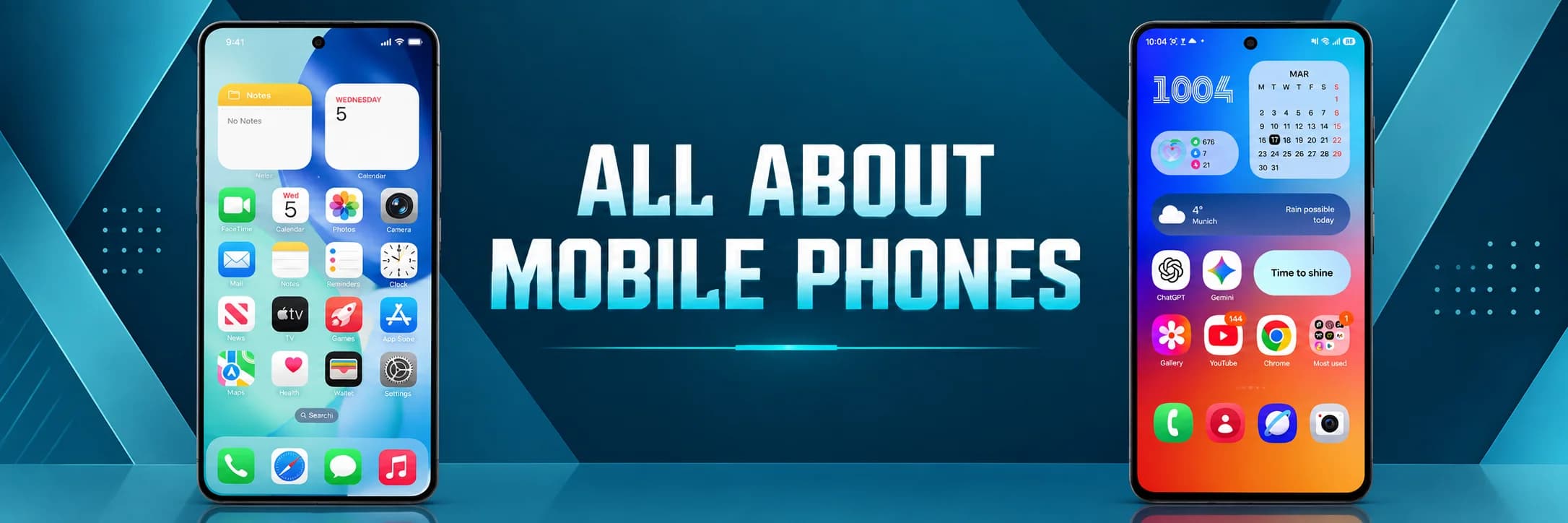





Tecno Spark 40 Pro Plus price in Pakistan
Tecno Spark 40 Pro Plus price in Pakistan is Rs. 72,999 (last updated 27 Oct 2026). See all Tecno phones.
The Tecno Spark 40 Pro Plus prioritises slim design, wireless charging and battery life, but its performance is difficult to justify at its price point. Its lightweight body, plastic construction and curved design give it a premium appearance, while IP64 protection helps guard against dust and water splashes. The 5,200mAh battery delivers around 7–8 hours of screen-on time with moderate use, and the included 45W charger takes roughly an hour to fully recharge it. 30W wireless charging is another useful feature, provided you have a compatible charging pad. The display supports Widevine L1 for HD streaming, and NFC enables contactless payments. With 8GB RAM and 256GB storage, it offers reasonable capacity for everyday apps and multitasking. The 50MP rear camera can produce decent daylight photos with balanced exposure and useful detail, making it suitable for casual social media photography.
Who it's for
- Design-conscious buyers: The slim, lightweight body suits people who value comfortable handling and a distinctive appearance.
- Everyday users: WhatsApp, browsing, calls, video streaming and routine multitasking are within its capabilities.
- Wireless charging users: The 30W wireless charging support and 5,200mAh battery offer flexibility for people who prefer cable-free charging.
Where it falls short
The biggest weakness is underwhelming performance for the price. The Helio G200 handles routine tasks and casual gaming, but demanding workloads and heavier gaming can expose its limitations. The display's advertised higher-resolution experience relies on AI upscaling rather than native resolution, and the always-on display only stays active briefly. The rear camera lacks a dedicated secondary sensor, while video stabilisation is weak despite recording up to 2K. Other compromises include no headphone jack, no microSD expansion, noticeable frame vibration at high volume, preinstalled bloatware and no clearly confirmed software update policy. The phone also lacks 4G+ carrier aggregation.
Worth comparing
The Redmi Note 14 Pro is worth considering if you prioritise photography and multimedia features over wireless charging. It offers a 200MP main camera with OIS, an 8MP ultrawide camera, a macro camera, a 32MP selfie camera, stereo speakers with Dolby Atmos and a 5,500mAh battery. Its 120Hz AMOLED display uses native FHD+ resolution rather than relying on the upscaling approach described for the Tecno. Both phones have 45W wired charging and IP64 protection, but the Tecno adds 30W wireless charging and a slimmer, lighter design. For buyers focused on performance, neither phone is designed for demanding gaming, so the decision comes down to camera versatility, display behaviour, design and wireless charging needs.
| Network | Technology | GSM / HSPA / LTE |
|---|
| Launch | Announced | 2025, July 02 |
|---|---|---|
| Status | Available. Released 2025, July 07 |
| Body | Dimensions | 163.9 x 75.8 x 6.5 mm |
|---|---|---|
| Weight | 160.4 g | |
| Build | Glass front (Gorilla Glass 7i), plastic back, plastic frame | |
| SIM | Nano-SIM + Nano-SIM |
| Display | Type | AMOLED, 1B colors, 144Hz, 1600 nits (HBM), 4500 nits (peak) |
|---|---|---|
| Size | 6.78 inches (~89.3% screen-to-body ratio) | |
| Resolution | 1224 x 2720 pixels, 20:9 ratio (~440 ppi density) | |
| Protection | Corning Gorilla Glass 7i |
| Platform | OS | Android 15, up to 3 major Android upgrades, HIOS 15 |
|---|---|---|
| Chipset | Mediatek Helio G200 (6 nm) | |
| CPU | Octa-core (2x2.2 GHz Cortex-A76 & 6x2.0 GHz Cortex-A55) | |
| GPU | Mali-G57 MC2 (1.1GHz) |
| Memory | Internal | 128GB 8GB RAM, 256GB 8GB RAM |
|---|---|---|
| Card Slot | No |
| Main Camera | Modules | 50 MP, f/1.6, (wide), 1/2.8", 0.64µm, PDAF Auxiliary lens |
|---|---|---|
| Features | Dual-LED flash, HDR | |
| Video | 1440p@30fps, 1080p@30fps, gyro-EIS |
| Selfie Camera | Modules | 13 MP, f/2.2, (wide), 1/3.1", 1.12µm |
|---|---|---|
| Features | Dual-LED flash | |
| Video | 1080p@30fps |
| Sound | Loudspeaker | Yes, with stereo speakers |
|---|---|---|
| 3.5mm Jack | No |
| Comms | WLAN | Wi-Fi 802.11 a/b/g/n/ac, dual-band |
|---|---|---|
| Bluetooth | 5.3, A2DP, LE | |
| GPS | GPS | |
| NFC | Yes (market/region dependent) | |
| Radio | FM radio | |
| USB | USB Type-C 2.0, OTG |
| Features | Sensors | Fingerprint (under display, optical), accelerometer, gyro, proximity, compass |
|---|
| Battery | Type | 5200 mAh |
|---|---|---|
| Charging | 45W wired, 100% in 55 min 30W wireless 5W reverse wireless 10W reverse wired Bypass charging |
| Misc | Colors | Nebula Black, Aurora White, Moon Titanium, Tundra Green |
|---|---|---|
| Models | KM7 |
Tecno Spark 40 Pro Plus
Similar Price Range


Top Trending Mobiles
More from Tecno
See more



Other Tecno models
- Tecno Spark 30C 5GRs. 32,999
- Tecno Spark 40In storesRs. 68,999
- Tecno Spark 40 5GRs. 42,999
- Tecno Spark 40 ProIn storesRs. 54,999
- Tecno Spark 40 Pro PlusThis phone
- Tecno Spark 40CRs. 29,999
- Tecno Spark 40SRs. 33,999
- Tecno Spark 50In storesRs. 58,995
- Tecno Spark 50 5GRs. 44,999
Tecno Spark 40 Pro Plus: Buyer's Guide
Is It Value for Money?
The Tecno Spark 40 Pro Plus costs Rs. 72,999 for the 8GB + 256GB model sold in Pakistan. At that price you are paying mainly for design and extras rather than raw power or camera hardware.
Where it earns its price:
- A 6.5 mm, 160 g body that feels far lighter in the pocket than most phones in this range
- A sharp, bright 144Hz AMOLED screen behind Gorilla Glass 7i
- 30W wireless charging, 5W reverse wireless and 10W reverse wired charging, which are rare at this level
- NFC, an IR blaster, IP64 splash resistance and 256GB of storage as standard
Where it cuts corners:
- No ultrawide camera and no optical stabilisation
- No memory card slot
- 4G only, with a Helio G200 chip that is not much faster than the older G100
- Stereo speakers are loud but thin on bass
- Tecno's software update promise is unclear (see the Software section)
The main alternative is the Xiaomi Redmi Note 15 at Rs. 68,999. It is cheaper and brings a bigger 6000 mAh battery, a 108 MP main camera, a microSD slot and a longer listed Android upgrade path, but it has no wireless charging, a 120Hz screen and slower 33W wired charging.
Verdict: buy the Spark 40 Pro Plus if a slim, light phone with a premium-looking screen and wireless charging matters most to you. If you care more about battery life, camera hardware or long-term updates, the price is hard to justify, and a price drop would make it a much easier recommendation.
How Is the Display?
Official specs: a 6.78-inch AMOLED panel with a 1224 x 2720 resolution, 144Hz refresh rate, 1B colours (10-bit), 1600 nits in high brightness mode and 4500 nits peak, protected by Corning Gorilla Glass 7i.
Real-world use: colours look rich, viewing angles are good and the screen stays readable in direct sun. An Outdoor Booster mode raises brightness further when you step outside. The edges have only a gentle 3D curve, so accidental touches are not a problem, and the in-display fingerprint reader is quick.
Smoothness: the refresh rate is adaptive, and HiOS lets you pick a refresh rate for each app. Some apps, including YouTube, default to 60Hz, so it is worth switching scrolling apps such as YouTube and TikTok to 120Hz manually while leaving simple apps at 60Hz to save battery.
Video: Widevine L1 is supported, so streaming apps play in high definition, and YouTube runs at up to 1440p. HDR playback in streaming apps is not supported.
Limitation: GSMArena found that the Helio G200 cannot drive the full 1224 x 2720 resolution at 144Hz natively. The interface is drawn at roughly Full HD and upscaled to the panel, so the extra sharpness is smaller than the spec sheet suggests, although the screen still looks very crisp in daily use.
How Is the Performance?
The phone runs on the MediaTek Helio G200 (6 nm) with 8GB of RAM and UFS 2.2 storage. The box mentions 16GB of RAM, but that figure includes 8GB of virtual memory borrowed from storage, so the real RAM is 8GB.
Everyday use: apps open without noticeable lag, and the extra virtual memory helps keep several apps and even a game open in the background. GSMArena describes the chip's performance as respectable for the class.
Gaming: PUBG Mobile runs at 60fps, with Smooth + Extreme and HDR + Ultra graphics options available. That makes it a capable casual gaming phone, though not a gaming-focused one.
Limitations:
- The G200 is only a small step up from the Helio G100, so do not expect a big jump over older phones in this range
- It is a 4G chip with no 5G support and no 4G+ carrier aggregation
- Storage is UFS 2.2, slower than the UFS 3.1 used by some rivals
- Long gaming sessions and heat levels were not measured in the sources we checked
How Is the Camera?
Official specs: a 50 MP f/1.6 main camera with PDAF plus an auxiliary lens, and a 13 MP selfie camera with its own dual-LED flash. There is no ultrawide camera and no optical image stabilisation.
Daylight photos: by default the camera saves 12.5 MP photos, and processing does a good job with dynamic range, colours and skin tones. A separate 50 MP mode keeps more detail if you plan to zoom into or crop a photo. Opinions differ on overall quality: some find the results impressive for the price, others call the colours average.
Portraits and selfies: beautification is switched on by default and can make lips and skin look pinker than they are. Edge detection in portrait shots is not always accurate. The front flash helps selfies and portrait video at night.
Low light: skin tones hold up well at night, but without OIS night photos get little help and can be soft.
Ultrawide workaround: the AI Extender in the gallery can widen a photo to imitate an ultrawide shot. It usually works well but sometimes adds mistakes, such as extra hands.
Video: the main camera records up to 1440p at 30fps with gyro-based electronic stabilisation. Front portrait video drops to 720p. Microphone pickup is clear.
How Is the Battery?
The Tecno Spark 40 Pro Plus has a 5200 mAh battery, which is large for such a slim phone.
Battery life: a typical day of use gives between 6 and 7 hours with the display on, which is decent but not class-leading. GSMArena rated the endurance as underwhelming for the battery size, so heavy users should not expect two-day battery life.
Charging:
- 45W wired charging with the charger included in the box. Tecno quotes a full charge in 55 minutes and GSMArena measured close to that, while other reports put it nearer 1 hour 10 minutes
- 30W wireless charging, but a wireless charger is not included, and the phone needs the magnetic case from the box to hold onto a magnetic charger. Even then the magnet is weak, so align the phone carefully
- 5W reverse wireless and 10W reverse wired charging for topping up earbuds or another phone
Useful extras: a Battery Health screen, bypass charging for gaming, and a low-temperature charging mode for when the phone gets warm.
How Is the Software?
The phone ships with Android 15 and HIOS 15, and an update to HiOS 15.1 is available.
Useful features:
- A redesigned control centre and plenty of customisation options
- Ella AI assistant with DeepSeek integration, a call assistant that translates calls, Circle to Search, live captions and AI subtitles for videos
- AI Studio in the gallery with AI Eraser, AI Sharpness and AI Extender, plus text extraction from photos
- Free Link, which lets two Tecno phones call each other over Bluetooth without a mobile network
- Built-in call recording in the dialer
Ads and bloatware: some preinstalled apps and suggestions remain, such as Opera News, Popular Games and Hot Apps/Hot Games. Untick the optional apps during setup to stop many of them installing, then turn off the remaining suggestions in Settings and in Tecno's own app store.
Limitations: HiOS still has no app opening and closing animations, which makes it feel less polished than its smooth screen suggests.
Updates: reports differ. Our specs list up to 3 major Android upgrades, while GSMArena says Tecno only promised two years of security patches and no major OS updates. Treat long-term update support as unconfirmed until Tecno publishes an official policy.
Tecno Spark 40 Pro Plus: Questions Buyers Ask
What is the price of the Tecno Spark 40 Pro Plus in Pakistan?
The Tecno Spark 40 Pro Plus costs Rs. 72,999. Both prices are for the 8GB RAM and 256GB storage model, which is the version sold in Pakistan.
Does a wireless charger come in the box?
No. The box includes a 45W wired charger, a USB Type-A to Type-C cable, a case with a magnetic ring for wireless charging, a screen protector and a SIM tool. A 30W wireless charger has to be bought separately.
Does it have NFC and an IR blaster?
Yes, it has both. NFC works for contactless payments on the Pakistani model, and the IR blaster on the back lets the phone work as a remote control for TVs, air conditioners and other appliances.
Is the Tecno Spark 40 Pro Plus waterproof?
No. It has an IP64 rating, which means it is protected against dust and water splashes such as rain, but it is not designed to be submerged in water. Keep it away from pools and buckets.
Is the display really 1.5K at 144Hz?
Partly. The panel itself has a 1224 x 2720 resolution and a 144Hz refresh rate, but GSMArena found the Helio G200 draws the interface at about Full HD and upscales it to the screen. It still looks sharp and smooth in daily use.
How long does the battery last?
The 5200 mAh battery gives roughly 6 to 7 hours with the display on, which is decent rather than outstanding. GSMArena rated its endurance as underwhelming for the capacity. The 45W charger refills it in about 55 minutes to 1 hour 10 minutes.
Does it have app opening and closing animations?
No. Even after the HiOS 15.1 update, apps open and close without transition animations. Everything else in the interface feels smooth, but this makes the software feel less polished than some rivals.
