



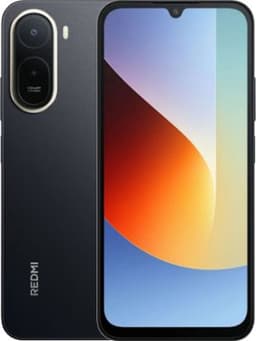
Xiaomi Redmi A7 Pro price in Pakistan
Xiaomi Redmi A7 Pro price in Pakistan is Rs. 35,999 (last updated 27 Oct 2026). See all Xiaomi phones.
The Redmi A7 Pro is a budget smartphone designed for buyers who prioritize a large display, long battery life and modern software over high-end performance. Its 6.9-inch HD+ IPS display with a 120Hz refresh rate provides plenty of screen space for watching videos, browsing and social media. The display also offers improved brightness, while its colourful interface and responsive touch make everyday use more comfortable. The 6,000mAh battery is a major advantage for users who want extended battery life, although the included 15W charger takes around two and a half hours to fully recharge it. Running Android 16 with HyperOS 3, the phone includes modern features such as Circle to Search and Google Gemini, alongside UFS 2.2 storage for more responsive everyday use. Its 13MP rear camera and 8MP selfie camera support 1080p video recording, and the rear camera can capture reasonably detailed photos with natural-looking colours in suitable lighting. A side-mounted fingerprint scanner, headphone jack and included protective case round out the practical features.
Who it's for
- Multimedia users who want a large screen for movies, dramas, browsing and social media.
- Buyers who prioritize battery endurance and can charge their phone overnight rather than needing rapid top-ups.
- Everyday users seeking Android 16, modern software features and sufficient performance for routine tasks and light gaming.
Where it falls short
The Unisoc T7250 processor is suitable for everyday tasks and light gaming, but it is not designed for demanding games or intensive multitasking. The HD+ resolution also limits sharpness on such a large display. Charging is relatively slow for a 6,000mAh battery, and the single speaker can sound distorted when volume boost is enabled. The 13MP rear camera is adequate for casual photography but should not be the main reason to buy this phone.
Worth comparing
The Redmi 15C is a useful alternative if camera quality and charging speed matter more than the A7 Pro’s latest software. It offers a 50MP main camera, a 6,000mAh battery and 33W charging, compared with the A7 Pro’s 13MP camera and 15W charging. The Samsung Galaxy A07 is worth considering for its Helio G99 processor, which provides more performance headroom for gaming and multitasking, along with a 50MP main camera and extended software support. The Infinix Smart 20 is another option to compare at a similar budget, but the available information does not establish enough reliable differences to make a detailed comparison. Choose the Redmi A7 Pro primarily for its large 120Hz display, battery capacity and Android 16 experience.
| Network | Technology | GSM / HSPA / LTE |
|---|
| Launch | Announced | 2026, February 27 |
|---|---|---|
| Status | Available. Released 2026, March 13 |
| Body | Dimensions | 171.6 x 79.5 x 8.2 mm |
|---|---|---|
| Weight | 208 g | |
| Build | ||
| SIM | Nano-SIM + Nano-SIM |
| Display | Type | IPS LCD, 120Hz, 800 nits (HBM) |
|---|---|---|
| Size | 6.9 inches (~84.3% screen-to-body ratio) | |
| Resolution | 720 x 1600 pixels, 20:9 ratio (~254 ppi density) | |
| Protection |
| Platform | OS | Android 16, HyperOS 3 |
|---|---|---|
| Chipset | Unisoc T7250 (12 nm) | |
| CPU | Octa-core (2x1.8 GHz Cortex-A75 & 6x1.6 GHz Cortex-A55) | |
| GPU | Mali-G57 MP1 |
| Memory | Internal | 64GB 4GB RAM, 128GB 4GB RAM |
|---|---|---|
| Card Slot | microSDXC (dedicated slot) |
| Main Camera | Modules | 13 MP, f/2.2, (wide), 1/3.06" Auxiliary lens |
|---|---|---|
| Features | LED flash, HDR | |
| Video | 1080p@30fps |
| Selfie Camera | Modules | 8 MP, f/2.0, (wide) |
|---|---|---|
| Features | HDR | |
| Video | 1080p@30fps |
| Sound | Loudspeaker | Yes |
|---|---|---|
| 3.5mm Jack | Yes |
| Comms | WLAN | Wi-Fi 802.11 a/b/g/n/ac, dual-band |
|---|---|---|
| Bluetooth | 5.2, A2DP, LE | |
| GPS | GPS, GALILEO, GLONASS, BDS, QZSS | |
| NFC | Yes (market/region dependent) | |
| Radio | FM radio | |
| USB | USB Type-C 2.0 |
| Features | Sensors | Fingerprint (side-mounted), accelerometer, compass |
|---|
| Battery | Type | 6000 mAh |
|---|---|---|
| Charging | 15W wired |
| Misc | Colors | Black, Mist Blue, Palm Green, Sunset Orange |
|---|---|---|
| Models | 25128RN17Y, 25128RN17A, 25128RN17L |
Xiaomi Redmi A7 Pro
Similar Price Range




Top Trending Mobiles
More from Xiaomi
See more


Other Xiaomi models
- Xiaomi Redmi A5In storesRs. 31,999
- Xiaomi Redmi A5 PlusRs. 33,999
- Xiaomi Redmi A6Rs. 27,499
- Xiaomi Redmi A7Rs. 31,999
- Xiaomi Redmi A7 ProThis phone
- Xiaomi Redmi A7 Pro 5GRs. 48,456
- Xiaomi Redmi K30 UltraRs. 64,999
- Xiaomi Redmi K40Rs. 54,999
- Xiaomi Redmi K40 ProRs. 84,999
Xiaomi Redmi A7 Pro: Buyer's Guide
Is It Value for Money?
At Rs. 35,999 for the 4GB + 64GB model, the Xiaomi Redmi A7 Pro is a fair buy for people who want a big screen and long battery life on a tight budget, and who mainly use WhatsApp, YouTube, social media and calls.
Main advantages
- Huge 6.9 inch 120Hz screen, rare at this price
- 6000 mAh battery that comfortably covers a full day
- Full HyperOS 3 on Android 16 instead of the stripped-down Go edition older A-series phones used
- Very fast side fingerprint sensor, headphone jack, FM radio and a dedicated microSD slot
Main compromises
- Only 4GB of real RAM; the "8GB" on the box includes 4GB of virtual memory taken from storage
- HD+ resolution, so text and video are less sharp than on a 1080p panel
- Single camera that struggles in low light, and video tops out at 1080p 30fps
- Slow 15W charging and plenty of preinstalled apps to remove
Compared with the alternatives: the Honor X5c Plus (Rs. 35,795) costs the same but has a smaller 90Hz screen and a smaller 5260 mAh battery, though its 50 MP camera and the older Helio G81 chip, which is well optimised by now, may suit some buyers. The Samsung Galaxy A07 (Rs. 35,599) costs a little more and gives you a 50 MP camera, faster 25W charging and Samsung's promise of up to six major Android upgrades, but with a smaller 5000 mAh battery and a 90Hz screen.
Verdict: a sensible choice for a media-focused first phone or a parent's phone. Buy the 64GB model and add a memory card if storage worries you; choose the Galaxy A07 instead if long software support matters most.
How Is the Display?
The Redmi A7 Pro has a 6.9 inch IPS LCD with 720 x 1600 (HD+) resolution and a 120Hz refresh rate, one of the biggest screens you can get at this price. Colours look pleasant and touch response is good, and the large size is genuinely useful for dramas, movies and YouTube.
Brightness: peak brightness is 800 nits in high-brightness mode, an improvement over the previous A-series model. That is decent for indoor use and acceptable outdoors, but it will not be as easy to read in harsh midday sun as brighter AMOLED phones.
Things to know:
- The phone ships set to 60Hz; switch it to 120Hz in Settings to get the smooth scrolling you paid for.
- At about 254 ppi, small text and fine details look softer than on a full HD screen.
- There is a U-shaped notch for the selfie camera and noticeable bezels, especially at the bottom.
- As an LCD, blacks look greyish in dark scenes compared with AMOLED, though the panel carries TÜV certifications for low blue light and flicker-free viewing.
How Is the Performance?
The phone runs on the Unisoc T7250 (12 nm) with 4GB RAM and UFS 2.2 storage, which is faster than the eMMC storage many budget phones still use. In day-to-day use such as messaging, browsing, social media and video, it feels snappy and smooth.
Gaming: PUBG Mobile unlocks graphics up to HD with a high frame rate option, settings that are better than what Helio G81 phones offer. Overall it handles light and casual games well at low to medium settings, but this is not a phone for serious gaming.
Stability: on paper the T7250 edges past the Helio G81, but in practice the G81 still feels slightly more stable because apps have had longer to be optimised for it. Unisoc chips have also had a reputation for slow fingerprint unlocks, but on this phone the side-mounted scanner is very fast, even quicker than face unlock.
Limitations: with only 4GB of physical RAM, keeping many apps open will cause reloads; the extra virtual RAM uses storage and is much slower than real memory. Long-session heating has not been tested, so we cannot comment on sustained performance.
How Is the Camera?
The rear has a single 13 MP main camera with an auxiliary lens and LED flash, and the front has an 8 MP selfie camera in the notch.
Daylight: for the price, results are good. Photos come out with fairly accurate colours and reasonable detail once processing finishes, which is a pleasant surprise for a Unisoc-powered phone, since weak cameras are usually their biggest complaint. The camera app is Xiaomi's familiar one, with photo, portrait, night and document modes.
Low light: the rear camera often makes night photos very dark. Night mode brightens them noticeably, but detail is hit and miss, and processing takes a few seconds because it all happens on the phone.
Selfies: the front camera is a strong point in this class, producing decent pictures in good light and even acceptable results indoors and in low light.
Video: both cameras record up to 1080p at 30fps, with no 4K or higher frame-rate option, so it suits video calls and casual clips rather than content creation.
Editing: the gallery's own editing tools are basic and largely non-AI, though a sky-replacement option is available, and Google Photos comes preinstalled for AI-based enhancement.
How Is the Battery?
The Redmi A7 Pro carries a 6000 mAh battery, the main reason to choose it, and gives a good battery backup in everyday use. Despite the large battery, the phone does not feel overly heavy in the hand.
Charging: charging is limited to 15W, and a matching 15W charger with a proper 3A cable comes in the box. A full charge from zero takes roughly two to two and a half hours, so it is best charged overnight rather than topped up quickly during the day.
Compared with rivals: the Honor X5c Plus also charges at 15W but with a smaller battery, while the Galaxy A07 charges faster at 25W but has a smaller 5000 mAh cell. There is no wireless charging, which is normal at this price.
No standardised battery test is available yet, so exact screen-on time cannot be confirmed.
How Is the Software?
The phone runs HyperOS 3 on Android 16 out of the box. This matters because earlier Redmi A-series phones came with Android Go, a lighter version with fewer features. Here you get the full HyperOS experience with redesigned colourful icons and a modern lock screen.
Useful features:
- Circle to Search and Gemini for quick searches and AI help
- Google Photos preinstalled for AI photo enhancement
- A 200% volume boost mode for the single bottom speaker, which is already loud; at 200% loud or already-boosted music can distort, so keep it at 100% for those
Bloatware: there is a lot of preinstalled third-party software, and apps like these usually show ads. The good news is that almost all of it can be uninstalled, and doing so right after setup frees up storage and stops background activity.
Updates: we could not confirm Xiaomi's official update commitment for the Pakistani 4G model, so check before buying if long-term support matters to you. By comparison, Samsung promises up to six major Android upgrades for the Galaxy A07.
Xiaomi Redmi A7 Pro: Questions Buyers Ask
Is the Redmi A7 Pro a good phone to buy?
Yes, if you want a large 6.9 inch 120Hz screen and a 6000 mAh battery for media, calls and social apps. It is smooth in daily use and has a fast fingerprint sensor, but it only has 4GB of real RAM, 15W charging and a weak low-light camera.
What is the price of the Redmi A7 Pro in Pakistan?
The 4GB + 64GB Redmi A7 Pro costs Rs. 35,999 in our latest listing. A 4GB + 128GB variant is also sold in Pakistan.
Is the Redmi A7 Pro slow?
No, not for everyday use. Messaging, browsing, social media and video feel snappy thanks to the Unisoc T7250 and UFS 2.2 storage. It handles casual games at low to medium settings, but heavy multitasking is limited by its 4GB of real RAM.
Which colours does the Redmi A7 Pro come in?
The Redmi A7 Pro comes in four colours: Black, Mist Blue, Palm Green and Sunset Orange. The best-looking one is a personal choice, but every colour has the same specifications and price.
