


Samsung Galaxy S26 Ultra price in Pakistan
Samsung Galaxy S26 Ultra price in Pakistan is Rs. 387,495 (last updated 27 Oct 2026). See all Samsung phones.
The Galaxy S26 Ultra focuses on being an all-round flagship, combining strong performance, versatile cameras, long software support, and practical productivity features. Its standout addition is Privacy Display, which restricts off-angle viewing and can be enabled for selected apps or notifications. However, this comes with a trade-off: activating it reduces effective screen resolution and peak brightness, while the display’s anti-reflective performance is less effective than on its predecessor. The Snapdragon 8 Elite Gen 5 for Galaxy handles demanding games and multitasking smoothly, and improved efficiency helps deliver slightly better battery life despite an unchanged battery capacity. Camera improvements include wider apertures on the main and 5x telephoto cameras, while Horizon Lock stabilization and APV log recording add flexibility for video creators. The built-in S Pen, customizable One UI software, and long update commitment make it useful for productivity as well as everyday use.
Who it's for
- Privacy-conscious users: Privacy Display can limit shoulder-surfing and hide selected notifications in public places.
- Productivity-focused users: The built-in S Pen, customizable software, and multitasking performance suit note-taking, work, and everyday organization.
- Mobile photographers and video creators: Versatile zoom cameras, improved light gathering, and Horizon Lock stabilization support photography and smoother action footage.
Where it falls short
The Privacy Display compromises screen clarity, reducing effective resolution and brightness when enabled, and the anti-reflective coating is less effective than on the previous generation. The camera system remains largely similar to its predecessor, and close-up focusing with the main camera has become less capable. The phone also rocks noticeably on a table because of its camera plateau, lacks built-in Qi2 magnets, and retains the same battery capacity despite only modest improvements in endurance. Several AI tools feel inconsistent or unnecessary, while the high price makes these hardware compromises harder to overlook.
Worth comparing
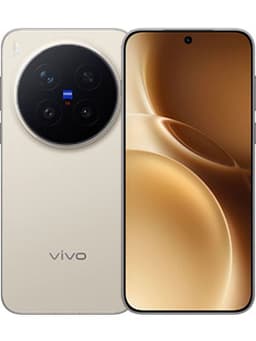
The iPhone 18 Pro Max offers a different approach, with Apple's A20 Pro chip, advanced video features, and iOS integration. The Google Pixel 11 Pro XL combines a large high-resolution display with Google's camera processing and Gemini integration. The vivo X300 Ultra is another option to investigate if camera hardware and photography are your main priorities. The Galaxy S26 Ultra stands out for its built-in S Pen, customizable Android experience, and Privacy Display, but buyers should weigh those benefits against its display compromises and relatively conservative battery and camera hardware changes.
| Network | Technology | GSM / CDMA / HSPA / EVDO / LTE / 5G |
|---|
| Launch | Announced | 2026, February 25 |
|---|---|---|
| Status | Available. Released 2026, March 06 |
| Body | Dimensions | 163.6 x 78.1 x 7.9 mm |
|---|---|---|
| Weight | 214 g | |
| Build | Glass front (Corning Gorilla Armor 2), glass back (Gorilla Glass Victus 2), aluminum frame | |
| SIM | · Nano-SIM + Nano-SIM + eSIM + eSIM (max 2 at a time) - INT · Nano-SIM + eSIM + eSIM (max 2 at a time) - USA · Nano-SIM + Nano-SIM - CN |
| Display | Type | Dynamic LTPO AMOLED 2X, 120Hz, HDR10+, 2600 nits (peak) |
|---|---|---|
| Size | 6.9 inches (~90.7% screen-to-body ratio) | |
| Resolution | 1440 x 3120 pixels, 19.5:9 ratio (~500 ppi density) | |
| Protection | Corning Gorilla Armor 2 |
| Platform | OS | Android 16, upgradable to Android 17, up to 7 major OS updates, One UI 9 |
|---|---|---|
| Chipset | Qualcomm SM8850-1-AD Snapdragon 8 Elite Gen 5 (3 nm) | |
| CPU | Octa-core (2x4.74 GHz Oryon V3 Phoenix L + 6x3.62 GHz Oryon V3 Phoenix M) | |
| GPU | Adreno 840 (1.3GHz) |
| Memory | Internal | 256GB 12GB RAM, 512GB 12GB RAM, 1TB 16GB RAM |
|---|---|---|
| Card Slot | No |
| Main Camera | Modules | 200 MP, f/1.4, 23mm (wide), 1/1.3", 0.6µm, multi-directional PDAF, OIS 10 MP, f/2.4, 67mm (telephoto), 1/3.94", 1.0µm, PDAF, OIS, 3x optical zoom 50 MP, f/2.9, 111mm (periscope telephoto), 1/2.52", 0.7µm, PDAF, OIS, 5x optical zoom 50 MP, f/1.9, 120˚ (ultrawide), 1/2.5", 0.7µm, dual pixel PDAF, Super Steady video |
|---|---|---|
| Features | Laser AF, Best Face, Horizon Lock, LED flash, auto-HDR, panorama | |
| Video | 8K@24/30fps, 4K@30/60/120fps, 1080p@30/60/120/240fps, 10-bit HDR, HDR10+, stereo sound rec., gyro-EIS |
| Selfie Camera | Modules | 12 MP, f/2.2, 23mm (wide), 1/3.2", 1.12µm, dual pixel PDAF |
|---|---|---|
| Features | HDR, HDR10+ | |
| Video | 4K@30/60fps, 1080p@30fps |
| Sound | Loudspeaker | Yes, with stereo speakers |
|---|---|---|
| 3.5mm Jack | No |
| Comms | WLAN | Wi-Fi 802.11 a/b/g/n/ac/6e/7, tri-band, Wi-Fi Direct |
|---|---|---|
| Bluetooth | 6.0, A2DP, LE | |
| GPS | GPS, GLONASS, BDS, GALILEO, QZSS | |
| NFC | Yes | |
| Radio | No | |
| USB | USB Type-C 3.2, DisplayPort 1.2, OTG |
| Features | Sensors | Fingerprint (under display, ultrasonic), accelerometer, gyro, proximity, compass, barometer |
|---|
| Battery | Type | Li-Ion 5000 mAh |
|---|---|---|
| Charging | 60W wired, PD3.0, 75% in 30 min 25W wireless (Qi2.2) 4.5W reverse wireless |
| Misc | Colors | Cobalt Violet, Sky Blue, Black, White, Silver Shadow, Pink Gold |
|---|---|---|
| Models | SM-S948B, SM-S948B/DS, SM-S948U, SM-S948U1, SM-S948W, SM-S948N, SM-S9480, SM-S948E, SM-S948E/DS |
Samsung Galaxy S26 Ultra
Similar Price Range



Top Trending Mobiles
More from Samsung
See more

Other Samsung models
- Samsung Galaxy S26 FEIn storesRs. 231,995
- Samsung Galaxy S26 NoteRs. 463,999
- Samsung Galaxy S26 PlusIn storesRs. 330,495
- Samsung Galaxy S26 ProRs. 393,999
- Samsung Galaxy S26 UltraThis phone
- Samsung Galaxy S27Rs. 344,999
- Samsung Galaxy S27 PlusRs. 383,999
- Samsung Galaxy S27 ProRs. 334,999
- Samsung Galaxy S27 UltraRs. 454,999
Samsung Galaxy S26 Ultra: Buyer's Guide
Is It Value for Money?
Our database lists the Samsung Galaxy S26 Ultra 12GB + 256GB at Rs. 387,495. That puts it well below the Apple iPhone 17 Pro Max (Rs. 504,999) and the Google Pixel 11 Pro XL (Rs. 469,999).
What you get for the money:
- Privacy Display, a hardware feature no other phone currently offers
- The S Pen stored inside the body
- Fast, cool performance and very stable software with long update support
- Good, dependable battery life with 60W charging
What you give up:
- Cameras that trail the newest Chinese camera flagships in fine detail, 3x zoom and macro
- A battery that did not grow in size, so heavy users can still run low by evening
- Weaker anti-glare treatment than the S25 Ultra
Verdict: a strong buy for people who want one safe, well-rounded flagship with a stylus. Owners of an S24 Ultra or S25 Ultra get little reason to upgrade, and anyone who wants the very best camera or the biggest battery should look elsewhere.
How Is the Display?
The S26 Ultra has a 6.9-inch Dynamic LTPO AMOLED 2X panel at 1440 x 3120 pixels with a 120Hz refresh rate and up to 2600 nits peak brightness. Note that it ships set to 1080p to save battery, so switch to full resolution in settings if you want the sharpest text.
In daily use the colours are pleasing and the whole experience, with responsive touch, good haptics and clear stereo speakers, feels polished. The Extra Dim option is handy for night-time scrolling. Gaming and video look good, though this is still an 8-bit panel imitating 10-bit colour, and there is no Dolby Vision.
The new Privacy Display can black out the whole screen, single apps or notification pop-ups to people beside you. The trade-off is real:
- Half the pixels switch off when it is on, so fine text looks blockier
- At normal settings the screen stays readable from a moderate angle; only the strongest mode truly blocks it
- Viewing angles are slightly worse all the time, the anti-reflective coating is weaker than on the S25 Ultra and the panel can look a bit dimmer
It remains a very good screen, just not the best-looking one for pixel peepers.
How Is the Performance?
It is powered by a Galaxy-tuned, higher-clocked Snapdragon 8 Elite Gen 5. In practice apps open quickly, animations stay smooth, switching between apps feels instant and heavy multitasking is handled without fuss. Long-term use shows it as one of the most stable, fastest-feeling phones around.
Heat is well controlled. Even in summer with a case on, it only gets warm during heavy games or charging, and it stays cooler than other Snapdragon flagships thanks to a redesigned vapour chamber.
Gaming is strong: PUBG Mobile runs at maximum settings, while Genshin Impact offers High rather than its highest preset. A side-by-side video export even finished ahead of the iPhone 18 Pro Max.
Limitations:
- In single-core tests Apple's newest chip is clearly faster, though everyday use shows little real difference
- Signal strength was criticised in one long test, with zero bars in places where newer iPhones held on
How Is the Camera?
The S26 Ultra keeps a 200 MP f/1.4 main camera, a 10 MP 3x telephoto, a 50 MP 5x periscope, a 50 MP ultrawide and a 12 MP selfie camera. The brighter main and 5x lenses help in dim light and give softer background blur up close.
Daylight: photos are bright, well exposed and have excellent colour and white balance, with shadows kept slightly deep for a natural look. Zoom in, though, and the main sensor resolves less detail than newer Chinese flagships, and faces can look oversharpened.
Low light: glare control is much improved, and bright light sources stay sharp. However, auto night mode sometimes oversharpens, and Apple's latest Pro Max produces more natural, cinematic night shots.
Zoom and portraits: the 5x lens is good, with nice skin tones and subject separation, and beats a 4x iPhone zoom in daylight. The 3x lens is weak, giving grainy, washed-out portraits. Macro relies on the ultrawide, and the main camera no longer focuses as close.
Video: Horizon Lock keeps footage level and very stable at QHD up to 60 fps, 8K recording is available and the new APV log option works well. Lens switching still shows a small jerk, and people in the frame can look darker than on an iPhone.
Selfies are decent but not very wide, with tones that can look a little washed out unless you change the style setting.
How Is the Battery?
The battery is still 5000 mAh, the same size as before. Real-world results differ, so it depends on how you use it:
- In one long rundown it lasted over 14 hours, beating the S25 Ultra, an iPhone and a top Xiaomi, while staying among the coolest phones in thermal testing
- Another test found it slightly better than last year, though standby drain is not class-leading
- A three-month heavy user saw screen-on time of roughly 7 to 8 hours at best and was often low on charge by evening, and the phone drops quickly once it falls below about 5%
Charging is now 60W wired, which our database rates at 75% in 30 minutes. It also supports 25W wireless (Qi2.2) and 4.5W reverse wireless, but there are no built-in magnets, so magnetic accessories need a case. There is no silicon-carbon battery, which is why some rival phones with larger cells last longer.
How Is the Software?
The S26 Ultra runs Android 16 with One UI, and our database says it is upgradable to Android 17 and One UI 9 with up to 7 major OS updates, the longest commitment in its class.
One UI is now very stable and deeply customisable. Small touches stand out: suggested apps in the multitasking view, tidy widgets and notifications, and Good Lock for changing almost anything, including S Pen pointers and button shortcuts. Quick Share also sends files to other brands, including iPhones.
Galaxy AI is large but mixed:
- Useful: call screening for unknown numbers, Audio Eraser for removing background noise, and message translation
- Hit and miss: Now Nudge and the new Bixby often misunderstood requests, generated images come out in a small square size, and AI edits reduce photo resolution
- The Create editor needs an internet connection, and Galaxy AI features work fully in Pakistan
Many of these extras are fun at first but easy to ignore. There is also no quick AI hub for saved screenshots and voice notes like some OnePlus and Nothing phones offer.
Samsung Galaxy S26 Ultra: Questions Buyers Ask
Does turning on Privacy Display save battery since half the pixels are off?
Possibly, but don't expect a meaningful battery saving. It doesn't simply turn off half the pixels; it changes how the display directs light using its pixel architecture. Samsung hasn't published a clear battery-saving figure for this feature.
Does Privacy Display work in landscape mode as well as portrait?
Yes. Because the effect comes from narrow-angle pixels built into the panel, it limits off-axis viewing both side to side and top to bottom, so it works whichever way you hold the phone. It can also be set to cover the whole screen, chosen apps or only notifications.
Is Privacy Display only on the S26 Ultra? I cannot find it on my S25 Ultra.
Yes, it is a hardware feature of the S26 Ultra's display, which uses two types of pixels, so it cannot be added to the S25 Ultra with a software update. At launch no other phone on the market offered it, and a double tap can be set to switch it on.
Does the S26 Ultra have the green line display problem?
Yes, isolated cases have been reported. Reports appeared in 2026, but there isn't enough evidence to establish a widespread defect or determine its failure rate.
Are Samsung's AI image editing features done on the phone or in the cloud?
The main generative edits, such as the Create tool that changes clothes or car colours, run online, so they need an internet connection. Galaxy AI features work fully in Pakistan, but each AI edit lowers the photo's resolution.
Does the S26 Ultra's S Pen have Bluetooth?
No. The S Pen has no Bluetooth, so remote tricks such as using its button as a camera shutter are gone. The upside is that it never needs charging and is always ready to write, and you can still customise its pointer and button shortcuts.
Which is better, the S25 Ultra or the S26 Ultra?
The S26 Ultra is better overall but not by much. It adds Privacy Display, slightly better battery life, 60W charging, a newer cooler chip and brighter main and 5x lenses, but its anti-glare coating is weaker, the screen looks a little dimmer and the frame is aluminium instead of titanium.
How long does the S26 Ultra's battery last?
It depends on use. One long rundown passed 14 hours and beat the S25 Ultra and an iPhone, while a heavy user over three months saw screen-on time of roughly 7 to 8 hours. The 5000 mAh cell has not grown, but efficiency improved.