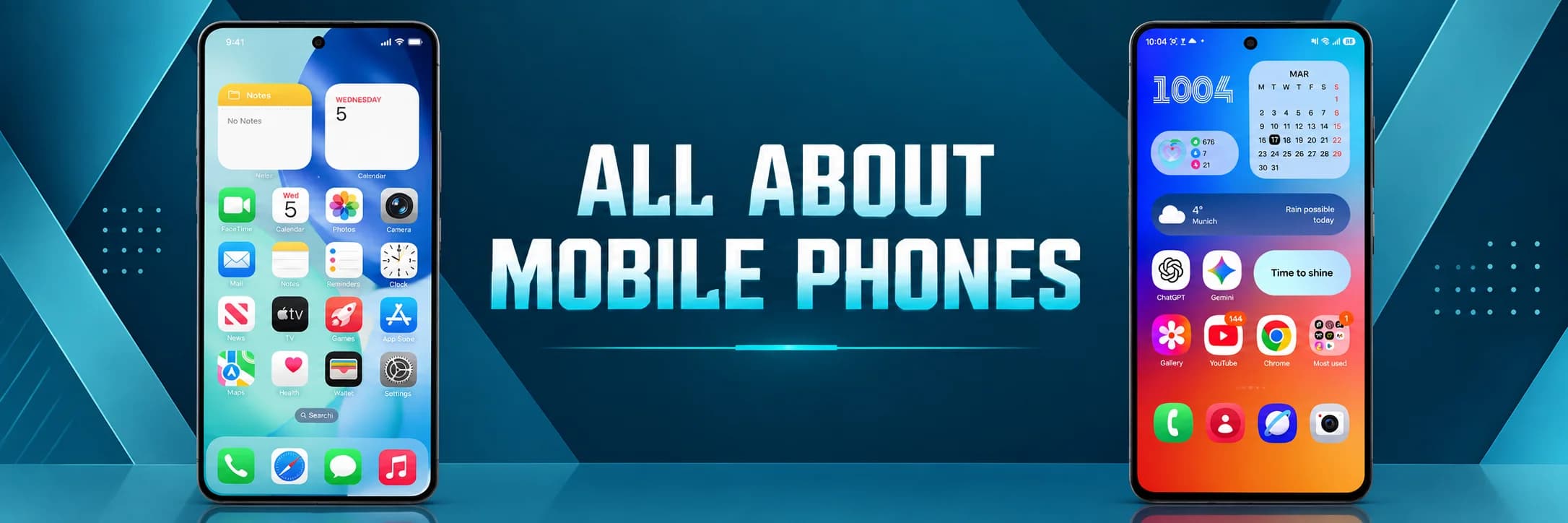

Apple iPhone 16 Pro price in Pakistan
Apple iPhone 16 Pro price in Pakistan is Rs. 396,999 (last updated 15 Oct 2026). See all Apple phones.
The iPhone 16 Pro is less about a dramatic redesign and more about making an already capable flagship significantly better for people who care about cameras, video and display quality. Its 6.3-inch display, faster sensor, 48MP ultrawide and 4K 120fps video make it a more meaningful upgrade than the regular iPhone 16 for creators, while the A18 Pro and larger battery keep it firmly in flagship territory. However, the upgrade case is much weaker if you already own a recent iPhone, because the overall experience remains familiar and Apple Intelligence was not fully available at launch.
Who it's for
Content creators who want 4K 120fps video and strong audio recording, making the phone practical as a primary filming device.
Mobile photographers who value a 48MP ultrawide and 5x telephoto, especially for detailed ultrawide, macro and zoom shots.
Users upgrading from an older iPhone who want a modern Pro display and substantially stronger camera capabilities without changing the familiar iPhone experience.
Where it falls short
The biggest compromises are that Camera Control is surprisingly finicky, while Apple's promised AI features were not fully ready at launch. The phone also retains lens flare at night, and 4K 120fps can consume storage extremely quickly. For existing iPhone 13-or-newer owners, the improvements may simply not justify upgrading.
Worth comparing
The Samsung Galaxy A26 is aimed at a much lower tier, but its 120Hz Super AMOLED display and IP67 protection make it attractive for buyers prioritizing smooth everyday use and durability over flagship cameras and video. The Pixel 11 Pro is the more direct flagship alternative, offering a 1–120Hz LTPO OLED display, 50MP main camera, 48MP ultrawide and 48MP 5x telephoto, plus Tensor G6 and strong AI integration. That makes the Pixel more compelling if display smoothness and Google's computational photography/AI features matter more, while the iPhone 16 Pro remains particularly compelling for video creation and Apple's camera workflow.
| Network | Technology | GSM / CDMA / HSPA / EVDO / LTE / 5G |
|---|
| Launch | Announced | 2024, September 09 |
|---|---|---|
| Status | Available. Released 2024, September 20 |
| Body | Dimensions | 149.6 x 71.5 x 8.3 mm |
|---|---|---|
| Weight | 199 g | |
| Build | Glass front (Ceramic Shield), glass back, titanium frame (grade 5) | |
| SIM | · Nano-SIM + eSIM + eSIM (max 2 at a time; International) · eSIM + eSIM (8 or more, max 2 at a time; USA) · Nano-SIM + Nano-SIM (China) |
| Display | Type | LTPO Super Retina XDR OLED, 120Hz, HDR10, Dolby Vision, 1000 nits (typ), 2000 nits (HBM) |
|---|---|---|
| Size | 6.3 inches (~90.1% screen-to-body ratio) | |
| Resolution | 1206 x 2622 pixels, 19.5:9 ratio (~460 ppi density) | |
| Protection | Ceramic Shield glass (2024 gen), Mohs level 4 |
| Platform | OS | iOS 18, upgradable to iOS 26.3 |
|---|---|---|
| Chipset | Apple A18 Pro (3 nm) | |
| CPU | Hexa-core (2x4.05 GHz + 4x2.42 GHz) | |
| GPU | Apple GPU (6-core graphics) |
| Memory | Internal | 128GB 8GB RAM, 256GB 8GB RAM, 512GB 8GB RAM, 1TB 8GB RAM |
|---|---|---|
| Card Slot | No |
| Main Camera | Modules | 48 MP, f/1.8, 24mm (wide), 1/1.28", 1.22µm, dual pixel PDAF, sensor-shift OIS 12 MP, f/2.8, 120mm (periscope telephoto), 1/3.06", 1.12µm, dual pixel PDAF, 3D sensor‑shift OIS, 5x optical zoom 48 MP, f/2.2, 13mm (ultrawide), 1/2.55", 0.7µm, PDAF TOF 3D LiDAR scanner (depth) |
|---|---|---|
| Features | Dual-LED dual-tone flash, HDR (photo/panorama) | |
| Video | 4K@24/25/30/60/100/120fps, 1080p@25/30/60/120/240fps, 10-bit HDR, Dolby Vision HDR (up to 60fps), ProRes, 3D (spatial) video/audio, stereo sound rec. |
| Selfie Camera | Modules | 12 MP, f/1.9, 23mm (wide), 1/3.6", 1.0µm, PDAF, OIS SL 3D, (depth/biometrics sensor) |
|---|---|---|
| Features | HDR, Dolby Vision HDR, 3D (spatial) audio, stereo sound rec. | |
| Video | 4K@24/25/30/60fps, 1080p@25/30/60/120fps, gyro-EIS |
| Sound | Loudspeaker | Yes, with stereo speakers |
|---|---|---|
| 3.5mm Jack | No |
| Comms | WLAN | Wi-Fi 802.11 a/b/g/n/ac/6e/7, tri-band, hotspot |
|---|---|---|
| Bluetooth | 5.3, A2DP, LE | |
| GPS | GPS (L1+L5), GLONASS, GALILEO, BDS, QZSS, NavIC | |
| NFC | Yes | |
| Radio | No | |
| USB | USB Type-C 3.2 Gen 2, DisplayPort |
| Features | Sensors | Face ID, accelerometer, gyro, proximity, compass, barometer |
|---|
| Battery | Type | Li-Ion 3582 mAh |
|---|---|---|
| Charging | Wired, PD2.0, 50% in 30 min 25W wireless MagSafe/Qi2, 50% in 30 min (15W - China) 4.5W reverse wired |
| Misc | Colors | Black Titanium, White Titanium, Natural Titanium, Desert Titanium |
|---|---|---|
| Models | A3293, A3083, A3292, A3294, iPhone17,1 |
Similar Price Range




Top Trending Mobiles
More from Apple
See more




Other Apple models
- Apple iPhone 15 UltraRs. 709,999
- Apple iPhone 16In storesRs. 309,899
- Apple iPhone 16 PlusRs. 353,999
- Apple iPhone 16 Plus SERs. 442,499
- Apple iPhone 16 ProThis phone
- Apple iPhone 16 Pro MaxRs. 473,499
- Apple iPhone 16 SERs. 389,999
- Apple iPhone 16 UltraRs. 733,990
- Apple iPhone 16eRs. 263,999
Apple iPhone 16 Pro: Buyer's Guide
Is It Value for Money?
At Rs. 396,999, the Apple iPhone 16 Pro is a premium purchase, and its value depends on what you own now. It is a small step over the iPhone 15 Pro, so anyone on an iPhone 13 or newer has little reason to upgrade. Owners of an iPhone 12 or older will notice a much bigger jump.
Main advantages:
- Best-in-class video, now with 4K 120 fps
- A bigger, brighter display with thinner bezels
- A 48 MP ultrawide and a 5x telephoto
- Camera Control and tone settings for more photo control
Main compromises: Camera Control is finicky, battery life is about the same as last year, wired charging is slow, and the base 128 GB fills fast with high-frame-rate video.
Verdict: worth it for video creators, photographers and long-time iPhone users on older models. If you mostly want battery life and value, the Google Pixel 11 or Samsung Galaxy S26 cost much less.
How Is the Display?
The iPhone 16 Pro has a 6.3-inch LTPO OLED display at 1206 x 2622 pixels with a 120Hz refresh rate, so scrolling and animations stay smooth. Our database lists 1000 nits typical and 2000 nits in high-brightness mode, with HDR10 and Dolby Vision support for rich video.
The screen is slightly larger than last year's Pro, and the bezels are thinner and even all the way around, which makes the phone feel more modern. Displays and cameras are the two places where the Pro clearly beats the regular iPhone 16, which stays at 60Hz.
Limitation: one side-by-side test found the Pro's screen consistently a little dimmer than the 15 Pro Max in a side-by-side test, despite the same quoted brightness.
How Is the Performance?
The Apple A18 Pro is built on a 3 nm process and has a 6-core GPU. It benchmarks roughly 10 to 30% faster than last year's chip depending on the task, but in everyday use the difference is hard to notice because the previous Pro was already very fast.
The extra power matters more for demanding tasks and future-proofing. All iPhone 16 models now have 8 GB of RAM, which helps apps stay in memory. A test of console-style Assassin's Creed on the base iPhone 16 held a steady 30 frames per second with settings cut down from the console version; the Pro was not tested the same way.
Heat: none of the sources tested sustained thermals for the Pro, and the phone still uses a graphite sheet instead of a vapour chamber. We cannot say how it behaves in long gaming sessions.
How Is the Camera?
The iPhone 16 Pro camera is a significant step up from the regular iPhone 16. The 48 MP main sensor is one of the best to shoot with, and freezes motion well with very fast shutter speeds, even from a moving car. Shallow depth of field on close subjects is on par with big-sensor Android flagships.
- Ultrawide: now 48 MP, with clear extra detail in daylight and better macro shots. Night shots do not improve much and may show vignetting.
- Telephoto: a 12 MP 5x lens that is useful and resolves more detail beyond 5x. The 3x to 4x range uses digital zoom.
- Photo control: Camera Control and tone settings let you reduce the bright, flat iPhone look. Lowering tone gives more natural shadows.
Video is the highlight: 4K 120 fps looks great, and the four-microphone array with the audio mix feature can isolate voices, though storage use is heavy. Weakness: lens flare from point lights at night has not been fixed.
How Is the Battery?
The iPhone 16 Pro has a 3582 mAh battery, about 9% larger than last year's Pro. In real use, battery life is about the same as last year: it lasts a whole day of heavy use, but not noticeably longer. Independent lab tests found it outlasting the Galaxy S24 and Pixel 9 in browsing tests.
Charging: our database lists 50% in 30 minutes over a wire, and faster wired charging proved useful in short bursts. There is no fast charger in the box, so you need to buy one. MagSafe and Qi2 wireless charging reach up to 25W with Apple's newer charger, but that needs a 30W adapter as well.
Compromise: reports differ on how fast wired charging really is, and Apple's wired speed is slow next to many Android rivals.
How Is the Software?
The iPhone 16 Pro runs iOS 18, and our database lists it as upgradable to iOS 26.3. Apple does not publish a fixed number of update years for iPhones, so treat long-term support as a track record, not a promise.
Useful features:
- Customisable home and lock screens, including coloured icons and lock screen shortcuts
- An Action Button you can map to the camera, a task app or other shortcuts
- Pause while recording video, plus music that keeps playing when you start recording
Apple Intelligence was not available when the phone launched and arrived later in software updates. Some features proved useful, such as email summaries, while Siri and photo cleanup felt limited. Availability can vary by language and region, so check before buying. Pakistani buyers should also check PTA approval, especially for imported units.
Apple iPhone 16 Pro: Questions Buyers Ask
Should I buy the iPhone 16 or the iPhone 16 Pro?
Buy the iPhone 16 Pro if you care about cameras and the display. It adds a 120Hz screen, a 48 MP ultrawide, a 5x telephoto and 4K 120 fps video. The regular iPhone 16 stays at 60Hz and has weaker cameras, but costs much less.
Is the iPhone 16 Pro worth upgrading to from an iPhone 11 or 12?
Yes, that is the group it suits best. Owners of an iPhone 12 or older will notice the faster chip, better cameras, larger screen and new controls. Owners of an iPhone 13 or newer will find the changes small and may not need to upgrade.
Does the iPhone 16 Pro have Apple Intelligence?
Yes, but not from day one. It was missing at launch and arrived later through software updates. Apple lists iPhone 16 models and the iPhone 15 Pro as supported, though feature availability varies by language and region, so check yours before buying.
What is the difference between the A18 and the A18 Pro chip?
The A18 Pro has a 6-core GPU, while the regular A18 has a 5-core GPU, and Apple claims better ray tracing. In everyday use, the difference is hard to notice. It matters more for demanding games and apps.
Is the iPhone 16 Pro better than the iPhone 15 Pro Max?
It adds a 48 MP ultrawide, 4K 120 fps video, Camera Control, a faster chip and thinner bezels. Both phones have a 5x telephoto, and battery life is similar to last year. Choose the 16 Pro for the newer features.
How can I stop 4K 120 fps video from filling the storage?
Record at a lower frame rate. A 1 minute 25 second clip at 120 fps used almost twice the storage of the same clip at 60 fps, close to a gigabyte. Choosing 256 GB or more helps if you shoot a lot.
