
Apple iPhone Air price in Pakistan
Apple iPhone Air price in Pakistan is Rs. 432,699 (last updated 27 Oct 2026). See all Apple phones.
The iPhone Air at Rs. 432,699 is chosen for how it feels, not what it does. At 5.6 mm thick and 165 g it is strikingly light, yet the titanium frame and Ceramic Shield 2 glass make it one of the toughest phones around, shrugging off bend tests. The 6.5-inch 120Hz OLED and A19 Pro chip feel premium, but Apple trimmed the battery, speakers and cameras to reach this shape.
Who it's for
- Light users who value comfort: calls, messaging and social apps run smoothly, and the low weight suits one-handed use.
- People who mostly use the main camera: the 48 MP Fusion camera matches the base iPhone 17, and the new selfie camera takes wide landscape selfies without turning the phone.
- Buyers who skip cases: the frame resists dents, the glass resists scratches, and it is IP68 rated.
Where it falls short
Battery is the biggest compromise: a heavy day can end near 15% in Low Power Mode after about four hours of screen time, and charging is slower than other iPhone 17 models. There is no ultrawide or telephoto, the single earpiece speaker sounds thin, the port is USB 2.0, and the chip throttles under sustained load.
Worth comparing
The Samsung Galaxy S26 at Rs. 256,999 costs noticeably less and adds ultrawide and telephoto cameras, a 4300 mAh battery and up to seven OS updates. 91mobiles still calls its battery life average and its 25W charging slow, and Digital Trends puts its Exynos 2600 behind Qualcomm's best. Choose the S26 for versatility, the Air for thinness.
| Network | Technology | GSM / CDMA / HSPA / EVDO / LTE / 5G |
|---|
| Launch | Announced | 2025, September 09 |
|---|---|---|
| Status | Available. Released 2025, September 19 |
| Body | Dimensions | 156.2 x 74.7 x 5.6 mm |
|---|---|---|
| Weight | 165 g | |
| Build | Glass front (Ceramic Shield 2), titanium frame (grade 5), glass back (Ceramic Shield) | |
| SIM | eSIM + eSIM (8 or more, max 2 at a time) |
| Display | Type | LTPO Super Retina XDR OLED, 120Hz, HDR10, Dolby Vision, 1000 nits (typ), 1600 nits (HBM), 3000 nits (peak) |
|---|---|---|
| Size | 6.5 inches (~89.9% screen-to-body ratio) | |
| Resolution | 1260 x 2736 pixels, 19.5:9 ratio (~460 ppi density) | |
| Protection | Ceramic Shield 2, Mohs level 5 |
| Platform | OS | iOS 26, upgradable to iOS 26.3 |
|---|---|---|
| Chipset | Apple A19 Pro (3 nm) | |
| CPU | Hexa-core (2x4.26 GHz + 4xX.X GHz) | |
| GPU | Apple GPU (5-core graphics) |
| Memory | Internal | 256GB 12GB RAM, 512GB 12GB RAM, 1TB 12GB RAM |
|---|---|---|
| Card Slot | No |
| Main Camera | Modules | 48 MP, f/1.6, 26mm (wide), 1/1.56", 1.0µm, dual pixel PDAF, sensor-shift OIS |
|---|---|---|
| Features | Dual-LED dual-tone flash, HDR (photo/panorama) | |
| Video | 4K@24/25/30/60fps, 1080p@25/30/60/120/240fps, HDR, Dolby Vision HDR (up to 60fps), stereo sound rec. |
| Selfie Camera | Modules | 18 MP multi-aspect, f/1.9, 20mm (ultrawide), PDAF SL 3D, (depth/biometrics sensor) |
|---|---|---|
| Features | HDR, Dolby Vision HDR, 3D (spatial) audio, stereo sound rec. | |
| Video | 4K@24/25/30/60fps, 1080p@25/30/60/120fps, gyro-EIS |
| Sound | Loudspeaker | Yes |
|---|---|---|
| 3.5mm Jack | No |
| Comms | WLAN | Wi-Fi 802.11 a/b/g/n/ac/6e/7, tri-band, hotspot |
|---|---|---|
| Bluetooth | 6.0, A2DP, LE | |
| GPS | GPS, GALILEO, GLONASS, QZSS, BDS, NavIC | |
| NFC | Yes | |
| Radio | No | |
| USB | USB Type-C 2.0 |
| Features | Sensors | Face ID, accelerometer, gyro, proximity, compass, barometer |
|---|
| Battery | Type | Li-Ion 3149 mAh |
|---|---|---|
| Charging | Wired, PD2.0, 50% in 30 min 20 wireless MagSafe/Qi2, 50% in 30 min (15W - China) 4.5W reverse wired |
| Misc | Colors | Space Black, Cloud White, Light Gold, Sky Blue |
|---|---|---|
| Models | iPhone18,4, A3517, A3260, A3518, A3516 |
Similar Price Range




Top Trending Mobiles
More from Apple
See more



Other Apple models
- Apple iPhone 19eRs. 229,999
- Apple iPhone 20Rs. 461,499
- Apple iPhone 20 ProRs. 593,499
- Apple iPhone 20 Pro MaxRs. 638,599
- Apple iPhone AirThis phone
- Apple iPhone Air 2Rs. 454,699
- Apple iPhone DuoRs. 724,999
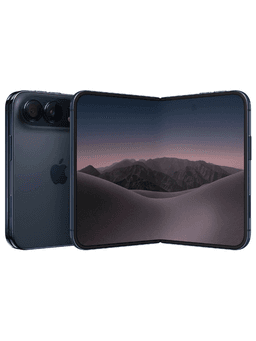
- Apple iPhone FlipRs. 281,999
- Apple iPhone FoldRs. 563,999
Apple iPhone Air: Buyer's Guide
Is It Value for Money?
At Rs. 432,699 for 256GB, the iPhone Air is not a value pick. You pay a premium for its thin, light titanium design, and give up features that cheaper iPhones and Android flagships include.
Main advantages:
- Extremely thin and light, yet very durable
- Large, bright 6.5-inch 120Hz display
- Excellent main camera and a clever new selfie camera
Main disadvantages:
- Weak battery life for heavy users and slower charging
- Single rear camera with no ultrawide or zoom lens
- One earpiece speaker, USB 2.0 and eSIM only
- Gets warm and slows down under sustained load
The Samsung Galaxy S26 (Rs. 256,999) is cheaper and more versatile, and the base iPhone 17 is the better value for most people. In Pakistan, a PTA-approved unit is the safer buy, because registering an imported iPhone yourself costs more in tax. Verdict: buy the Air only if its design matters more to you than battery life and cameras.
How Is the Display?
The iPhone Air has a 6.5-inch LTPO Super Retina XDR OLED with 1260 x 2736 resolution and a 120Hz refresh rate. Apple rates it at 1000 nits typical, 1600 nits for HDR and up to 3000 nits peak, with HDR10 and Dolby Vision support.
In everyday use it is big, bright and sharp, and scrolling feels smooth. The adaptive refresh rate can drop very low on still content, which helps the small battery.
Ceramic Shield 2 covers the front and back and proved more scratch-resistant than earlier iPhones, showing deeper marks only at level 7 in scratch testing. Glass can still crack in a bad drop.
The main viewing limitation is not the screen itself but the single speaker: in landscape, all sound comes from one side, which takes away from films and games.
How Is the Performance?
The A19 Pro (3 nm) with 12GB RAM keeps everyday tasks fast and smooth. It has one fewer GPU core than the chip in the iPhone 17 Pro models.
The problem is sustained performance. The thin titanium body has no vapour chamber, so heavy use warms the back near the camera plateau and the chip throttles. In 3DMark's stress test, the Air peaked at 3,863, while the cheaper iPhone 17 reached 4,869. Chilling the phone briefly lifted it to 4,717, but that faded within about a minute. It never showed an overheating warning.
For gaming and long video recording, the iPhone 17 Pro models are better choices.
Apple's own C1X modem and N1 wireless chip (Wi-Fi 7, Bluetooth 6, Thread) deliver strong speeds and coverage, though mmWave 5G is missing. The USB-C port runs at USB 2.0 speeds, so cable transfers are slow.
How Is the Camera?
The iPhone Air has one rear camera: a 48 MP Fusion main camera (f/1.6, sensor-shift OIS), plus an 18 MP front camera.
- Main camera: it matches the camera on the base iPhone 17, putting it among the best main cameras at this price. The 2x crop gives decent shots.
- Zoom: there is no telephoto, and image quality drops noticeably beyond about 5x.
- No ultrawide or macro: you cannot zoom out for groups or landscapes, which is easy to miss if you are used to one.
- Portraits: mode works with a single camera and often matches the iPhone 17, but it can misjudge depth in tricky scenes.
- Selfies: the square front sensor takes portrait or landscape selfies while you hold the phone upright, shoots wider group shots, and Center Stage reframes video calls automatically. Extra sensor area also improves video stabilisation.
- Video: 4K at up to 60fps with Dolby Vision, and Apple's spec page lists Action mode for extra stabilisation.
Casual photographers will be happy; anyone who relies on zoom or ultrawide shots should look at another model.
How Is the Battery?
The iPhone Air uses a 3149 mAh battery, roughly matching the iPhone 11's capacity, and it is a standard lithium-ion cell rather than a higher-density silicon-carbon one.
Efficient parts help, but endurance is still the Air's weakest point. A heavy day can end at around 15% in Low Power Mode after about four hours of screen-on time. Standby drain is good, but demanding tasks such as wireless CarPlay drain it quickly. Light users will get through a day; heavy users will need top-ups.
Charging is slower than the rest of the iPhone 17 lineup. Apple quotes 50% in about 30 minutes with a wired charger, and MagSafe/Qi2 wireless charging is supported.
Apple's separate MagSafe Battery adds only about 65% because of heat loss. With a small battery, long-term battery ageing is a real concern.
How Is the Software?
The iPhone Air ships with iOS 26 and receives the same features as every other current iPhone, including the new glass-style design and Visual Intelligence. There is nothing unique to the Air apart from the camera features.
The Camera Control button sits flush with the frame and gives quick access to the camera.
The Air is eSIM only worldwide: there is no physical SIM tray. It can store several eSIMs and use two at once. Most people notice this only when switching phones, but check that your mobile network can issue an eSIM before buying.
Apple does not publish a fixed number of years of iOS updates.
Apple iPhone Air: Questions Buyers Ask
What is the price of the iPhone Air in Pakistan?
The iPhone Air 256GB is listed at Rs. 432,699 in our latest price check. Prices change often, so confirm the current listing, and buy a PTA-approved unit if you want to use local SIMs without paying registration tax later.
How many SIMs does the iPhone Air support?
The iPhone Air has no physical SIM slot at all; it is eSIM only. It can store multiple eSIMs and keep two active at the same time, so you need your mobile network to issue an eSIM for each number.
Should I buy the iPhone Air or the iPhone 17 for personal use?
For most people, the iPhone 17 is the better choice. It costs less, has an extra ultrawide camera, louder dual speakers and faster charging, and performed better in sustained tests. Pick the Air only if its thin, light design matters more to you.
Is the iPhone Air battery as small as the iPhone 11's, and how long does it last?
Yes, its 3149 mAh battery is about the size of the iPhone 11's, though newer parts are more efficient. Light users get through a day, but heavy use can leave around 15% in Low Power Mode after about four hours of screen time.