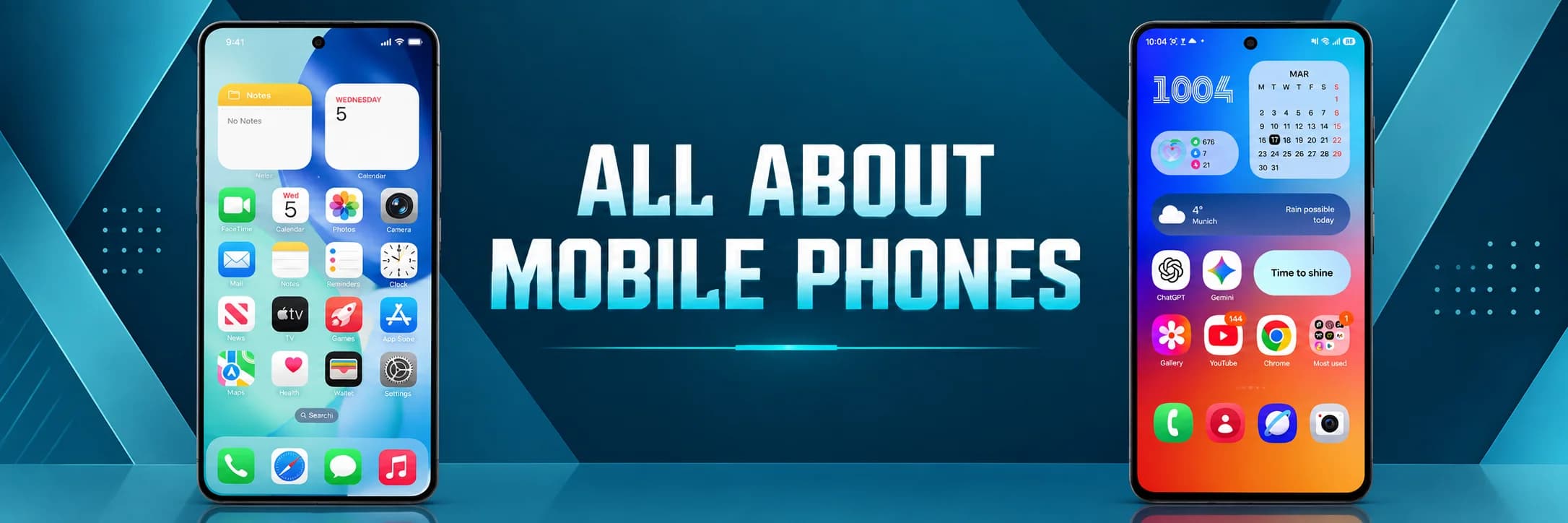


Apple iPhone 16 price in Pakistan
Apple iPhone 16 price in Pakistan is Rs. 309,899 (last updated 17 Oct 2026). See all Apple phones.
The Apple iPhone 16 is an incremental step over the iPhone 15, and that decides who should buy it. Its gains sit under the surface: the A18 chip jumps two generations, 8GB of RAM matches the Pro models, and battery life now covers a full day of normal use. The main camera, however, takes photos that are hard to tell apart from last year's, so the upgrade only feels big if your current iPhone is a few years old.
Who it's for
- Owners of an iPhone 13 or older, who will feel a clear jump in speed and battery life.
- Casual creators and vloggers, because Audio Mix can isolate or clean up voices after recording, and both cameras shoot 4K at 60fps.
- Gamers curious about console titles, since the A18 runs games like Assassin's Creed at a steady 30 frames per second.
Where it falls short
The 60Hz display is the main compromise: animations feel laggy to anyone used to a smoother screen, and games cannot run at high frame rates. The Camera Control button is finicky, triggering accidental shots and forcing an awkward grip. It also runs warmer than the iPhone 15, and no charger comes in the box.
Worth comparing
The Google Pixel 10 (Rs. 219,499) is cheaper and adds a 120Hz screen and a 5x zoom camera, but its Tensor G5 throttles heavily, charges slowly and trails the iPhone on battery life. The iPhone 15 Pro Max (Rs. 481,499) adds ProMotion and a 5x telephoto, worth it only if zoom matters at a far higher price.
| Network | Technology | GSM / CDMA / HSPA / EVDO / LTE / 5G |
|---|
| Launch | Announced | 2024, September 09 |
|---|---|---|
| Status | Available. Released 2024, September 20 |
| Body | Dimensions | 147.6 x 71.6 x 7.8 mm |
|---|---|---|
| Weight | 170 g | |
| Build | Glass front (Ceramic Shield), glass back, aluminum frame | |
| SIM | · Nano-SIM + eSIM + eSIM (max 2 at a time; International) · eSIM + eSIM (8 or more, max 2 at a time; USA) · Nano-SIM + Nano-SIM (China) |
| Display | Type | Super Retina XDR OLED, HDR10, Dolby Vision, 1000 nits (typ), 2000 nits (HBM) |
|---|---|---|
| Size | 6.1 inches (~86.8% screen-to-body ratio) | |
| Resolution | 1179 x 2556 pixels, 19.5:9 ratio (~460 ppi density) | |
| Protection | Ceramic Shield glass (2024 gen) |
| Platform | OS | iOS 18, upgradable to iOS 27 |
|---|---|---|
| Chipset | Apple A18 (3 nm) | |
| CPU | Hexa-core (2x4.04 GHz + 4x2.20 GHz) | |
| GPU | Apple GPU (5-core graphics) |
| Memory | Internal | 128GB 8GB RAM, 256GB 8GB RAM, 512GB 8GB RAM |
|---|---|---|
| Card Slot | No |
| Main Camera | Modules | 48 MP, f/1.6, 26mm (wide), 1/1.56", 1.0µm, dual pixel PDAF, sensor-shift OIS 12 MP, f/2.2, 13mm, 120˚ (ultrawide), 0.7µm, dual pixel PDAF |
|---|---|---|
| Features | Dual-LED dual-tone flash, HDR (photo/panorama) | |
| Video | 4K@24/25/30/60fps, 1080p@25/30/60/120/240fps, HDR, Dolby Vision HDR (up to 60fps), stereo sound rec. |
| Selfie Camera | Modules | 12 MP, f/1.9, 23mm (wide), 1/3.6", 1.0µm, PDAF SL 3D, (depth/biometrics sensor) |
|---|---|---|
| Features | HDR, Dolby Vision HDR, 3D (spatial) audio, stereo sound rec. | |
| Video | 4K@24/25/30/60fps, 1080p@25/30/60/120fps, gyro-EIS |
| Sound | Loudspeaker | Yes, with stereo speakers |
|---|---|---|
| 3.5mm Jack | No |
| Comms | WLAN | Wi-Fi 802.11 a/b/g/n/ac/6/7, tri-band, hotspot |
|---|---|---|
| Bluetooth | 5.3, A2DP, LE | |
| GPS | GPS, GLONASS, GALILEO, BDS, QZSS | |
| NFC | Yes | |
| Radio | No | |
| USB | USB Type-C 2.0, DisplayPort |
| Features | Sensors | Face ID, accelerometer, gyro, proximity, compass, barometer |
|---|
| Battery | Type | Li-Ion 3561 mAh |
|---|---|---|
| Charging | Wired, PD2.0, 50% in 30 min 25W wireless MagSafe/Qi2, 50% in 30 min (15W - China) 4.5W reverse wired |
| Misc | Colors | Black, White, Pink, Teal, Ultramarine |
|---|---|---|
| Models | A3287, A3081, A3286, A3288, iPhone17,3 |
Apple iPhone 16
Similar Price Range



Top Trending Mobiles
More from Apple
See more




Other Apple models
- Apple iPhone 15 PlusRs. 365,499
- Apple iPhone 15 ProRs. 408,999
- Apple iPhone 15 Pro MaxRs. 481,499
- Apple iPhone 15 UltraRs. 709,999
- Apple iPhone 16This phone
- Apple iPhone 16 PlusRs. 353,999
- Apple iPhone 16 Plus SERs. 442,499
- Apple iPhone 16 ProRs. 396,999
- Apple iPhone 16 Pro MaxRs. 473,499
Apple iPhone 16: Buyer's Guide
Is It Value for Money?
At Rs. 309,899 (the only store price we track), the Apple iPhone 16 is expensive for a phone with a 60Hz screen and a camera that barely changed from the iPhone 15. Its value comes from long iOS support, strong all-round performance and a refined, reliable experience rather than from new features.
Main advantages
- A18 chip and 8GB RAM, with headroom for years of iOS updates and Apple Intelligence
- Full-day battery life and 25W MagSafe wireless charging
- Excellent video, including 4K 60fps on both cameras and the Audio Mix voice tools
- New Action button and Camera Control, IP68 rating and a tougher front glass
Main compromises
- 60Hz display at a flagship price
- Main camera results almost identical to the iPhone 15
- No charger in the box and only 128GB on the base model
- Runs slightly warmer than the iPhone 15 under load
Compared with the alternatives: the Google Pixel 10 (Rs. 219,499) is cheaper and has a 120Hz screen and zoom camera, but tests show weaker battery life, throttling and slow charging. The iPhone 15 Pro Max (Rs. 481,499) adds ProMotion and a 5x telephoto at a far higher price.
Verdict: a good buy if you are coming from an iPhone 13 or older and want a dependable iPhone for several years. iPhone 15 owners should skip it, and buyers who care about screen smoothness or zoom should look at a Pro model.
How Is the Display?
The iPhone 16 has a 6.1 inch Super Retina XDR OLED screen at 1179 x 2556 resolution (about 460 ppi), with HDR10 and Dolby Vision. Colour reproduction, contrast and touch response are top-notch, and HDR video looks excellent.
Brightness: Apple rates it at 1000 nits typical and 2000 nits in high-brightness mode, and it is visibly brighter outdoors than the iPhone 15. It can also dim all the way down to one nit, which makes late-night scrolling much more comfortable.
Limitations:
- 60Hz refresh rate, with no adaptive switching. App launches, Dynamic Island animations and tab switching feel slightly laggy if you are coming from a 120Hz phone, and games are capped at low frame rates. People who have never used a high-refresh screen may not notice.
- PWM flicker is unchanged from the iPhone 15, so users sensitive to flicker may get eye strain or headaches.
- Bezels are a little thick and the panel is effectively the same as last year's.
The front uses the 2024 generation of Ceramic Shield, which Apple says is tougher. The improvement is mainly that cracks are less likely to spread, not better scratch resistance, so a screen protector is still a good idea.
How Is the Performance?
The Apple A18 (3 nm) is a two-generation jump from the A16 in the iPhone 15, and it is paired with 8GB RAM, the same amount as the Pro models. In everyday use the speed difference is hard to feel straight out of the box, but benchmarks run roughly 10% to 30% faster depending on the task, and that extra power mainly helps with demanding work and future-proofing.
Gaming: the A18 gives access to console-class games. Assassin's Creed runs at a consistent 30 frames per second with impressive draw distances, though settings are pulled back heavily. In demanding titles like Genshin Impact it holds frame rates more steadily than the iPhone 15, while mid-tier games like PUBG feel similar on both because the 60Hz screen limits high-frame-rate play.
Heat: the stronger chip and compact body mean the iPhone 16 runs a couple of degrees warmer than the iPhone 15 under sustained load, despite a larger internal graphite sheet.
Versus the Pro: the A18 is only slightly behind the A18 Pro, with most of the gap in graphics performance, so non-Pro buyers give up very little speed.
How Is the Camera?
The rear has a 48 MP main camera with sensor-shift OIS and a 12 MP ultrawide, plus a 12 MP front camera.
Main camera: photos are solid and very much in the iPhone style, but almost impossible to tell apart from the iPhone 15. The default look still brightens shadows and lowers contrast, especially with people in the frame. The new Camera Control lets you change exposure, zoom, photographic styles and tone; turning tone down brings back natural shadows. Night shots show a small improvement in colour and smoothness, and glare is handled a little better, but lens flare from point lights at night remains.
Ultrawide and macro: the ultrawide now has autofocus, so it can take proper macro shots, and its brighter aperture makes ultrawide photos slightly brighter and sharper than before.
Selfies: results look the same as the iPhone 15, apart from slightly better shadow processing.
Video: both cameras record up to 4K 60fps; the 4K 120fps mode is reserved for the Pro models. Useful additions include Audio Mix (isolate the person in frame or make speech sound studio-like after recording), pausing a recording, recording while music plays, full-resolution 4K quick-take video and spatial video in 1080p for headsets.
Camera Control drawbacks: the half-press is sensitive enough to cause accidental shots, the placement forces an awkward grip, and pressing it can add shake, so many people will simply use it as a shutter button.
How Is the Battery?
The iPhone 16 has a 3561 mAh battery, slightly larger than the iPhone 15's, and with the efficient 3 nm A18 it comfortably lasts a full day of normal use. In side-by-side use it gave about 45 minutes more screen-on time than the iPhone 15, which often ran out by late evening, though other long-term use found battery life about the same as before. GSMArena's lab test also showed longer call, web browsing and video streaming times than the iPhone 15.
Wired charging: around 50% in 30 minutes with a fast USB-C charger. One comparison found wired speed unchanged from the iPhone 15, with a full charge taking about five minutes longer, while GSMArena measured a full charge in about 1 hour 42 minutes.
Wireless charging: the new MagSafe charger supports up to 25W, up from 15W, but it needs Apple's higher-power adapter to reach that speed. Qi2 is also supported.
Other points:
- No charger in the box, only a USB-C cable.
- The phone can share power with 4.5W reverse wired charging for earbuds or a watch.
How Is the Software?
The iPhone 16 launched with iOS 18 and our database lists support up to iOS 27. Apple does not publish a fixed number of update years, but its iPhones traditionally receive major updates for many years, and the 8GB RAM helps the A18 handle newer features.
Useful features:
- More customisation than ever: place and tint home screen icons freely, change lock screen shortcuts and lock individual apps
- The Action button can be mapped to the camera, flashlight, a shortcut or any app
- Apple Intelligence support, including writing tools, email and text summaries, smart replies and Clean Up for removing distractions from photos
Apple Intelligence limitations: the features were not available at launch, rolled out later and in stages by region, and early versions had clear limits: Clean Up results looked weaker than Google's equivalent, smart replies only handle certain question types, and rewritten text can lose your tone. Check which features are available in Pakistan before treating them as a buying reason.
iOS remains clean, with no ads or duplicate third-party apps, though newcomers from Android may find some restrictions.
Apple iPhone 16: Questions Buyers Ask
Should I buy the iPhone 16 or the iPhone 15?
Buy the iPhone 15 if you want to save money, because in daily use the two feel very similar, with the same 60Hz screen and almost identical main camera photos. The iPhone 16 is worth the extra only if you value the faster A18 chip, longer battery life, Audio Mix and Apple Intelligence.
Should I buy the iPhone 16 or the iPhone 16 Pro?
Choose the iPhone 16 Pro if cameras or the display matter most: it adds a 120Hz ProMotion screen, a larger main sensor, a sharper ultrawide, a 5x telephoto and 4K 120fps video. If you do not notice screen smoothness and mostly take casual photos, the iPhone 16 offers the same RAM and most of the speed.
Is it worth upgrading to the iPhone 16 from an iPhone 11, 12 or 13?
Yes. Coming from an iPhone 13 or older, the iPhone 16 brings a clearly faster chip, more RAM, better battery life, USB-C, the Action button and noticeably more detailed photos. Owners of an iPhone 14 or 15 will find the change too small to justify the price.
Does the iPhone 16 have a physical SIM card slot?
Yes, outside the USA. The international iPhone 16 has one Nano-SIM slot plus eSIM support, with two lines active at a time, which is why a SIM ejector comes in the box. The US model is eSIM-only and has no SIM tray.
Does the iPhone 16 have an OLED or IPS display?
OLED. The iPhone 16 uses a 6.1 inch Super Retina XDR OLED panel with HDR10 and Dolby Vision support, offering deep blacks and excellent colours. Its main limitation is the 60Hz refresh rate, not the panel type.
Is the iPhone 16 front camera better than older iPhones?
Only slightly compared with the iPhone 15. The 12 MP front camera produces almost identical selfies, with slightly better shadow processing. It does record 4K at 60fps, so video calls and front-facing vlogs look sharp.
Is there a big difference between the A18 and the A18 Pro?
No, the gap is small. The A18 in the iPhone 16 is only slightly behind the A18 Pro, mostly in graphics performance, and both phones have 8GB RAM. The bigger differences between the iPhone 16 and 16 Pro are the 120Hz screen and the cameras.
Does the iPhone 16 heat up while charging?
Yes, the iPhone 16 can get warm while charging, especially with fast wired or MagSafe wireless charging. Mild warmth is normal, but excessive heat can cause charging to slow down or pause. Using a certified charger and avoiding direct sunlight can help manage temperatures.
