
Xiaomi 17 price in Pakistan
Xiaomi 17 price in Pakistan is Rs. 279,999 (last updated 23 Oct 2026). See all Xiaomi phones.
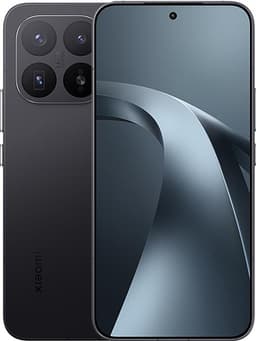
The Xiaomi 17 shows that a compact phone no longer has to cut corners. Its 6.3-inch body is easy to use one-handed, yet it carries the Snapdragon 8 Elite Gen 5, UFS 4.1 storage and a 6330 mAh battery good for roughly 9–10 hours of screen use. Add 100W wired and 50W wireless charging, and it is one of the few small phones you can choose for performance and endurance, not just size.
Who it's for
- Small-phone fans: the evenly balanced, matte-glass design feels premium and resists smudges.
- Gamers and power users: 120fps gaming, a large vapour chamber that keeps long Genshin Impact sessions cool, and quick USB 3.2 file transfers.
- Everyday photographers: the main camera is sharp with near-natural Leica colours, and the 2.6x telephoto handles portraits and close-ups.
Where it falls short
The ultrawide is the weak link: its view is narrow, detail turns muddy at night, and night video is poor. Zoom range is limited next to periscope rivals, white balance needs work, and occasional stutters appear. At this price, IP68 only and standard Xiaomi Shield Glass also feel modest.
Worth comparing
The Vivo X300 FE at Rs. 251,999 is just as compact and cheaper. GSMArena calls its 3x periscope telephoto a highlight, and Vivo promises up to five major OS updates. However, its Snapdragon 8 Gen 5 graphics trail Elite-chip phones, Digital Camera World finds its ultrawide weak too, and GSMArena found its video unimpressive. Choose the X300 FE for zoom, the Xiaomi 17 for speed and charging.
| Network | Technology | GSM / HSPA / LTE / 5G |
|---|
| Launch | Announced | 2025, September 25 |
|---|---|---|
| Status | Available. Released 2025, September 27 |
| Body | Dimensions | 151.1 x 71.8 x 8.1 mm |
|---|---|---|
| Weight | 191 g | |
| Build | Glass front (Dragon Crystal Glass), aluminum frame | |
| SIM | · Nano-SIM + Nano-SIM · Nano-SIM + Nano-SIM + eSIM + eSIM (max 2 at a time) |
| Display | Type | LTPO AMOLED, 68B colors, 2160Hz PWM, 120Hz, Dolby Vision, HDR Vivid, HDR10+, 3500 nits (peak) |
|---|---|---|
| Size | 6.3 inches (~91.1% screen-to-body ratio) | |
| Resolution | 1220 x 2656 pixels, 19.5:9 ratio (~460 ppi density) | |
| Protection | Xiaomi Shield Glass (Global), Dragon Crystal Glass (China) |
| Platform | OS | Android 16, HyperOS 3 |
|---|---|---|
| Chipset | Qualcomm SM8850-AC Snapdragon 8 Elite Gen 5 (3 nm) | |
| CPU | Octa-core (2x4.6 GHz Oryon V3 Phoenix L + 6x3.62 GHz Oryon V3 Phoenix M) | |
| GPU | Adreno 840 |
| Memory | Internal | 256GB 12GB RAM, 512GB 12GB RAM, 512GB 16GB RAM, 1TB 16GB RAM |
|---|---|---|
| Card Slot | No |
| Main Camera | Modules | 50 MP, f/1.7, 23mm (wide), 1/1.31", 1.2µm, dual pixel PDAF, OIS 50 MP, f/2.0, 60mm (telephoto), 1/2.76", 0.64µm, PDAF (10cm - ∞), OIS, 2.6x optical zoom 50 MP, f/2.4, 17mm, 102˚ (ultrawide), 1/2.76", 0.64µm |
|---|---|---|
| Features | Laser AF, color spectrum sensor, Leica lens, Dual-LED dual-tone flash, HDR, panorama | |
| Video | 8K@30fps (HDR), 4K@30/60fps (HDR10+, 10-bit Dolby Vision HDR, 10-bit LOG), 1080p@30/60/120/240/960fps, 720p@1920fps, gyro-EIS |
| Selfie Camera | Modules | 50 MP, f/2.2, 21mm (wide), PDAF |
|---|---|---|
| Features | HDR, panorama | |
| Video | 4K@30/60fps, 1080p@30/60fps, HDR10+, gyro-EIS |
| Sound | Loudspeaker | Yes, with stereo speakers (with Dolby Atmos) |
|---|---|---|
| 3.5mm Jack | No |
| Comms | WLAN | Wi-Fi 802.11 a/b/g/n/ac/6e/7, dual-band, Wi-Fi Direct |
|---|---|---|
| Bluetooth | 5.4, A2DP, LE, aptX HD, aptX Adaptive, LHDC 5 | |
| GPS | GPS (L1+L5), BDS (B1I+B1c+B2a), GALILEO (E1+E5a), QZSS (L1+L5), NavIC (L5), GLONASS | |
| NFC | Yes | |
| Radio | No | |
| USB | USB Type-C 3.2, Display Port, OTG |
| Features | Sensors | Fingerprint (under display, ultrasonic), accelerometer, proximity, gyro, compass, barometer |
|---|
| Battery | Type | Si/C Li-Ion 6330 mAh - Global Si/C Li-Ion 7000 mAh - China |
|---|---|---|
| Charging | 100W wired, PD3.0, QC3+, 100W PPS 50W wireless 22.5W reverse wireless 22.5W reverse wired |
| Misc | Colors | Black, Venture Green, Alpine Pink, Ice Blue, White |
|---|---|---|
| Models | 25113PN0EG |
Similar Price Range





Top Trending Mobiles
More from Xiaomi
See more


Other Xiaomi models
- Xiaomi 16s ProRs. 329,999
- Xiaomi 16S UltraRs. 347,999
- Xiaomi 16TRs. 179,999
- Xiaomi 16T ProRs. 241,999
- Xiaomi 17This phone
- Xiaomi 17 AirRs. 328,499
- Xiaomi 17 FoldRs. 479,999
- Xiaomi 17 MaxRs. 339,999
- Xiaomi 17 ProRs. 389,999
Xiaomi 17: Buyer's Guide
Is It Value for Money?
Our listed price for the Xiaomi 17 is Rs. 279,999. That is a lot for a compact phone, but it delivers flagship hardware with very few compromises.
Main advantages:
- Snapdragon 8 Elite Gen 5 in an easy-to-hold 6.3-inch body
- Strong battery life with 100W wired and 50W wireless charging
- Sharp main camera with natural colours and a useful 2.6x telephoto
- USB 3.2, IR blaster and loud stereo speakers
Main disadvantages:
- Weak ultrawide camera, especially at night
- Limited zoom range compared with periscope rivals
- Only IP68 and standard Xiaomi Shield Glass
The Vivo X300 FE (Rs. 251,999) is the cheaper compact alternative with better zoom and a longer OS promise, but a weaker GPU. Verdict: worth it if you want the fastest small Android phone; zoom lovers should look at the Vivo.
How Is the Display?
The Xiaomi 17 uses a 6.3-inch LTPO AMOLED panel with 1220 x 2656 (1.5K) resolution, a 120Hz refresh rate and up to 3500 nits peak brightness. It supports HDR10+, Dolby Vision and HDR Vivid, with 2160Hz PWM dimming.
In daily use, colours look vibrant, viewing angles are good, touch response is fast and brightness matches most flagships, so outdoor use is easy. Xiaomi adds both hardware and software eye-protection features, and an ultrasonic fingerprint reader sits under the screen.
The compact size suits small hands but feels less immersive for films and games than larger phones. Protection is Xiaomi Shield Glass rather than the latest Gorilla Glass.
How Is the Performance?
The Snapdragon 8 Elite Gen 5 (3 nm) with LPDDR5X RAM and UFS 4.1 storage makes the Xiaomi 17 one of the fastest phones of its size, scoring around 3.4 million in AnTuTu.
Everyday use, photo and video editing and multitasking all feel quick, though a few minor stutters appear now and then.
Games run at maximum settings, and 120fps gaming is supported with solid frame-rate stability. A large vapour chamber keeps heat in check: even 30 to 40 minutes of Genshin Impact did not make it uncomfortably warm. Throttling and UI jitters appear only after punishing 3D benchmarks, and the frame and camera area get hot during long video recording in direct sun.
The USB 3.2 port transfers files much faster than most phones, and an IR blaster on the back controls TVs and air conditioners.
How Is the Camera?
All three rear cameras are 50 MP with Leica tuning: a large main sensor (f/1.7, OIS), a 2.6x telephoto (OIS) and a 102° ultrawide, plus a 50 MP selfie camera.
- Main camera: sharp in almost every light with good dynamic range, and colours stay close to natural even in the vivid mode. White balance is the one thing that needs improvement.
- Telephoto: portraits are good for social media, though skin can look a little bright and face shadows look better at 3.2x than at the default 2.6x. It also focuses from 10 cm for detailed close-ups.
- Ultrawide: the weak spot. Its view is not very wide, and detail turns muddy at night.
- Selfies: the 50 MP front camera gives pleasing results, though detail could be better and the frame is narrower than an iPhone's.
- Video: every camera, including the front one, records 4K at 60fps, and the main camera adds 8K. Main and telephoto footage is sharp and stable, but ultrawide night video is poor.
How Is the Battery?
The global Xiaomi 17 has a 6330 mAh silicon-carbon battery (the Chinese version has 7000 mAh). For a compact phone, endurance is excellent: roughly 9–10 hours of screen use on a normal day, a comfortable full day and better than the bigger Xiaomi 17 Pro and 17 Ultra.
Charging is fast: 100W wired and 50W wireless, plus 22.5W reverse wired and reverse wireless charging for accessories. Support for the USB PD (PPS) and UFCS charging standards means good third-party GaN chargers and many laptop adapters charge it quickly too.
The box sold in Pakistan includes a 100W charger and a case, though some other markets ship without a charger.
How Is the Software?
The Xiaomi 17 runs Android 16 with HyperOS 3. It is feature-rich, very usable and noticeably smoother and more refined than earlier Xiaomi software. GSMArena notes the global version is nearly identical to the Chinese one, with slightly less detailed privacy and app-permission controls.
Useful extras include Leica photo styles, the IR remote app and Xiaomi's ecosystem features for connecting with other Xiaomi devices. Its AI tools cover the basics, such as unblurring and enhancing photos, but Xiaomi lacks standout AI features of its own.
On updates, Xiaomi promises six years of support for the 17 series. Reports differ on how many major Android upgrades that includes, so confirm on Xiaomi's official page before buying.
Xiaomi 17: Questions Buyers Ask
Does the Xiaomi 17 overheat or throttle?
Not in normal use. A large vapour chamber keeps it fairly cool, even through 30 to 40 minutes of Genshin Impact. It throttles and shows UI jitters only after punishing 3D benchmarks, and the frame gets hot during long video recording in direct sunlight.
How good are the Xiaomi 17 speakers?
They are good. The stereo speakers support Dolby Atmos, get loud and put clear emphasis on vocals and higher tones. Bass could be a little stronger, but for videos, calls and games they are more than enough.
How are the haptics on the Xiaomi 17?
The haptics are crisp and precise. Typing, fingerprint unlocking and system gestures all give tight, clean feedback, which adds to the phone's premium feel.
Is the Xiaomi 17 telephoto good enough coming from a phone with 5x zoom?
It depends on how far you zoom. The Xiaomi 17 has a 2.6x telephoto with OIS that takes good portraits and sharp close-ups from 10 cm, but it cannot match a 5x lens for distant subjects. If long-range zoom matters, look at a model with a periscope camera.
