



Apple iPhone 17 Pro Max price in Pakistan
Apple iPhone 17 Pro Max price in Pakistan is Rs. 504,999 (last updated 16 Oct 2026). See all Apple phones.
The iPhone 17 Pro Max is designed for buyers who want a large display, versatile cameras, sustained performance, and exceptional battery endurance. Its A19 Pro chip and vapor chamber cooling help maintain performance during demanding gaming sessions and extended video recording. The camera system produces detailed photos, handles challenging lighting well, and delivers crisp video with natural-looking colors. Professional features such as ProRAW, Apple Log, ProRes RAW, and Genlock provide additional control for content creators, while the 18MP Center Stage selfie camera automatically adjusts framing for group selfies. Battery life is another major strength, with light to moderate use potentially extending to two days. Ceramic Shield 2 and its anti-reflective coating also improve everyday screen durability and outdoor visibility.
Who it's for
- Mobile photographers and video creators: The versatile camera system, excellent video quality, and professional recording tools suit users who regularly capture content or need editing flexibility.
- Heavy users and mobile gamers: The A19 Pro chip and improved cooling support demanding applications, graphics-intensive games, and prolonged recording sessions.
- Users prioritizing battery life and a large display: Strong battery endurance and the biggest screen in the current iPhone range make it suitable for media consumption, travel, and long days away from a charger.
Where it falls short
The biggest drawback is weight: at 233 g, the phone can feel heavy during prolonged one-handed use. The aluminum finish may also scratch or chip around the camera plateau. Speakers can distort at high volume, Siri feels less capable than competing AI assistants, and Apple’s restricted app installation limits flexibility. Low-light photography introduces noticeable noise, while ultrawide and telephoto results can be less consistent than the main camera.
Worth comparing
The Google Pixel 11 Pro XL offers a 5x telephoto camera and a brighter display, while the Samsung Galaxy S26 Ultra provides a versatile multi-camera system, S Pen support, and faster wired charging. The vivo X300 Ultra is worth considering for its high-resolution camera hardware, larger battery, and faster charging. The iPhone 17 Pro Max remains compelling for sustained performance, video quality, iOS integration, and long battery endurance. Compare these alternatives based on your priorities: professional video recording, zoom photography, Android flexibility, or everyday comfort.
| Network | Technology | GSM / CDMA / HSPA / EVDO / LTE / 5G |
|---|
| Launch | Announced | 2025, September 09 |
|---|---|---|
| Status | Available. Released 2025, September 19 |
| Body | Dimensions | 163.4 x 78 x 8.8 mm |
|---|---|---|
| Weight | 233 g | |
| Build | Glass front (Ceramic Shield 2), aluminum alloy frame, aluminum alloy back/ glass back (Ceramic Shield) | |
| SIM | · Nano-SIM + eSIM + eSIM (max 2 at a time; International) · eSIM + eSIM (8 or more, max 2 at a time; USA) · Nano-SIM + Nano-SIM (China) |
| Display | Type | LTPO Super Retina XDR OLED, 120Hz, HDR10, Dolby Vision, 1000 nits (typ), 1600 nits (HBM), 3000 nits (peak) |
|---|---|---|
| Size | 6.9 inches (~90.7% screen-to-body ratio) | |
| Resolution | 1320 x 2868 pixels, 19.5:9 ratio (~460 ppi density) | |
| Protection | Ceramic Shield 2, Mohs level 5 |
| Platform | OS | iOS 26, upgradable to iOS 26.3 |
|---|---|---|
| Chipset | Apple A19 Pro (3 nm) | |
| CPU | Hexa-core (2x4.26 GHz + 4xX.X GHz) | |
| GPU | Apple GPU (6-core graphics) |
| Memory | Internal | 256GB 12GB RAM, 512GB 12GB RAM, 1TB 12GB RAM, 2TB 12GB RAM |
|---|---|---|
| Card Slot | No |
| Main Camera | Modules | 48 MP, f/1.8, 24mm (wide), 1/1.28", 1.22µm, dual pixel PDAF, sensor-shift OIS 48 MP, f/2.8, 100mm (periscope telephoto), 1/2.55", 0.7µm, PDAF, 3D sensor‑shift OIS, 4x optical zoom 48 MP, f/2.2, 13mm, 120˚ (ultrawide), 1/2.55", 0.7µm, PDAF TOF 3D LiDAR scanner (depth) |
|---|---|---|
| Features | Dual-LED dual-tone flash, HDR (photo/panorama) | |
| Video | 4K@24/25/30/60/100/120fps, 1080p@25/30/60/120/240fps, 10-bit HDR, Dolby Vision HDR (up to 120fps), ProRes, ProRes RAW (up to 120fps), Apple Log 2, 3D (spatial) video/audio, stereo sound rec. |
| Selfie Camera | Modules | 18 MP multi-aspect, f/1.9, 20mm (ultrawide), PDAF SL 3D, (depth/biometrics sensor) |
|---|---|---|
| Features | HDR, Dolby Vision HDR, 3D (spatial) audio, stereo sound rec., ProRes RAW, Apple Log 2 | |
| Video | 4K@24/25/30/60fps, 1080p@25/30/60/120fps, gyro-EIS |
| Sound | Loudspeaker | Yes, with stereo speakers |
|---|---|---|
| 3.5mm Jack | No |
| Comms | WLAN | Wi-Fi 802.11 a/b/g/n/ac/6e/7, tri-band, hotspot |
|---|---|---|
| Bluetooth | 6.0, A2DP, LE | |
| GPS | GPS (L1+L5), GLONASS, GALILEO, BDS, QZSS, NavIC | |
| NFC | Yes | |
| Radio | No | |
| USB | USB Type-C 3.2 Gen 2, DisplayPort |
| Features | Sensors | Face ID, accelerometer, gyro, proximity, compass, barometer |
|---|
| Battery | Type | Market-dependent versions: · Li-Ion 4823 mAh - Nano SIM model · Li-Ion 5088 mAh - eSIM only model |
|---|---|---|
| Charging | Wired, PD3.2, AVS, 50% in 20 min 25W wireless MagSafe/Qi2, 50% in 30 min (15W - China) 4.5W reverse wired |
| Misc | Colors | Silver, Cosmic Orange, Deep Blue |
|---|---|---|
| Models | iPhone18,2, A3526, A3257, A3527, A3525 |
Apple iPhone 17 Pro Max
Similar Price Range






Top Trending Mobiles
More from Apple
See more
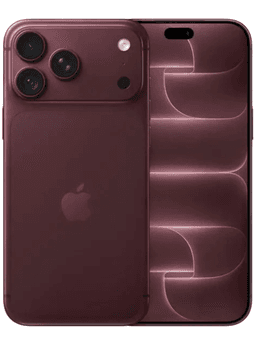




Other Apple models
- Apple iPhone 17In storesRs. 406,899
- Apple iPhone 17 AirRs. 413,999
- Apple iPhone 17 PlusRs. 439,799
- Apple iPhone 17 ProIn storesRs. 473,999
- Apple iPhone 17 Pro MaxThis phone
- Apple iPhone 17 SlimRs. 399,999
- Apple iPhone 17 UltraRs. 507,999
- Apple iPhone 17eIn storesRs. 289,000
- Apple iPhone 18Rs. 428,999
Apple iPhone 17 Pro Max: Buyer's Guide
Is It Value for Money?
At Rs. 504,999 for the 256GB model, the Apple iPhone 17 Pro Max is one of the most expensive phones in Pakistan, so it has to justify itself through long-term use rather than headline specs.
Main advantages:
- Battery life and charging are the clearest gains over earlier Pro Max models.
- Gaming stays stable for long sessions thanks to vapour chamber cooling.
- Video recording and the new selfie camera remain class-leading.
Main disadvantages:
- The aluminium frame dents and scratches more easily than the older titanium and steel frames.
- The rear cameras are only a modest step forward, and AI features lag behind Android rivals.
Official units sold through local distributors were reported to come with a two-year warranty and screen replacement, which adds value for a phone this costly; confirm the terms and PTA status before buying.
Verdict: worth it for heavy users upgrading from an older iPhone who will keep a case on it. Owners of a 16 Pro Max, or buyers who want the best still camera for the money, can skip it.
How Is the Display?
The 6.9-inch LTPO Super Retina XDR OLED panel runs at up to 120Hz, with a 1320 x 2868 resolution and a quoted peak of 3000 nits. Day to day it remains one of the best phone screens for touch response, haptics and accurate colours out of the box.
The headline change is the anti-reflective Ceramic Shield 2 glass, which makes the screen easier to read under harsh sunlight. Independent lab testing found it improves legibility with very little colour loss, though it is not quite as effective as Samsung's coating on its Ultra phones.
There are limits worth knowing:
- Some users find it looks slightly dimmer than the 16 Pro Max, possibly because of the extra coating layer.
- Outdoors, brightness can drop back after a while, so you may need to raise it manually.
- You can now turn off PWM dimming, which helps flicker-sensitive eyes, but low-brightness colours shift slightly and smoothness drops when you do.
For scrolling, gaming and video, the smooth refresh rate and HDR support make it an excellent screen; just do not expect a visible jump over last year's model.
How Is the Performance?
The Apple A19 Pro chip is paired with 12GB of RAM, up from 8GB on the 16 Pro Max. In everyday use the difference over last year is small, but apps such as the camera and settings do open a little faster.
The real gain is in heavy workloads and gaming. A new vapour chamber replaces the older graphite sheets, so heat spreads across the whole body instead of building up in one spot. In practice:
- Long gaming sessions of 30 to 40 minutes run without the screen dimming or performance falling off.
- Temperatures while gaming were measured a few degrees lower than on the 16 Pro Max.
- The whole frame can feel warm to the touch, which is the cooling doing its job rather than a fault.
Independent stress testing confirmed better sustained performance than the 16 Pro Max, though the gain was smaller than Apple's marketing suggested. Demanding console-style games run smoothly, and PUBG ran at 60fps at launch.
The main weakness is software: iOS glitches seen on the 16 Pro Max can also appear here, so a new phone will not fix those issues.
How Is the Camera?
The rear setup uses three 48 MP cameras: main, ultrawide and a new 4x periscope telephoto.
Main and ultrawide: the sensors carry over from last year, but photos handle highlights and shadows slightly better, and lens glare at night is reduced. Colours stay consistent across all three lenses, a long-standing iPhone strength.
Telephoto: this is the most debated upgrade.
- The 4x lens at 100mm is more practical for portraits than the old 5x, with better edge detection.
- Detail is only slightly better than the 16 Pro Max, and some users see little real difference.
- At close range the camera can switch to a crop of the main sensor without telling you, which lowers quality.
- Close-up flash shots in the dark can show an odd shadow in the corner.
- Portrait and macro results still trail the best Chinese camera phones, and macros still use the ultrawide.
Selfies: the new 18 MP square sensor is the biggest camera upgrade. It is wider and more detailed, and Center Stage lets you shoot landscape photos or 4K video while holding the phone upright, ideal for group shots and vlogging.
Video: still the strongest part of the package. ProRes, Log recording, 4K at up to 120fps, smooth lens switching and dual front-and-back recording make it a top choice for creators.
How Is the Battery?
Our database lists two versions: 4823 mAh for the Nano-SIM model and 5088 mAh for the eSIM-only model, so the eSIM version should last a little longer.
Real-world results are strong:
- Under heavy use, screen-on time reaches 8 to 9 hours, which stretches to roughly 36 hours between charges for many people.
- Even with intensive use, one full charge cycle covers a whole day, so a power bank is rarely needed.
- Independent lab testing also recorded clearly better endurance than the previous Pro Max.
Charging: with Apple's 40W adapter the phone reaches 50% in about 20 minutes, and it can briefly draw more power with the original charger. Owners of a good 30W or higher USB-C PD charger may not see a big difference, so a new charger is not essential. Only a USB-C cable comes in the box.
Wireless: 25W MagSafe and Qi2 charging are supported, plus 4.5W reverse wired charging for accessories.
The main compromise is that Apple still uses conventional lithium-ion cells, so capacity stays below the large silicon-carbon batteries in many Chinese flagships.
How Is the Software?
The phone ships with iOS 26 and its new Liquid Glass design, and our database lists it as upgradable to iOS 26.3. Updates since launch have improved stability and fixed many bugs, though some glitches carried over from older models.
iOS is now more customisable than before:
- MP3 files as ringtones and built-in call recording.
- Dual recording from the front and back cameras at the same time.
- Call Screening for unknown numbers and Hold Assist for support calls.
AI features are the weak point. Apple Intelligence is supported on the whole iPhone 17 lineup, but the feature set feels thin next to Samsung and Google, and the more personal Siri Apple promised arrived late. Apple Intelligence also needs Siri and the device set to a supported language such as English.
Updates: Apple does not publish a fixed number of years of iOS updates, so any figure you hear is an estimate based on its track record rather than a confirmed policy.
Apple iPhone 17 Pro Max: Questions Buyers Ask
What is the price of the iPhone 17 Pro Max in Pakistan?
Our current listed price for the Apple iPhone 17 Pro Max is **Rs. 504,999 for the 256GB version**. Prices for PTA-approved and non-PTA units move often, so check the latest store listing and the exact storage variant before paying.
Which charger should I use with the iPhone 17 Pro Max?
Apple's 40W USB-C adapter gives the fastest charging, reaching about **50% in 20 minutes**. A quality USB-C Power Delivery charger of 30W or more from a known brand also works well and is only a little slower, so buying a new charger is optional.
Which colour is better: silver, orange or blue?
It comes down to taste, as all three colours (Silver, Cosmic Orange and Deep Blue) use the same aluminium body. Orange and blue units have shown scuffs on the camera plateau edge, while silver still reveals dents clearly, so a case is wise whichever colour you pick.
How durable is the iPhone 17 Pro Max, and does it need a case?
Yes, use a case. The Ceramic Shield 2 glass on the front resists scratches well, and the small back glass panel is less likely to crack, but the aluminium frame **dents and scratches more easily** than the titanium of earlier Pro models after a drop.
Will the new AI features work only on the 17 Pro Max or on other models too?
Apple Intelligence is not exclusive to the Pro Max. Apple lists the whole iPhone 17 lineup, including the base iPhone 17, as supported. It works when Siri and the device language are set to a supported language such as English, and some features may not be available in every region.
Is signal strength different on the eSIM-only model compared with the physical SIM + eSIM model?
Not inherently. Signal strength depends mainly on the modem, antenna design, supported frequency bands and carrier. Regional hardware differences can matter, but removing the physical SIM slot alone doesn't mean better or worse reception.
Which power bank should I use, and does it affect battery health?
Use a reputable USB-C PD power bank with 20–30W output for reliable charging. A MagSafe-compatible Qi2 power bank is also convenient. Power banks don't inherently damage battery health. Heat is the main concern: avoid charging in direct sunlight or under bedding, especially during wireless charging.
