

Apple iPhone 18 Pro price in Pakistan
Apple iPhone 18 Pro price in Pakistan is Rs. 563,998 (last updated 26 Oct 2026). See all Apple phones.
The Apple iPhone 18 Pro focuses on refining the flagship experience rather than introducing a completely different design or camera system. It offers improved battery efficiency, faster charging, stronger processing performance, and better image processing. The variable-aperture main camera adds creative control, while expanded manual settings make the built-in camera app more useful for photography enthusiasts. However, these refinements may offer less reason to upgrade for owners of a recent Pro iPhone.
Who it's for
Mobile photographers: The variable-aperture main camera and expanded manual controls suit users who want greater control over focus, exposure, and photographic style without relying entirely on third-party camera apps.
Heavy users and gamers: Improved processing efficiency, better cooling, and longer battery life make the phone relevant for demanding games, video exports, and extended camera use.
Users upgrading from older iPhones: Better battery endurance, faster charging, and improved image processing may provide a more noticeable upgrade for those using older devices.
Where it falls short
The iPhone 18 Pro remains an incremental upgrade for recent Pro owners. The variable aperture makes a relatively subtle difference in everyday photography, and the camera hardware changes are limited. The lack of 8K video recording may also disappoint creators looking for higher-resolution capture. Its high price makes upgrading harder to justify when an existing Pro iPhone still meets everyday needs.
Worth comparing
Consider other camera-focused flagship phones before deciding. The iPhone 18 Pro emphasizes battery efficiency, image processing, and additional camera controls, but there is not yet enough verified information for a reliable comparison of camera quality, pricing, or overall value against specific competing models.
| Network | Technology | GSM / HSPA / LTE / 5G |
|---|
| Launch | Announced | 2026, September 09 |
|---|---|---|
| Status | Available. Released 2026, September 18 |
| Body | Dimensions | 150 x 71.9 x 8.8 mm |
|---|---|---|
| Weight | 211 g | |
| Build | Glass front (Ceramic Shield 2), aluminum frame, aluminum back/ glass back (Ceramic Shield) | |
| SIM | · Nano-SIM + eSIM + eSIM (max 2 at a time; International) · eSIM + eSIM (8 or more, max 2 at a time; USA) · Nano-SIM + Nano-SIM + eSIM + eSIM (max 2 at a time; China) |
| Display | Type | LTPO Super Retina XDR OLED, 120Hz, HDR10, Dolby Vision, 1000 nits (typ), 1600 nits (HBM), 3000 nits (peak) |
|---|---|---|
| Size | 6.3 inches (~89.4% screen-to-body ratio) | |
| Resolution | 1206 x 2622 pixels, 19.5:9 ratio (~460 ppi density) | |
| Protection | Ceramic Shield 2 |
| Platform | OS | iOS 27 |
|---|---|---|
| Chipset | Apple A20 Pro (2 nm) | |
| CPU | Hexa-core (2x4.93 GHz + 4x2.64 GHz) | |
| GPU | Apple GPU (7-core graphics) |
| Memory | Internal | 256GB 12GB RAM, 512GB 12GB RAM, 1TB 12GB RAM, 2TB 12GB RAM |
|---|---|---|
| Card Slot | No |
| Main Camera | Modules | 48 MP, f/1.5-4.0, 24mm (wide), 1/1.28", 1.22µm, dual pixel PDAF, sensor-shift OIS (gen2) 48 MP, f/2.8, 100mm (periscope telephoto), 1/2.55", 0.7µm, PDAF, 3D sensor‑shift OIS, 4x optical zoom 48 MP, f/2.2, 13mm, 120˚ (ultrawide), 1/2.55", 0.7µm, PDAF TOF 3D LiDAR scanner (depth) |
|---|---|---|
| Features | Dual-LED dual-tone flash, HDR (photo/panorama), Cinematic from regular video | |
| Video | 4K@24/25/30/60/100/120fps, 1080p@25/30/60/120/240fps, 10-bit HDR, Dolby Vision HDR (up to 120fps), ProRes, ProRes RAW (up to 120fps), Apple Log 2, 3D (spatial) video/audio, stereo sound rec. |
| Selfie Camera | Modules | 18 MP multi-aspect, f/1.9, 20mm (ultrawide), PDAF SL 3D, (depth/biometrics sensor) |
|---|---|---|
| Features | HDR, Dolby Vision HDR, 3D (spatial) audio, stereo sound rec., ProRes RAW, Apple Log 2 | |
| Video | 4K@24/25/30/60fps, 1080p@25/30/60/120fps, gyro-EIS |
| Sound | Loudspeaker | Yes, with stereo speakers |
|---|---|---|
| 3.5mm Jack | No |
| Comms | WLAN | Wi-Fi 802.11 a/b/g/n/ac/6e/7, tri-band, hotspot |
|---|---|---|
| Bluetooth | 6.0, A2DP, LE | |
| GPS | GPS (L1+L5), GLONASS, GALILEO, BDS, QZSS, NavIC | |
| NFC | Yes | |
| Radio | No | |
| USB | USB Type-C 3.2 Gen 2, DisplayPort |
| Features | Sensors | Face ID, accelerometer, gyro, proximity, compass, barometer |
|---|
| Battery | Type | Market-dependent versions: · Li-Ion 4056 mAh - Nano SIM model · Li-Ion 4288 mAh - eSIM only model* |
|---|---|---|
| Charging | Wired, PD3.2, AVS, 50% in 15 min 25W wireless MagSafe/Qi2, 50% in 30 min (15W - China) 4.5W reverse wired * eSIM only model battery capacity is officially unconfirmed |
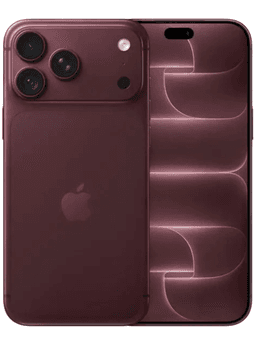
| Misc | Colors | Black, Silver, Glacier, Burgundy |
|---|---|---|
| Models | A3714, A3472, A3713, A3715 |
Apple iPhone 18 Pro
Similar Price Range



Top Trending Mobiles
More from Apple
See more




Other Apple models
- Apple iPhone 17eIn storesRs. 289,000
- Apple iPhone 18Rs. 428,999
- Apple iPhone 18 AirRs. 503,499
- Apple iPhone 18 PlusRs. 473,799
- Apple iPhone 18 ProThis phone
- Apple iPhone 18 Pro MaxIn storesRs. 614,999
- Apple iPhone 18eRs. 331,999
- Apple iPhone 19Rs. 399,999
- Apple iPhone 19 ProRs. 524,999
Apple iPhone 18 Pro: Buyer's Guide
Is It Value for Money?
At Rs. 563,998 for the 256GB model listed on W4Mobiles, the iPhone 18 Pro is one of the most expensive compact phones in Pakistan, and its value depends on what you are upgrading from.
- Strengths: class-leading chip, a big step in battery life and charging for a small iPhone, excellent video recording and steadily better photo processing.
- Weaknesses: the same camera sensors and design as the 17 Pro, a scratch-prone aluminum frame, AI features that lag Samsung and Google, and a very high price.
If you use an iPhone 15 Pro or older, the upgrade is worthwhile and the A20 Pro gives headroom for several years. If you already own a 17 Pro, keep it. Android buyers can get more features for much less with the Galaxy S26 Plus or Pixel 11 Pro, but not the same video quality or long-term iOS support.
How Is the Display?
The iPhone 18 Pro has a 6.3 inches LTPO OLED (Super Retina XDR) at 1206 x 2622 with ProMotion up to 120Hz. Apple rates it at 1000 nits typical, 1600 nits for HDR and up to 3000 nits outdoors, so it stays readable in strong Pakistani sunlight.
The panel itself is carried over from the 17 Pro, which already had one of the best displays on a phone, with an anti-reflective coating and smooth scrolling. The visible change is a smaller Dynamic Island: Apple moved part of the Face ID hardware under the top-left corner of the screen, so the cut-out shrinks and can show more live activities.
That corner has fewer pixels; it is hard to notice in use, but some owners can spot a faint circle at an angle or in direct sun, and a matte screen protector may make it more visible. Some buyers also hoped for a stronger anti-reflective coating like Samsung's, which did not arrive.
How Is the Performance?
The Apple A20 Pro is built on a 2-nanometer process with a 6-core CPU and a 7-core GPU. Apple moved the memory beside the chip so a much larger vapor chamber could sit on it, which improves sustained cooling.
- Everyday use: apps open instantly and multitasking is effortless, as on any recent Pro iPhone; the real gain is that this power now comes with better battery life.
- Heavy work: video exports and photo processing are noticeably faster, and on-device Siri tasks run quicker.
- Gaming: in a 20-minute graphics stress test the 18 Pro Max kept a large lead over the 17 Pro and the Galaxy S26 Ultra; the smaller 18 Pro uses the same chip.
Not every test was positive. In the same hands-on testing, AI tasks such as creating a Siri shortcut or cleaning up a photo were not faster than older iPhones, and the Pro Max's frame ran warmer than rivals under long load because the vapor chamber pushes heat out of the chip into the frame.
How Is the Camera?
All three rear cameras carry over from the 17 Pro, each with 48 megapixels: main, ultrawide and a 4x telephoto. The new feature is a variable aperture on the main camera, with four steps from f/1.48 to f/4.
In practice the difference is subtle. Auto mode stays at f/1.8 most of the time, opens fully in low light and closes only for scenes such as staggered group shots, where it keeps everyone in focus. The wider f/1.48 opening does help at night, with brighter, cleaner shots than the 17 Pro Max in very dark scenes.
The bigger improvement is image processing: extra detail in side-by-side shots and skin tones that compare well with Samsung. New pro controls let you add manual white balance, shutter speed, focus and a histogram to the camera app.
Limits remain: the 4x telephoto is unchanged and cannot shoot tele macro, there is no 8K video, and serious photographers note the main sensor has not grown in years. Video stays a strength, with 4K up to 120fps and ProRes RAW.
How Is the Battery?
Apple does not list a capacity, but EU energy labels show 4056 mAh for the physical-SIM iPhone 18 Pro, only slightly larger than before. The gain comes from the efficient A20 Pro.
Hands-on results are strong. In daily use the 18 Pro easily lasts a day and a half and can stretch to two light days. In a timed test of medium-to-heavy apps, it almost matched the iPhone 17 Pro Max, which reached 10 hours 36 minutes.
Charging is much faster: Apple quotes 50% in about 15 minutes with a suitable USB-C charger, and in testing the smaller Pro reached 63% in 20 minutes, ahead of last year's iPhones but still behind the Galaxy S26 Ultra. MagSafe wireless charging goes up to 25W. No charger comes in the box.
How Is the Software?
The iPhone 18 Pro ships with iOS 27. Apple does not publish a fixed update period, but iPhones usually receive iOS updates for around six to seven years; treat that as an estimate, not a promise.
The best software upgrade for buyers is in the camera app, where you can choose which pro settings appear. iOS 27 also brings Apple Intelligence features such as Image Playground, Genmoji and photo Clean Up, plus an upgraded Siri that handles more on the device.
Opinions on the AI are split. Some find the new Siri features fun and useful in daily use, while others say Apple's AI still trails Samsung and Google and that basics such as dictation and settings search need work. There are no ads or bloatware, a real advantage over most Android rivals.
Apple iPhone 18 Pro: Questions Buyers Ask
Should I upgrade from an older iPhone to the iPhone 18 Pro?
Yes, if you are on an iPhone 15 Pro or older. You will notice longer battery life, much faster charging, a far stronger chip and better photo processing. From an iPhone 17 Pro the change is small: same sensors, same design and a similar screen, so most 17 Pro owners can skip it.
Will I actually see a camera difference over the iPhone 17 Pro?
Mostly in specific situations. In normal daylight the photos look very similar unless you zoom in, where the 18 Pro shows more detail from improved processing. The clearer gains are in very dark scenes, where the wider f/1.48 aperture gives brighter, cleaner shots, and in staggered group photos where the variable aperture keeps everyone sharp.
Does the iPhone 18 Pro come in matte black?
Yes. Black is one of the four colours, alongside Silver, Glacier (a light blue) and the new Burgundy. The black finish is a deep matte shade, though it shows fingerprints a little more than lighter colours.
Why does the iPhone 18 Pro get warm on the outside under heavy load?
The larger cooling chamber pulls warmth off the processor and spreads it across the frame and back panel. In stress tests the 18 Pro Max ran warmer on the outside than rivals, yet it held much higher performance and cooled down fastest. A warm body here means the cooling is working, not failing.
Does Apple Intelligence run on the phone or on Apple's servers?
Both. Most Apple Intelligence requests run on the iPhone itself, which is why the A20 Pro has a stronger Neural Engine. More complex requests go to Apple's Private Cloud Compute servers, which Apple says use Apple chips and do not store your data.
