
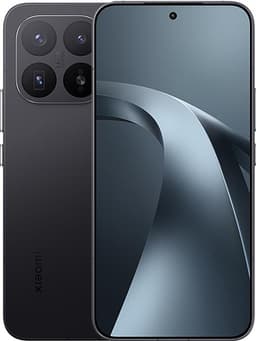
Xiaomi 15 Ultra price in Pakistan
Xiaomi 15 Ultra price in Pakistan is Rs. 399,999 (last updated 24 Oct 2026). See all Xiaomi phones.
The Xiaomi 15 Ultra is a camera first and a phone second, and at Rs. 399,999 for the 16GB/512GB version sold in Pakistan, that focus is the reason to buy it. All four rear cameras are flagship grade: a 1-inch 50MP main sensor, a 50MP ultrawide, a 50MP 3x telephoto that doubles as an excellent macro lens, and a 200MP 4.3x periscope. Leica tuning gives portraits superb skin tones, and the Snapdragon 8 Elite and 90W charger in the box mean little else holds it back.
Who it's for
- Photographers who want two zoom lenses, true close-up shots and Leica black-and-white photos that look professional.
- Video creators, thanks to 4K at 120fps, 10-bit Log recording and an optional photography kit with a shutter button and filter ring.
- Power users who want top speed and 80W wireless charging.
Where it falls short
The big camera bump makes the phone top-heavy and uncomfortable to hold without a case. The periscope lens is slow, so moving subjects and shaky hands give soft zoom shots. HyperOS still carries bloatware that cannot be uninstalled, and four years of OS updates trail the best rivals. Reports differ on heat, but it warms more than other Snapdragon 8 Elite phones.
Worth comparing
The Samsung Galaxy S24 Ultra (Rs. 434,999) suits buyers who value long software support: it promises seven major Android upgrades and includes the S Pen. However, its older Snapdragon 8 Gen 3 and 45W charging mean the Xiaomi is faster, charges quicker and takes more versatile photos for less.
| Network | Technology | GSM / HSPA / LTE / 5G |
|---|
| Launch | Announced | 2025, February 27 |
|---|---|---|
| Status | Available. Released 2025, February 27 |
| Body | Dimensions | 161.3 x 75.3 x 9.4 mm |
|---|---|---|
| Weight | 226 g or 229 g | |
| Build | Glass front, fiber-reinforced plastic back or silicone polymer back (eco leather), aluminum frame | |
| SIM | · Nano-SIM + Nano-SIM · Nano-SIM + Nano-SIM + eSIM + eSIM (max 2 at a time) |
| Display | Type | LTPO AMOLED, 68B colors, 120Hz, 1920Hz PWM, Dolby Vision, HDR10+, HDR Vivid, 3200 nits (peak) |
|---|---|---|
| Size | 6.73 inches (~89.7% screen-to-body ratio) | |
| Resolution | 1440 x 3200 pixels, 20:9 ratio (~522 ppi density) | |
| Protection | Xiaomi Shield Glass 2.0, Mohs level 6 |
| Platform | OS | Android 15, up to 4 major Android upgrades, HyperOS 3 |
|---|---|---|
| Chipset | Qualcomm SM8750-AB Snapdragon 8 Elite (3 nm) | |
| CPU | Octa-core (2x4.32 GHz Oryon V2 Phoenix L + 6x3.53 GHz Oryon V2 Phoenix M) | |
| GPU | Adreno 830 |
| Memory | Internal | 256GB 12GB RAM, 512GB 16GB RAM, 1TB 16GB RAM |
|---|---|---|
| Card Slot | No |
| Main Camera | Modules | 50 MP, f/1.6, 23mm (wide), 1.0"-type, 1.6µm, dual pixel PDAF, OIS 50 MP, f/1.8, 70mm (telephoto), 1/2.51", 0.7µm, dual pixel PDAF (10cm - ∞), OIS, 3x optical zoom 200 MP, f/2.6, 100mm (periscope telephoto), 1/1.4", 0.56µm, multi-directional PDAF, OIS, 4.3x optical zoom 50 MP, f/2.2, 14mm, 115˚ (ultrawide), 1/2.76", 0.64µm, dual pixel PDAF TOF 3D, (depth) |
|---|---|---|
| Features | Laser AF, color spectrum sensor, Leica lenses, Dual-LED flash, HDR, panorama, 67mm filter ring holder (optional) | |
| Video | 8K@30fps, 4K@30/60/120fps, 1080p@30/60/120/240/480/960/1920fps, gyro-EIS, Dolby Vision HDR 10-bit rec. (4K@60fps, 1080p) |
| Selfie Camera | Modules | 32 MP, f/2.0, 21mm (wide), 1/3.14", 0.7µm |
|---|---|---|
| Features | HDR, panorama | |
| Video | 4K@30/60fps, 1080p@30/60fps, gyro-EIS |
| Sound | Loudspeaker | Yes, with stereo speakers |
|---|---|---|
| 3.5mm Jack | No |
| Comms | WLAN | Wi-Fi 802.11 a/b/g/n/ac/6e/7, dual-band or tri-band, Wi-Fi Direct |
|---|---|---|
| Bluetooth | 6.0, A2DP, LE, aptX HD, aptX Adaptive, LHDC 5 | |
| GPS | GPS (L1+L5), BDS (B1I+B1c+B2a), GALILEO (E1+E5a), QZSS (L1+L5), NavIC (L5), GLONASS | |
| NFC | Yes | |
| Radio | No | |
| USB | USB Type-C 3.2 Gen 2, DisplayPort, OTG |
| Features | Sensors | Fingerprint (under display, ultrasonic), accelerometer, proximity, gyro, compass, barometer |
|---|
| Battery | Type | Market-dependent versions: · Si/C Li-Ion 5410 mAh - Global · Si/C Li-Ion 6000 mAh - China |
|---|---|---|
| Charging | 90W wired, PD3.0, QC3+ 80W wireless 10W reverse wireless |
| Misc | Colors | Black, White, Silver Chrome, Green |
|---|---|---|
| Models | 25010PN30G |
Similar Price Range





Top Trending Mobiles
More from Xiaomi
See more


Other Xiaomi models
- Xiaomi 15Rs. 269,999
- Xiaomi 15 CiviRs. 209,999
- Xiaomi 15 LiteRs. 329,999
- Xiaomi 15 ProRs. 369,999
- Xiaomi 15 UltraThis phone
- Xiaomi 15S ProRs. 299,999
- Xiaomi 15TRs. 169,999
- Xiaomi 15T ProRs. 233,999
- Xiaomi 16Rs. 277,999
Xiaomi 15 Ultra: Buyer's Guide
Is It Value for Money?
At Rs. 399,999 for 16GB RAM and 512GB storage, the Xiaomi 15 Ultra is good value for buyers who put camera quality first. Few phones offer four flagship-grade rear cameras, two telephoto lenses and a 90W charger in the box at this price.
Main advantages:
- One of the most versatile camera systems on any phone, tuned with Leica
- Snapdragon 8 Elite performance and 16GB RAM in the base Pakistani variant
- 90W wired and 80W wireless charging, with the charger included
- Bright, sharp LTPO AMOLED screen and excellent speakers
Main compromises:
- Heavy, top-heavy design because of the large camera module
- Bloatware and frequent app notifications in HyperOS
- Four major OS updates, fewer than Samsung offers
Alternative: the Samsung Galaxy S24 Ultra (Rs. 434,999) costs more but brings seven major Android upgrades, the S Pen and a titanium frame. It uses an older chipset and charges more slowly.
Verdict: if photography is your top priority, the Xiaomi 15 Ultra is one of the best choices at this price. Buyers who want the longest software support and the most polished interface should look at Samsung.
How Is the Display?
The Xiaomi 15 Ultra has a 6.73-inch LTPO AMOLED screen with a sharp 1440 x 3200 resolution. The refresh rate moves between 1Hz and 120Hz: fast for gaming and scrolling, and slow on still content to save battery.
Brightness and colours: peak brightness is rated at 3200 nits, and the screen stays easy to read both indoors and in strong sunlight. Colours are accurately calibrated out of the box, with 12-bit colour depth and support for HDR10+ and Dolby Vision in streaming apps.
Eye comfort: DC dimming and 1920Hz PWM dimming help reduce eye strain at low brightness.
Fingerprint: the ultrasonic in-display fingerprint sensor works even with wet fingers, and it is designed to work with a screen protector.
Protection: Xiaomi uses its own Shield Glass 2.0 on the front. Thin bezels are equal on all four sides.
Limitation: there is no anti-glare coating, which some rival flagships now offer.
How Is the Performance?
The phone runs on the Qualcomm Snapdragon 8 Elite (3nm) with 16GB RAM in the Pakistani variant, so apps open instantly and multitasking is effortless.
Gaming: PUBG Mobile supports 120fps, and frame rates stay stable during play. The phone gets slightly warmer than the Galaxy S25 Ultra while gaming, but temperatures remain acceptable.
Heat: reports differ. In demanding benchmark runs the phone gets warm, and the back can feel warm even during casual use, more than on other Snapdragon 8 Elite phones. During games, heat stays under control. Long camera sessions may also warm the phone.
Limitation: there is far more power here than most people will ever use, so the main reason to pay for it is the camera rather than raw speed.
How Is the Camera?
The camera is the Xiaomi 15 Ultra's main strength, built with Leica. On the back are:
- 50MP 1-inch Sony LYT-900 main camera
- 50MP ultrawide
- 50MP 3x telephoto with autofocus
- 200MP 4.3x periscope telephoto
Main camera: photos have excellent detail, colours, white balance and dynamic range. A few shots show slight highlight issues.
Ultrawide: very wide, with colours that match the main camera closely.
Macro: the 3x lens takes some of the best close-up shots of any phone, with a wide area in focus.
Portraits: the default 4.3x portraits have some of the best skin tones on any smartphone. The Leica black-and-white mode handles contrast and shades of black so well that photos can pass for a professional camera's.
Zoom: up to 120x digital zoom, with AI Zoom that rebuilds detail. It works well for buildings and landscapes, but it can invent detail on text such as number plates. The periscope's shutter is slow, so moving subjects or shaky hands produce soft photos, especially at 20x to 30x.
Video: up to 8K at 30fps, 4K at 120fps including Cinematic mode, and 10-bit Log recording. Stabilisation is good, though not quite at the level of the Galaxy S25 Ultra or iPhone 16 Pro Max. Night ultrawide video is not flagship level and occasionally struggles to focus.
Selfies: the 32MP front camera records 4K at 60fps with good skin tones, dynamic range and stabilisation, though it is not as strong as the rear cameras.
Photography kit: an optional kit adds a shutter button, zoom controls, its own 2000mAh battery and a 67mm filter ring for ND or mist filters.
How Is the Battery?
The global and Pakistani version has a 5410mAh silicon-carbon battery. The Chinese version has a bigger 6000mAh battery.
Battery life: endurance is very good for a flagship, and the LTPO screen helps by dropping to 1Hz when the content is still.
Charging: the phone supports 90W wired charging, and a 90W charger comes in the box in Pakistan. A full charge takes about 50 minutes.
Wireless: 80W wireless charging and 10W reverse wireless charging for earbuds or a watch are also supported.
Limitation: heavy camera and video use drains the battery faster, so the optional photography kit's 2000mAh battery is useful for long shoots.
How Is the Software?
The Xiaomi 15 Ultra launched with Android 15 and HyperOS 2, and Xiaomi now lists it with HyperOS 3. Xiaomi promises up to 4 major OS updates, which is fewer than Samsung or Google offer and can affect resale value after a few years.
AI features:
- AI Zoom for sharper long-range photos
- AI Enhance, AI Expand and AI Erase for photo editing (Erase needs the internet)
- AI Sky, which relights a whole photo using templates
- AI Interpreter and live subtitles
- Google Gemini built in
Bloatware: HyperOS 2 is more stable than before, but several preinstalled apps cannot be uninstalled, and their notifications can be annoying until you turn them off. Opinions differ on the interface: some find it less refined than Samsung's One UI.
Extras: an IR blaster for TV and AC remotes, NFC, Wi-Fi 7 and very strong vibration motors. The stereo speakers are loud and clear.
Xiaomi 15 Ultra: Questions Buyers Ask
Which is better: Xiaomi 15 Ultra or Vivo X200 Pro?
The Xiaomi 15 Ultra is the more versatile camera phone. Its dedicated 3x lens takes better close-ups with a wider area in focus, and it has two telephoto lenses instead of one. The Vivo X200 Pro has a faster shutter, so long-zoom shots of moving subjects come out sharper.
What is the price of the Xiaomi 15 Ultra in Pakistan?
The Xiaomi 15 Ultra costs Rs. 399,999 in Pakistan for the 16GB RAM and 512GB storage version. A 90W charger is included in the box.
Does the Xiaomi 15 Ultra have an IR blaster?
Yes, the Xiaomi 15 Ultra has an infrared port, so it can work as a remote control for TVs, air conditioners and other appliances.
How much zoom does the Xiaomi 15 Ultra have?
The Xiaomi 15 Ultra has 3x and 4.3x optical zoom from two telephoto cameras, and up to 120x digital zoom. AI Zoom adds detail to long shots, but it can invent detail on text such as number plates.
Does the Xiaomi 15 Ultra have ads or bloatware?
Yes, it comes with preinstalled apps, and some of them cannot be uninstalled. Their notifications can be annoying until you turn them off in settings. HyperOS is otherwise stable and full of useful AI features.
