

Vivo Y03t price in Pakistan
Vivo Y03t price in Pakistan is Rs. 25,999 (last updated 24 Oct 2026). See all Vivo phones.
The Vivo Y03t is a simple, good-looking phone for basic use, but at Rs. 25,999 it asks buyers to accept more compromises than most rivals. The 90Hz display feels smooth and stays visible outdoors, the slim, light body looks smart, and IP54 dust and splash resistance adds peace of mind. But there is no fingerprint sensor at all, the earpiece doubles as the only loudspeaker and the cameras are low resolution, so it suits buyers who value brand and looks over convenience.
Who it's for
- Light users who want a trusted brand for calls, WhatsApp and social media, and who are happy unlocking with a PIN or pattern.
- Buyers who care about looks, since the slim, lightweight design looks more expensive than it is.
- People who want a tougher everyday phone, as IP54 guards against dust and splashes.
Where it falls short
The missing fingerprint sensor is the biggest drawback, especially for banking and mobile wallet apps. The 720p screen with a waterdrop notch looks dated, the 5MP selfie camera struggles in low light, and the rear camera also weakens at night. With no dedicated loudspeaker and only 15W charging, the price feels high.
Worth comparing
The Xiaomi Redmi 14C (Rs. 26,999) offers a 120Hz 6.88-inch screen, a 50MP main camera and a 13MP selfie camera, making it the better all-rounder for photos and media. The Samsung Galaxy A06 (Rs. 35,000) costs more but adds a side fingerprint sensor, 25W charging and two major Android upgrades, though its screen runs at 60Hz and no charger comes in the box.
| Network | Technology | GSM / HSPA / LTE |
|---|
| Launch | Announced | 2024, August 19 |
|---|---|---|
| Status | Available. Released 2024, August 19 |
| Body | Dimensions | 163.6 x 75.6 x 8.4 mm |
|---|---|---|
| Weight | 185 g | |
| Build | Glass front, plastic frame, plastic back | |
| SIM | Nano-SIM + Nano-SIM |
| Display | Type | IPS LCD, 90Hz, 528 nits (HBM) |
|---|---|---|
| Size | 6.56 inches (~83.6% screen-to-body ratio) | |
| Resolution | 720 x 1612 pixels, 20:9 ratio (~269 ppi density) | |
| Protection |
| Platform | OS | Android 14, Funtouch 14 |
|---|---|---|
| Chipset | Unisoc T612 (12 nm) | |
| CPU | Octa-core (2x1.8 GHz Cortex-A75 & 6x1.8 GHz Cortex-A55) | |
| GPU | Mali-G57 MP1 |
| Memory | Internal | 64GB 4GB RAM, 128GB 4GB RAM |
|---|---|---|
| Card Slot | microSDXC (dedicated slot) |
| Main Camera | Modules | 13 MP, f/2.2, (wide), PDAF Auxiliary lens |
|---|---|---|
| Features | LED flash, panorama | |
| Video | 1080p@30fps |
| Selfie Camera | Modules | 5 MP, f/2.2, (wide) |
|---|---|---|
| Features | ||
| Video | Yes |
| Sound | Loudspeaker | Yes |
|---|---|---|
| 3.5mm Jack | Yes |
| Comms | WLAN | Wi-Fi 802.11 a/b/g/n/ac, dual-band |
|---|---|---|
| Bluetooth | 5.2, A2DP, LE | |
| GPS | GPS, GALILEO, GLONASS, BDS, QZSS | |
| NFC | No | |
| Radio | FM radio | |
| USB | USB Type-C 2.0, OTG |
| Features | Sensors | Accelerometer, proximity |
|---|
| Battery | Type | Li-Ion 5000 mAh |
|---|---|---|
| Charging | 15W wired |
| Misc | Colors | Space Black, Gem Green |
|---|---|---|
| Models |
Similar Price Range





Top Trending Mobiles
More from Vivo
See more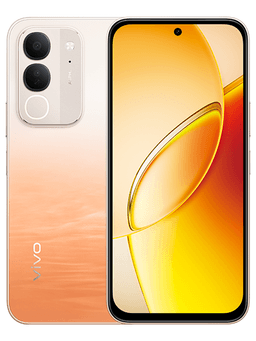






Other Vivo models
- Vivo Y02sRs. 27,999
- Vivo Y02tRs. 24,999
- Vivo Y03Rs. 25,999
- Vivo Y03sRs. 28,999
- Vivo Y03tThis phone
- Vivo Y04In storesRs. 49,999
- Vivo Y04eRs. 27,999
- Vivo Y04sRs. 27,999
- Vivo Y04tRs. 29,999
Vivo Y03t: Buyer's Guide
Is It Value for Money?
At Rs. 25,999, the Vivo Y03t is hard to recommend over its rivals unless brand and design matter most to you. It comes with 4GB of RAM and 64GB or 128GB of storage.
The strengths are real but modest: a smooth 90Hz screen that stays readable outdoors, a slim and light body, IP54 dust and splash resistance, a dedicated memory card slot and a 3.5mm headphone jack. The box includes a 15W charger, a Type-C cable and a transparent case.
The compromises are bigger than usual for this price:
- No fingerprint sensor, so banking and wallet apps need a PIN or password.
- No dedicated loudspeaker; the earpiece does both jobs.
- A 720p screen with a waterdrop notch and low-resolution cameras.
Verdict: a neat basic phone, but the price feels high for these compromises. The Xiaomi Redmi 14C gives more screen and camera for a similar price, while the Samsung Galaxy A06 adds a fingerprint sensor and promised updates for more money.
How Is the Display?
The Vivo Y03t has a 6.56-inch IPS LCD with 720 x 1612 resolution and a 90Hz refresh rate. The settings let you choose the standard rate, 90Hz, or Smart Switch, which picks the refresh rate automatically.
In daily use the screen feels smooth and fluid, and touch response is quick. Brightness, rated at up to 528 nits, is good enough for comfortable viewing both indoors and outdoors.
The limits are sharpness and design. At 720p, text and video look softer than on a Full HD screen, and the waterdrop notch looks dated next to punch-hole displays at similar prices.
How Is the Performance?
The phone runs on the Unisoc T612 with a Mali-G57 MP1 GPU and 4GB of RAM, and it scores around 195,000 points on AnTuTu. That puts it in the entry-level class, suited to calls, messaging, social media and video rather than demanding games.
According to GSMArena, the Y03t is essentially the Vivo Y03 with the Unisoc T612 in place of the MediaTek Helio G85, with the other specifications unchanged.
Detailed gaming, heating and long-term speed tests are not yet available for this model, so heavy gamers should look for a phone with proven gaming results. A microSD card in the dedicated slot adds storage, not extra memory for multitasking.
How Is the Camera?
The rear camera is a 13MP f/2.2 main sensor with a small helper sensor and an LED flash, and the front camera is 5MP f/2.2. The rear camera records video at up to 1080p at 30fps.
In daylight and good indoor lighting, the rear camera captures decent detail with fairly accurate colours. Low light is the weak spot: both cameras struggle at night, and the front camera has the most trouble, so selfies and video calls in dim rooms look noticeably weaker.
The camera resolutions are low for the price, especially the 5MP selfie camera, so buyers who take many photos should consider rivals with stronger cameras.
How Is the Battery?
The Vivo Y03t has a 5000mAh battery with 15W wired charging, and a 15W charger comes in the box.
Reliable screen-on time and full charging-time tests are not yet available for this model, so its exact battery life cannot be confirmed. The 15W charging speed is slow next to rivals such as the Samsung Galaxy A06 with 25W, so expect a full charge to take a while.
How Is the Software?
The phone runs Funtouch OS 14 based on Android 14 out of the box.
Because there is no fingerprint sensor, you have to unlock the phone and approve banking or wallet apps such as EasyPaisa and JazzCash with a PIN, pattern or password, which is slower in daily use.
Vivo has not published an official update commitment for the Y03t, so do not count on a long update period. By comparison, Samsung promises two major Android upgrades for the Galaxy A06.
Vivo Y03t: Questions Buyers Ask
What is the difference between the Vivo Y03 and the Vivo Y03t?
The main difference is the chipset. According to GSMArena, the Vivo Y03t is the Vivo Y03 with a Unisoc T612 in place of the MediaTek Helio G85, while the other specifications stay the same, including the 90Hz display, 13MP rear camera and 5000mAh battery with 15W charging.
Does the Vivo Y03t have a fingerprint sensor?
No, the Vivo Y03t has no fingerprint sensor, neither on the side nor on the back. Banking and wallet apps such as EasyPaisa and JazzCash have to be opened with a PIN, pattern or password instead, which is a real drawback at this price.
