
Google Pixel 7 Pro price in Pakistan
Google Pixel 7 Pro price in Pakistan is Rs. 209,999 (last updated 17 Oct 2026). See all Google phones.
The Google Pixel 7 Pro wins on software and camera processing rather than raw hardware. The Tensor G2 is not the fastest chip, yet daily use feels smooth, battery life is genuinely strong, and Google's AI tools such as call screening, Direct My Call, the transcribing Recorder app and Photo Unblur solve real problems. Add a large, bright 1440p display and a 5x telephoto that stays sharp to around 10x, and it becomes one of the most dependable point-and-shoot cameras on Android.
Who it's for
- Point-and-shoot photographers, because Pixel processing reliably gives contrasty, detailed photos with natural skin tones and motion-freezing shutter speeds.
- People who live on calls and voice, since call screening, accurate speech-to-text and Live Caption save real time every day.
- Heavy daily users, who can finish long days with battery to spare even at the full 1440p resolution.
Where it falls short
Stability is the main worry: bugs such as a blank media player and the phone briefly losing track of tasks echo the Pixel 6. Face unlock fails in the dark or with a mask, the optical fingerprint reader trails ultrasonic rivals, video still lags the iPhone for clarity, there is no super-fast charging and no charger in the box.
Worth comparing
The Google Pixel 8 (Rs. 163,999) costs less and brings a brighter, compact 120Hz screen and seven years of updates, but drops the telephoto camera. The Vivo V70 FE (Rs. 121,999) offers a 7000 mAh battery with 90W charging and a 200 MP camera, yet its Dimensity 7360 Turbo is clearly slower.
| Network | Technology | GSM / CDMA / HSPA / EVDO / LTE / 5G |
|---|
| Launch | Announced | 2022, October 06 |
|---|---|---|
| Status | Available. Released 2022, October 13 |
| Body | Dimensions | 162.9 x 76.6 x 8.9 mm |
|---|---|---|
| Weight | 212 g | |
| Build | Glass front (Gorilla Glass Victus), glass back (Gorilla Glass Victus), aluminum frame | |
| SIM | Nano-SIM + eSIM |
| Display | Type | LTPO AMOLED, 120Hz, HDR10+, 1000 nits (HBM), 1500 nits (peak) |
|---|---|---|
| Size | 6.7 inches (~88.7% screen-to-body ratio) | |
| Resolution | 1440 x 3120 pixels, 19.5:9 ratio (~512 ppi density) | |
| Protection | Corning Gorilla Glass Victus |
| Platform | OS | Android 13, upgradable to Android 16, up to 7 major Android upgrades |
|---|---|---|
| Chipset | Google Tensor G2 (5 nm) | |
| CPU | Octa-core (2x2.85 GHz Cortex-X1 & 2x2.35 GHz Cortex-A78 & 4x1.80 GHz Cortex-A55) | |
| GPU | Mali-G710 MP7 |
| Memory | Internal | 128GB 8GB RAM, 256GB 8GB RAM, 128GB 12GB RAM, 256GB 12GB RAM, 512GB 12GB RAM |
|---|---|---|
| Card Slot | No |
| Main Camera | Modules | 50 MP, f/1.9, 25mm (wide), 1/1.31", 1.2µm, dual pixel PDAF, OIS 48 MP, f/3.5, 120mm (periscope telephoto), 1/2.55", 0.7µm, dual pixel PDAF, OIS, 5x optical zoom 12 MP, f/2.2, 126˚ (ultrawide), 1/2.9", 1.25µm, AF |
|---|---|---|
| Features | Laser AF, Dual-LED flash, Pixel Shift, Auto-HDR, panorama | |
| Video | 4K@30/60fps, 1080p@30/60/120/240fps; gyro-EIS, OIS, 10-bit HDR |
| Selfie Camera | Modules | 10.8 MP, f/2.2, 21mm (ultrawide), 1/3.1", 1.22µm |
|---|---|---|
| Features | HDR, panorama | |
| Video | 4K@30/60fps, 1080p@30/60fps |
| Sound | Loudspeaker | Yes, with stereo speakers |
|---|---|---|
| 3.5mm Jack | No |
| Comms | WLAN | Wi-Fi 802.11 a/b/g/n/ac/6e, tri-band, Wi-Fi Direct |
|---|---|---|
| Bluetooth | 5.2, A2DP, LE, aptX HD | |
| GPS | GPS (L1+L5), GLONASS (G1), BDS (B1I+B1c+B2a), GALILEO (E1+E5a), QZSS (L1+L5) | |
| NFC | Yes | |
| Radio | No | |
| USB | USB Type-C 3.2 |
| Features | Sensors | Fingerprint (under display, optical), accelerometer, gyro, proximity, compass, barometer |
|---|
| Battery | Type | Li-Ion 5000 mAh |
|---|---|---|
| Charging | 23W wired, PD3.0, 50% in 30 min 23W wireless Reverse wireless |
| Misc | Colors | Obsidian, Snow, Hazel |
|---|---|---|
| Models | GP4BC, GE2AE, GFE4J |
Similar Price Range





Top Trending Mobiles
More from Google
See more



Other Google models
- Google Pixel 6Rs. 115,999
- Google Pixel 6 ProRs. 114,999
- Google Pixel 6aRs. 94,999
- Google Pixel 7Rs. 144,999
- Google Pixel 7 ProThis phone
- Google Pixel 7aRs. 137,999
- Google Pixel 8Rs. 163,999
- Google Pixel 8 ProRs. 253,999
- Google Pixel 8aRs. 143,999
Google Pixel 7 Pro: Buyer's Guide
Is It Value for Money?
Our listed price for the Google Pixel 7 Pro is Rs. 75,000(used) - 209,999, and at that figure it is a hard sell against newer phones, even though it remains a capable camera-first flagship. It launched in 2022, so you are paying a high price for older hardware with a shorter remaining update window.
Main advantages
- Excellent point-and-shoot camera with a 5x telephoto and strong zoom up to around 10x
- Large, sharp 6.7 inch 1440p LTPO screen at 120Hz
- Strong battery life for a flagship
- Google-only features such as call screening, Recorder transcription and Photo Unblur
Main compromises
- Software bugs reported early on
- Face unlock struggles in the dark and the optical fingerprint reader is not the fastest
- Slow charging by modern standards and no charger in the box
- Updates end sooner than on newer Pixels
Compared with the alternatives: the Google Pixel 8 (Rs. 163,999) is cheaper, has a brighter 120Hz screen, a newer Tensor G3 chip and seven years of updates, but no telephoto lens and a smaller 4575 mAh battery. The Vivo V70 FE (Rs. 121,999) costs far less and offers a 7000 mAh battery, 90W charging and a 200 MP main camera, but its chip is much weaker and its camera processing lacks the Pixel's consistency.
Verdict: worth it only if you specifically want the Pixel's zoom camera and can find it well below our listed price. Otherwise the Pixel 8 is the smarter Google buy, and the V70 FE suits those who value battery and charging over camera processing.
How Is the Display?
The Pixel 7 Pro has a 6.7 inch LTPO AMOLED panel with 1440 x 3120 resolution (about 512 ppi), a 120Hz refresh rate and HDR10+. It is brighter than the Pixel 6 Pro, reaching up to 1500 nits at peak, and generally looks better, with less colour shifting when viewed at an angle.
Set it to full resolution: out of the box the screen runs at 1080p even though it is a 1440p panel. Switching to 1440p makes text and photos sharper, and in long-term use this caused no noticeable battery problems.
Design points:
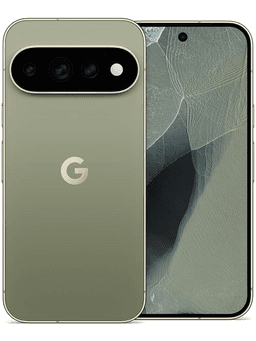
- The edges curve slightly over the sides, which gives a premium feel and pairs with the curved body, unlike the flat Pixel 7.
- Gorilla Glass Victus protects both front and back.
- The always-on display clock blends smoothly into the lock screen clock, a small but polished touch.
The main comparison point is the newer Pixel 8, whose smaller flat screen is brighter at peak, while the Vivo V70 FE offers a larger 6.83 inch AMOLED screen.
How Is the Performance?
The Google Tensor G2 is paired with up to 12GB RAM. Opinions on its raw power differ: one test put its CPU neck and neck with the Galaxy S22 Ultra's chip, while another placed it closer to an older Snapdragon 865 level. Both agree that it is fast enough that nothing feels compromised, and its real gains are in machine learning, which runs much faster and more efficiently than on the first Tensor and powers features like voice typing and photo processing.
Everyday use: the phone glides between apps, and opening and closing apps feels quick and graceful. One exception is switching between camera lenses, which is not as smooth.
Gaming: heavy games like Genshin Impact and Apex Legends run at close to maximum settings. Graphics performance was around five percent behind Samsung's flagship in testing, and under repeated stress runs it heated up and slowed down about as much as its rivals, so dedicated gaming phones will still perform better.
Stability: the Pixel 6 had a reputation for bugs, and some showed up here too, such as a blank media player widget and moments where the phone seemed to lose track of what it was doing. Google usually fixes these through updates, but it is worth knowing.
How Is the Camera?
The rear setup has a 50 MP main camera, a 48 MP 5x periscope telephoto and a 12 MP ultrawide with autofocus, plus a 10.8 MP ultrawide selfie camera.
Photos: Pixel processing is the standout. Shots have high dynamic range, strong contrast, lots of detail and realistic skin tones, and the big main sensor creates natural background blur without portrait mode. Shutter speed is very fast, so it captures moving subjects and exact moments well. Colours can lean slightly exaggerated.
Low light: night shots are captured faster than on the Pixel 6, giving less blur, and dynamic range in bright spots compares well with the iPhone 14 Pro.
Zoom: this is where the Pro earns its price. 2x is a high-quality crop of the main sensor, 2x to 5x blends data from the telephoto, 5x uses the periscope directly and 10x is a sharp crop of it. Results stay convincing up to around 10x to 12x, better than the iPhone 14 Pro but not at Samsung's level, and stabilisation kicks in at 15x.
Macro: the autofocus ultrawide takes impressive close-ups automatically, though there is no macro video.
Video: a big improvement over earlier Pixels, with 4K 60fps, 10-bit HDR and speech enhancement that cuts background noise. Testers disagree on how close it gets to the iPhone: one found it still behind for noise and autofocus, while another praised its precise focus and tracking but found the selfie video fainter and fuzzier. Cinematic mode is limited to 1080p.
How Is the Battery?
The Pixel 7 Pro carries a 5000 mAh battery, and battery life is one of its biggest improvements over the Pixel 6 Pro. In daily use it consistently ended days with 30% to 40% left and delivered six to seven hours of screen-on time, even at 1440p resolution. Another long-term test placed it in the highest tier, close to the iPhone 14 Pro Max though not the very best.
Charging:
- 23W wired charging, reaching about 50% in 30 minutes
- 23W wireless charging, plus reverse wireless charging for earbuds or a watch
- No charger in the box, though Google includes a USB-C cable and an adapter for transferring data from your old phone
The compromise is speed: Google skipped the super-fast charging found on many rivals, and the Vivo V70 FE's 90W charging fills a much larger 7000 mAh battery far quicker.
How Is the Software?
The Pixel 7 Pro launched with Android 13 and our database lists it as upgradable to Android 16. Google's official policy is five years of updates from when the phone went on sale in the US Google Store in October 2022, so support should end around late 2027. At launch Google promised three years of major OS updates, and the policy was extended later.
Standout features:
- Call screening and Direct My Call, which shows menu options from automated phone systems as buttons before the recording finishes
- The Recorder app with fast, accurate speech-to-text and speaker labels
- Photo Unblur for fixing blurry photos, working best on streaky shots taken with too long an exposure
- Live Caption for anything playing on the phone and guided framing that helps blind users take selfies
- Accurate voice typing, even with punctuation
Clean experience: very few apps come preinstalled, there is no bloatware, and the setup tools make moving from an old phone easy.
Limitations: face unlock uses only the selfie camera, so it is fast in good light but fails in the dark or with a mask, and the optical fingerprint reader is slower than ultrasonic ones. Early bugs also appeared, as noted in the performance section.
Google Pixel 7 Pro: Questions Buyers Ask
Should I buy the Pixel 7 or the Pixel 7 Pro?
For most people the Pixel 7 is the better deal, since it shares the same chip, main camera and software. Choose the Pixel 7 Pro if you want the 5x telephoto zoom, the autofocus ultrawide for macro shots, a larger curved 1440p screen, more RAM and a bigger battery.
Is the Google Pixel 7 Pro still worth buying?
Only at a good price. Its camera, zoom and battery are still strong, but Google's update support ends about five years after its October 2022 US launch, so buyers today get roughly two years of updates. Newer Pixels with longer support may be the safer choice.
How long will the Pixel 7 Pro get software updates?
Google gives the Pixel 7 Pro five years of updates from when it first went on sale in the US Google Store in October 2022, which means support should run until around October 2027. It launched with Android 13 and has been upgraded to Android 16.
Does the Pixel 7 Pro support wireless charging?
Yes. The Pixel 7 Pro supports 23W wireless charging and can also charge other devices such as earbuds through reverse wireless charging. Wired charging is also 23W, reaching about 50% in 30 minutes, but no charger comes in the box.
Can the Pixel 7 Pro record 4K 60fps video?
Yes. The rear cameras record up to 4K at 60fps with 10-bit HDR, and the front camera also supports 4K at 60fps. Cinematic mode is the exception, as it is limited to 1080p.
How much internal storage does the Pixel 7 Pro have?
The Pixel 7 Pro comes in 128GB, 256GB and 512GB storage options, with 8GB or 12GB RAM depending on the variant. There is no microSD card slot, so choose your storage carefully at purchase.
Does the Pixel 7 Pro support bypass charging?
No, the Google Pixel 7 Pro does not offer a dedicated bypass charging feature. When plugged in, it charges its battery rather than directly powering the phone while bypassing the battery.