

Google Pixel 8 Pro price in Pakistan
Google Pixel 8 Pro price in Pakistan is Rs. 253,999 (last updated 24 Oct 2026). See all Google phones.
The Google Pixel 8 Pro is a software-first flagship whose hardware finally matches Google's camera smarts. The 6.7-inch LTPO display reaches up to 2400 nits, the 5x telephoto keeps zoom shots usable far beyond its optical range and battery life is strong. At Rs. 253,999, buyers pay for camera range, screen quality and long support rather than raw speed.
Who it's for
- Zoom and travel photographers, since the telephoto stays sharp to around 20x and Pro controls unlock full 50MP shots.
- Heavy users who want all-day battery, as the larger battery and LTPO screen comfortably cover a busy day.
- Long-term owners, thanks to seven years of OS, security and feature updates.
Where it falls short
The Tensor G3 is the weak point: the phone gets hot during long video recording or hotspot use, the camera feed turns choppy when it does, and photo editing feels slow. Video is inconsistent, with laggy lens switching and blurry stabilisation as light drops. The temperature sensor's readings vary each time.
Worth comparing
The Google Pixel 9 (Rs. 199,999) costs less and brings the newer Tensor G4 chip in a smaller 6.3-inch body, and its later release stretches its seven-year update window further. However, it has no telephoto lens, a non-LTPO screen and a smaller 4700 mAh battery. Pick the 8 Pro when optical zoom and a bigger, more efficient display matter more.
| Network | Technology | GSM / HSPA / LTE / 5G |
|---|
| Launch | Announced | 2023, October 04 |
|---|---|---|
| Status | Available. Released 2023, October 12 |
| Body | Dimensions | 162.6 x 76.5 x 8.8 mm |
|---|---|---|
| Weight | 213 g | |
| Build | Glass front (Gorilla Glass Victus 2), glass back (Gorilla Glass Victus 2), aluminum frame | |
| SIM | Nano-SIM + eSIM |
| Display | Type | LTPO OLED, 120Hz, HDR10+, 1600 nits (HBM), 2400 nits (peak) |
|---|---|---|
| Size | 6.7 inches (~87.4% screen-to-body ratio) | |
| Resolution | 1344 x 2992 pixels, 20:9 ratio (~489 ppi density) | |
| Protection | Corning Gorilla Glass Victus 2 |
| Platform | OS | Android 14, upgradable to Android 16, up to 7 major Android upgrades |
|---|---|---|
| Chipset | Google Tensor G3 (4 nm) | |
| CPU | Nona-core (1x3.0 GHz Cortex-X3 & 4x2.45 GHz Cortex-A715 & 4x2.15 GHz Cortex-A510) | |
| GPU | Immortalis-G715s MC10 |
| Memory | Internal | 128GB 12GB RAM, 256GB 12GB RAM, 512GB 12GB RAM, 1TB 12GB RAM |
|---|---|---|
| Card Slot | No |
| Main Camera | Modules | 50 MP, f/1.7, 25mm (wide), 1/1.31", 1.2µm, dual pixel PDAF, OIS 48 MP, f/2.8, 113mm (periscope telephoto), 1/2.55", 0.7µm, dual pixel PDAF, OIS, 5x optical zoom 48 MP, f/2.0, 126˚ (ultrawide), 1/2.0", 0.8µm, dual pixel PDAF |
|---|---|---|
| Features | Multi-zone Laser AF, Dual-LED flash, Pixel Shift, Ultra-HDR, panorama, Best Take, Zoom Enhance | |
| Video | 4K@30/60fps, 1080p@24/30/60/120/240fps; gyro-EIS, OIS, 10-bit HDR |
| Selfie Camera | Modules | 10.5 MP, f/2.2, 20mm (ultrawide), 1/3.1", 1.22µm, PDAF |
|---|---|---|
| Features | HDR, panorama | |
| Video | 4K@24/30/60fps, 1080p@30/60fps |
| Sound | Loudspeaker | Yes, with stereo speakers |
|---|---|---|
| 3.5mm Jack | No |
| Comms | WLAN | Wi-Fi 802.11 a/b/g/n/ac/6e/7, tri-band, Wi-Fi Direct |
|---|---|---|
| Bluetooth | 5.3, A2DP, LE, aptX HD | |
| GPS | GPS (L1+L5), GLONASS (G1), GALILEO (E1+E5a), QZSS (L1+L5) | |
| NFC | Yes | |
| Radio | No | |
| USB | USB Type-C 3.2 |
| Features | Sensors | Fingerprint (under display, optical), accelerometer, gyro, proximity, compass, barometer, thermometer (skin temperature) |
|---|
| Battery | Type | Li-Ion 5050 mAh |
|---|---|---|
| Charging | 30W wired, PD3.0, PPS, 50% in 30 min 23W wireless Reverse wireless Bypass charging |
| Misc | Colors | Obsidian, Porcelain, Bay, Mint |
|---|---|---|
| Models | GC3VE, G1MNW |
Similar Price Range




Top Trending Mobiles
More from Google
See more

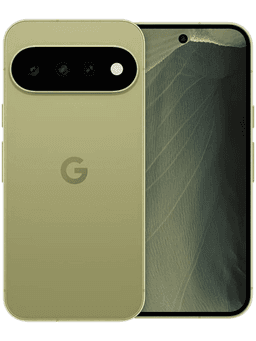


Other Google models
- Google Pixel 7Rs. 144,999
- Google Pixel 7 ProRs. 209,999
- Google Pixel 7aRs. 137,999
- Google Pixel 8Rs. 163,999
- Google Pixel 8 ProThis phone
- Google Pixel 8aRs. 143,999
- Google Pixel 9Rs. 199,999
- Google Pixel 9 ProRs. 269,999
- Google Pixel 9 Pro FoldRs. 489,999
Google Pixel 8 Pro: Buyer's Guide
Is It Value for Money?
At Rs. 253,999, the Google Pixel 8 Pro is good value for buyers who want the most complete Pixel camera kit and long software support, and weaker value for anyone chasing performance.
Its strengths are a very bright LTPO display, a 5x periscope telephoto, six to eight hours of screen time, 12GB RAM and seven years of updates. Its weaknesses are a Tensor G3 chip that heats up under sustained load, slow photo editing and video quality that lags the best rivals in tricky light.
The cheaper Google Pixel 8 has the same chip and main camera, while the Google Pixel 9 (Rs. 199,999) has a newer chip but no telephoto. Verdict: buy the 8 Pro for zoom, a big screen and battery life; otherwise the smaller Pixel 8 gives most of the experience for much less.
How Is the Display?
The Pixel 8 Pro has a 6.7-inch LTPO OLED display at 1344 x 2992 resolution, with a 120Hz refresh rate and up to 2400 nits peak brightness. It is among the brightest phone screens available and stays easy to read outdoors, although the difference from the Pixel 8 is hard to spot side by side.
The screen is now completely flat, replacing the curved edges of earlier Pro models, and the bezels are thin and even. Because it is LTPO, the refresh rate can drop as low as 1Hz on static content, which helps battery life with the always-on display.
The phone ships set to a resolution just below 1080p. It still looks sharp, and full resolution can be switched on in settings. Gorilla Glass Victus 2 protects the front.
How Is the Performance?
The Google Tensor G3 with 12GB RAM keeps everyday use smooth: animations are fluid and the haptics are strong and refined, which makes typing and scrolling feel precise.
Raw power is the weakness. Graphics performance trails rival flagship chips, the photo editing suite can chug, and tasks Google has not specifically optimised run slower than on the competition.
Heat shows up during sustained work such as long video recording or hotspot use; when the phone gets hot, everything lags, including the camera viewfinder. Occasional bugs, such as a briefly unresponsive screen, have also been reported. Signal is generally good but can drop more often during hotspot use, as the 5G modem is a revised older design. The optical fingerprint reader works but is slower than ultrasonic ones.
How Is the Camera?
The Pixel 8 Pro pairs a 50MP main camera with a 48MP ultrawide and a 48MP 5x periscope telephoto. Daylight photos are detailed with realistic colours and wide dynamic range, though processing can overdo HDR or smooth fine texture. Pro controls allow full 50MP shots.
Zoom is the standout: the telephoto stays sharp to about 20x, and sometimes up to its 30x maximum. There are odd limits, though: portrait mode cannot zoom past 3x, so it never uses the telephoto, and slow motion relies on digital zoom.
Video has excellent colours and cleaner shadows than earlier Pixels, but faces get artificial brightening and sharpening, lens switching is laggy, and stabilisation creates blur and artefacts in low light. Cinematic blur is limited to 1080p. Best Take, Magic Editor and Audio Magic Eraser are impressive, although Audio Magic Eraser cannot remove strong wind or loud engine noise.
How Is the Battery?
The Pixel 8 Pro has a 5050 mAh battery, and battery life is one of its strengths. Screen-on time of six to eight hours is regular with normal use, and standby drain is reasonable. Whether it holds up over several years is still an open question, as some older Pixels faded with age.
Wired charging is rated at 30W, and Google quotes 50% in about 30 minutes with its 30W charger. No charger is included in the box. It also supports 23W wireless charging with Google's Pixel Stand (2nd gen) and reverse wireless charging.
A useful battery estimate shows what time the phone will run out at your current usage, rather than only a percentage.
How Is the Software?
The Pixel 8 Pro launched with Android 14 and Google's clean Pixel interface. Google's official policy promises seven years of updates from the date it first went on sale on the US Google Store, covering OS versions, security patches and feature drops.
Highlights include call screening with a natural-sounding voice and context-aware reply buttons, faster on-device speech-to-text that leaves out filler words, natural read-aloud for web pages and AI-generated wallpapers. The camera app is neatly split into photo and video modes. A thermometer app uses the rear sensor to measure surface temperatures, but readings vary from one try to the next.
Magic Editor and AI wallpapers need an internet connection, Video Boost processes clips in the cloud and can take hours, and some Assistant features launched only in the US, so availability in Pakistan may differ.
Google Pixel 8 Pro: Questions Buyers Ask
Does the Google Pixel 8 Pro overheat?
It can get hot under sustained load, but not in light everyday use. Long video recording and hotspot use have pushed it hot enough that the camera viewfinder becomes choppy and the phone lags. Normal browsing and apps stay smooth.
How long does the Pixel 8 Pro battery last?
Battery life is a strength. Between 6 and 8 hours of screen use per charge is typical from the 5050 mAh battery, and the phone loses little charge when idle. The LTPO display helps by lowering its refresh rate on static content, so a full busy day is realistic.
Has the fingerprint sensor improved on the Pixel 8 Pro?
Not much. It is still an optical under-display sensor, which works reliably for most people but is a beat slower than the ultrasonic sensors in rival flagships and less consistent with wet fingers. Face unlock is an alternative, though it needs the phone fairly close to your face.
Is the Pixel 8 Pro worth the extra over the Pixel 8?
Only if you need zoom, a bigger screen or longer battery life. Both share the Tensor G3 and 50MP main camera, so everyday photos look similar. The Pro adds a 5x telephoto, a 6.7-inch LTPO display, 12GB RAM and a 5050 mAh battery, at Rs. 253,999.
How good is the zoom on the Pixel 8 Pro?
Very good. The 48MP 5x periscope telephoto keeps photos sharp up to around 20x, and some shots stay usable at the 30x maximum. The main limits are that portrait mode cannot go past 3x and slow-motion video uses digital zoom instead of the telephoto.
Does the Pixel 8 Pro have network or modem problems?
Signal and call quality are generally good, but not class-leading. The connection can drop more often than on some rivals during hotspot use, because the Pixel 8 Pro uses a revised version of an older 5G modem rather than the newest one.
How many years of software updates will the Pixel 8 Pro get?
Seven years. Google's official policy covers OS upgrades, security patches and feature drops for seven years from the date the phone first went on sale on the US Google Store in October 2023, which takes support to 2030.
