



Infinix Note 50 Pro price in Pakistan
Infinix Note 50 Pro price in Pakistan is Rs. 132,999 (last updated 23 Oct 2026). See all Infinix phones.
The Infinix Note 50 Pro combines a 144Hz AMOLED display, metal construction, wireless charging, and an extensive collection of AI tools. Its Helio G100 chipset delivers familiar mid-range performance, handling everyday tasks comfortably and supporting PUBG at Smooth graphics with Ultra frame rates. However, the main attraction is its software: Gemini integration, DeepSeek-powered AI assistance, Circle to Search, call translation and transcription, AI photo editing, and privacy protection features offer practical functionality beyond basic smartphone use.
The 50MP main camera with OIS captures detailed images, including in low light, while the 8MP ultrawide camera adds flexibility for landscapes and group shots. The 32MP selfie camera offers improved detail and colour reproduction compared with the standard Note 50. Its 5,200mAh battery supports 90W wired charging, 30W wireless charging, and reverse wireless charging. The magnetic charging accessory, customizable notification lighting, in-display fingerprint scanner, stereo speakers, and IP64 protection add to its everyday convenience.
Who it's for
- AI-focused users who want built-in assistants, call transcription, translation, and photo-editing tools.
- Photography enthusiasts who value OIS, an ultrawide camera, detailed low-light photos, and a capable selfie camera.
- Convenience-focused buyers who want fast wired charging, wireless charging, a metal frame, and a smooth AMOLED display.
Where it falls short
The Helio G100 is a 4G-only chipset, and the additional RAM does not deliver a noticeable gaming advantage over the standard Note 50. Video recording is limited to 2K rather than 4K, and the stereo speakers sound good but are not particularly loud. The 5,200mAh battery is adequate, but buyers prioritizing maximum battery capacity have alternatives with larger cells. There is also no memory card slot, so storage cannot be expanded later.
Worth comparing
The Vivo V50 Lite 5G offers a 6,500mAh battery, 90W wired charging, a 120Hz AMOLED display, IP65 protection, and 5G connectivity. Its larger battery and newer-generation connectivity may suit users who prioritize endurance and mobile data speeds. The Infinix Note 50 Pro counters with a smoother 144Hz display, 30W wireless charging, a metal frame, a 50MP OIS main camera paired with an ultrawide lens, and a broader selection of AI features. Choose the Vivo for battery capacity and 5G, or the Infinix for wireless charging, camera flexibility, and its feature-rich software experience.
| Network | Technology | GSM / HSPA / LTE |
|---|
| Launch | Announced | 2025, March 04 |
|---|---|---|
| Status | Available. Released 2025, March |
| Body | Dimensions | 163.3 x 74.4 x 7.3 mm |
|---|---|---|
| Weight | 198 g | |
| Build | Glass front, aluminum frame | |
| SIM | Nano-SIM + Nano-SIM |
| Display | Type | AMOLED, 1B colors, 144Hz, 2160Hz PWM, 1300 nits (peak) |
|---|---|---|
| Size | 6.78 inches (~90.4% screen-to-body ratio) | |
| Resolution | 1080 x 2436 pixels (~393 ppi density) | |
| Protection |
| Platform | OS | Android 15, up to 2 major Android upgrades, XOS 15 |
|---|---|---|
| Chipset | Mediatek Helio G100 Ultimate (6 nm) | |
| CPU | Octa-core (2x2.2 GHz Cortex-A76 & 6x2.0 GHz Cortex-A55) | |
| GPU | Mali-G57 MC2 |
| Memory | Internal | 256GB 8GB RAM, 256GB 12GB RAM |
|---|---|---|
| Card Slot | No |
| Main Camera | Modules | 50 MP, f/1.9, (wide), 1/1.57", 1.0µm, PDAF, OIS 8 MP, f/2.2, 15mm, 112˚ (ultrawide) |
|---|---|---|
| Features | Dual-LED flash, HDR, panorama | |
| Video | 1440p@30fps, 1080p@30/60/240fps |
| Selfie Camera | Modules | 32 MP, f/2.2, (wide), 1/3.1" |
|---|---|---|
| Features | ||
| Video | 1080p@30fps |
| Sound | Loudspeaker | Yes, with stereo speakers |
|---|---|---|
| 3.5mm Jack | No |
| Comms | WLAN | Wi-Fi 802.11 a/b/g/n/ac, dual-band |
|---|---|---|
| Bluetooth | 5.4, A2DP, LE | |
| GPS | GPS | |
| NFC | Yes (market/region dependent) | |
| Radio | FM radio | |
| USB | USB Type-C 2.0, OTG |
| Features | Sensors | Fingerprint (under display, optical), accelerometer, gyro, compass, heart rate, SpO2 |
|---|
| Battery | Type | 5200 mAh |
|---|---|---|
| Charging | 90W wired, 100% in 38 min 30W wireless MagCharge 10W Reverse wired Reverse wireless Bypass Charging |
| Misc | Colors | Titanium Grey, Enchanted Purple, Racing Edition, Shadow Black |
|---|---|---|
| Models | X6855 |
Infinix Note 50 Pro
Similar Price Range









Top Trending Mobiles
More from Infinix
See more
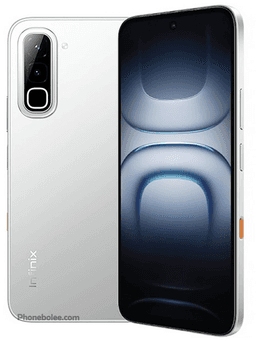
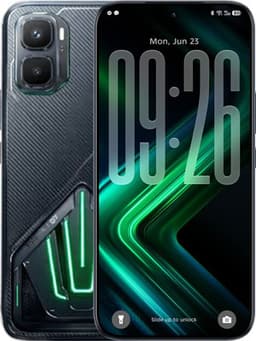

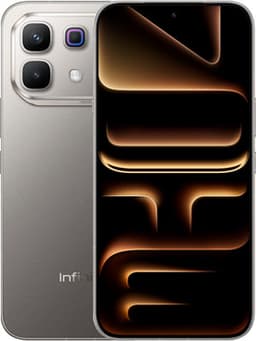
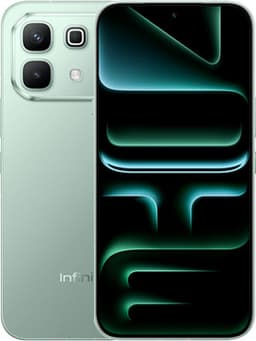


Other Infinix models
- Infinix Note 40 VIPRs. 89,999
- Infinix Note 40SRs. 54,999
- Infinix Note 40XRs. 51,999
- Infinix Note 50In storesRs. 117,999
- Infinix Note 50 ProThis phone
- Infinix Note 50 Pro PlusRs. 119,999
- Infinix Note 50sRs. 54,999
- Infinix Note 50s PlusRs. 64,999
- Infinix Note 50s Pro PlusRs. 70,999
Infinix Note 50 Pro: Buyer's Guide
Is It Value for Money?
The Infinix Note 50 Pro is the same core phone as the Note 50 with three upgrades: a heart rate and SpO2 sensor, a better camera set (an 8 MP ultrawide and a 32 MP selfie camera) and faster 90W wired charging. It also gets 12GB of RAM, a slimmer body, a screen protector in the box and excellent haptics.
What it does not change is the Helio G100 Ultimate chip, which is a 4G chip also found in much cheaper phones. Many buyers expected a 5G chip at this price.
Verdict: a good pick if you want a premium metal design, wireless charging and the extra camera and health features. If those upgrades do not matter to you, the plain Note 50 is the better value. Heavy gamers and video editors should look elsewhere. The Oppo Reno 16F costs more at Rs. 139,495, but adds 5G, a 7000 mAh battery, IP68/IP69K protection and a telephoto camera.
How Is the Display?
Official specs: a 6.78-inch AMOLED panel with a 1080 x 2436 resolution, a 144Hz refresh rate, 2160Hz PWM dimming and up to 1300 nits peak brightness.
Real-world use: the screen is bright and easy to read outdoors, with thin bezels and a smaller chin than last year's model. The in-display fingerprint reader is quick. Scrolling is very smooth, although, as on the Note 50, the 144Hz mode is limited to some apps and games cannot run that fast on this chip. The display is identical to the cheaper Note 50, so there is no screen reason to pay extra for the Pro.
How Is the Performance?
Official specs: the MediaTek Helio G100 Ultimate (6 nm) with 8GB or 12GB of RAM and 256GB of UFS 2.2 storage, with no memory card slot.
Real-world use: the AnTuTu score is around 430,000, the same as the Note 50. Social media, browsing and everyday apps run smoothly, and the 12GB of RAM keeps more apps open in the background. Games run at about 30 to 40 FPS; PUBG Mobile offers Smooth graphics with the Ultra frame rate, or HD with the High frame rate. The extra RAM makes no difference in gaming compared with 8GB, and video editing can lag. Some app animations feel less smooth than on rival brands.
How Is the Camera?
Official specs: a 50 MP main camera with OIS (f/1.9), an 8 MP ultrawide and a 32 MP selfie camera. Video tops out at 1440p (2K) at 30fps, with no 4K recording; portrait video is limited to 720p.
Real-world use:
- Main camera: the same quality as the Note 50, with good detail in daylight and detailed shots in low light.
- Ultrawide: the main hardware upgrade over the Note 50, useful for groups and landscapes.
- Selfies: the 32 MP camera captures more detail and more accurate colours than the Note 50's 13 MP camera, which tends to wash out faces.
- Extras: Street Snap, Vlog, Super Night and sky replacement modes, plus a vintage filter and AI Studio tools.
Overall, the cameras are decent for the price but not outstanding; rivals such as the Redmi Note 14 Pro are slightly better.
How Is the Battery?
Official specs: a 5200 mAh battery with 90W wired charging (100% in 38 minutes, as Infinix states), 30W wireless MagCharge, 10W reverse wired charging, reverse wireless charging and bypass charging.
Real-world use: a full charge takes about 38 to 40 minutes, but can stretch to 50 to 55 minutes if the phone is warm or in use while charging. Screen-on time is around seven hours, and GSMArena measured an Active Use Score of 11:26h. The box includes a 90W charger with a USB-A to USB-C cable.
The MagCharge magnets sit in the included hard case. The magnetic power bank shows its own battery level on the phone over Bluetooth. Launch stock also came with a free 5000 mAh magnetic power bank.
How Is the Software?
The phone runs XOS 15 on Android 15, with a cleaner design and a new control centre. Infinix promises up to 2 major Android upgrades; three years of security updates have also been reported.
The AI suite is one of the most complete at this price:
- Folax voice assistant with DeepSeek R1 built in, and Gemini on a long press of the power key.
- AI call translation and summaries, which also record and save calls as notes. Urdu is not offered yet.
- On-screen recognition that reads text in images and web pages, plus Circle to Search.
- AI eraser, extender, cut-out and automatic removal of location data from photos.
The Pro also adds a heart rate and SpO2 sensor inside the multi-colour rear light, readable in the Infinix Health app. It works best indoors; in strong sunlight readings can fail unless you cover your finger. An IR blaster and NFC are included.
Infinix Note 50 Pro: Questions Buyers Ask
What is the difference between the Infinix Note 50 and the Note 50 Pro?
The Pro adds three main upgrades: a heart rate and SpO2 sensor, an 8 MP ultrawide plus a 32 MP selfie camera, and 90W wired charging instead of 45W. It also offers 12GB of RAM. The display, chip, main camera and design are essentially the same.
Does the Infinix Note 50 Pro have a headphone jack?
No, the Infinix Note 50 Pro has no 3.5mm headphone jack. You will need USB-C or Bluetooth earphones. It also has no memory card slot, but it does have dual nano-SIM support.
Does the Infinix Note 50 Pro always come with a free power bank?
No, not always. The 5000 mAh magnetic power bank was a launch offer for early buyers, so later stock may not include it. The standard box has the phone, a 90W charger, a cable, a magnetic hard case and a glass screen protector; confirm the bundle with the seller.
Does the heart rate sensor on the Infinix Note 50 Pro work, and where do I check it?
Yes, it works. Open the Infinix Health app, choose to measure with the phone, and place your finger on the sensor in the rear light. It shows heart rate and blood oxygen. Use it indoors, as strong sunlight can make the measurement fail.
Does the Infinix Note 50 Pro lag?
Not in everyday use. Social media, browsing and normal apps run smoothly, helped by up to 12GB of RAM. It does slow down with heavy tasks: games run at about 30 to 40 FPS and video editing can lag, because the Helio G100 Ultimate is a modest chip.