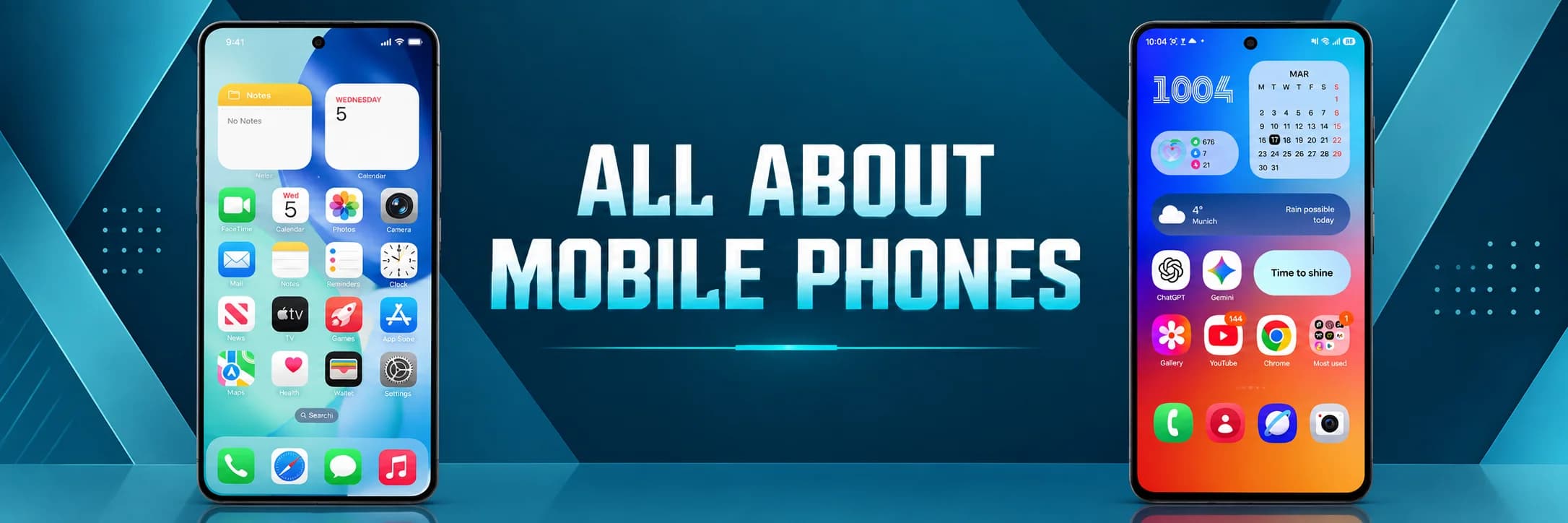

Xiaomi 17 Pro Max price in Pakistan
Xiaomi 17 Pro Max price in Pakistan is Rs. 413,999 (last updated 26 Oct 2026). See all Xiaomi phones.
The Xiaomi 17 Pro Max suits buyers who want an iPhone-sized flagship without iPhone-style limits on battery and charging. A 7,500 mAh silicon-carbon battery fits in a body lighter than the iPhone 17 Pro Max, the Snapdragon 8 Elite Gen 5 rivals the fastest phone chips, and a 2.9-inch rear display turns the main cameras into a selfie viewfinder. The catch: it is a China-only model, better for tech-savvy owners than plug-and-play buyers.
Who it's for
- Heavy users: 100W charging with the charger in the box plus 50W wireless keeps top-ups rare and quick.
- Camera-first buyers: all three 50 MP cameras give crisp shots with natural background blur, and the 5x telephoto excels at portraits.
- Curious iPhone users: familiar design and controls ease the switch, while the rear screen adds something no iPhone has.
Where it falls short
The cameras tend to over-expose faces, making skin look brighter than real life. Rear-screen extras like timers, music controls and a retro gaming case look clever but add little. Most importantly, the China-only status makes it hard to rely on as an everyday phone outside China.
Worth comparing
The Vivo X300 Ultra (Rs. 389,999) is built around two 200 MP cameras but has a smaller battery, slower wireless charging and no rear display. The Oppo Find X9 Ultra (Rs. 289,999) saves a large sum and adds a dedicated 10x zoom lens for distant subjects, though it is heavier and also lacks a back screen. Choose the Xiaomi for battery and rear-camera selfies.
| Network | Technology | GSM / HSPA / LTE / 5G |
|---|
| Launch | Announced | 2025, September 25 |
|---|---|---|
| Status | Available. Released 2025, September 25 |
| Body | Dimensions | 162.9 x 77.6 x 8 mm |
|---|---|---|
| Weight | 219 g | |
| Build | Glass front (Dragon Crystal Glass 3), aluminum frame | |
| SIM | Nano-SIM + Nano-SIM |
| Display | Type | LTPO AMOLED, 68B colors, 2160Hz PWM, 120Hz, Dolby Vision, HDR Vivid, HDR10+, 3500 nits (peak) |
|---|---|---|
| Size | 6.9 inches (~92.3% screen-to-body ratio) | |
| Resolution | 1200 x 2608 pixels, 19.5:9 ratio (~416 ppi density) | |
| Protection | Xiaomi Dragon Crystal Glass 3 |
| Platform | OS | Android 16, HyperOS 3 |
|---|---|---|
| Chipset | Qualcomm SM8850-AC Snapdragon 8 Elite Gen 5 (3 nm) | |
| CPU | Octa-core (2x4.6 GHz Oryon V3 Phoenix L + 6x3.62 GHz Oryon V3 Phoenix M) | |
| GPU | Adreno 840 |
| Memory | Internal | 512GB 12GB RAM, 512GB 16GB RAM, 1TB 16GB RAM |
|---|---|---|
| Card Slot | No |
| Main Camera | Modules | 50 MP, f/1.7, 23mm (wide), 1/1.28", 1.22µm, dual pixel PDAF, OIS 50 MP, f/2.6, 115mm (periscope telephoto), 1/1.95", 0.8µm, PDAF (30cm - ∞), OIS, 5x optical zoom 50 MP, f/2.4, 17mm, 102˚ (ultrawide), 1/2.88", 0.61µm, PDAF |
|---|---|---|
| Features | Laser AF, color spectrum sensor, Leica lens, Dual-LED dual-tone flash, HDR, panorama | |
| Video | 8K@30fps (HDR), 4K@30/60/120fps (HDR10+, 10-bit Dolby Vision HDR, 10-bit LOG), 1080p@30/60/120/240/960fps, 720p@1920fps, gyro-EIS |
| Selfie Camera | Modules | 50 MP, f/2.2, 21mm (wide), 1/2.88", 0.61µm, PDAF |
|---|---|---|
| Features | HDR, panorama | |
| Video | 4K@30/60fps, 1080p@30/60fps, HDR10+, gyro-EIS |
| Sound | Loudspeaker | Yes, with stereo speakers (with Dolby Atmos) |
|---|---|---|
| 3.5mm Jack | No |
| Comms | WLAN | Wi-Fi 802.11 a/b/g/n/ac/6e/7, dual-band, Wi-Fi Direct |
|---|---|---|
| Bluetooth | 5.4, A2DP, LE, aptX HD, aptX Adaptive, LHDC 5 | |
| GPS | GPS (L1+L5), BDS (B1I+B1c+B2a), GALILEO (E1+E5a), QZSS (L1+L5), NavIC (L5), GLONASS | |
| NFC | Yes | |
| Radio | No | |
| USB | USB Type-C 3.2, Display Port, OTG |
| Features | Sensors | Fingerprint (under display, ultrasonic), accelerometer, proximity, gyro, compass, barometer |
|---|
| Battery | Type | Si/C Li-Ion 7500 mAh |
|---|---|---|
| Charging | 100W wired, PD3.0, QC3+, 100W PPS 50W wireless 22.5W reverse wireless |
| Misc | Colors | Black, White, Purple, Green |
|---|---|---|
| Models | 2509FPN0BC |
Similar Price Range





Top Trending Mobiles
More from Xiaomi
See more


Other Xiaomi models
- Xiaomi 17 AirRs. 328,499
- Xiaomi 17 FoldRs. 479,999
- Xiaomi 17 MaxRs. 339,999
- Xiaomi 17 ProRs. 389,999
- Xiaomi 17 Pro MaxThis phone
- Xiaomi 17 UltraRs. 439,999
- Xiaomi 17 Ultra Leica EditionRs. 481,999
- Xiaomi 17s ProRs. 344,999
- Xiaomi 17TIn storesRs. 218,999
Xiaomi 17 Pro Max: Buyer's Guide
Is It Value for Money?
At Rs. 413,999, the Xiaomi 17 Pro Max is priced against the most expensive flagships in Pakistan, and it earns much of that price. It combines a very large battery, 100W charging with the charger included, a top-tier Snapdragon chip, three strong 50 MP cameras and a rear display that is genuinely useful for selfies.
The compromises are about software and support rather than hardware. The phone is a China-market model: GSMArena notes that several Google features do not work on its Chinese software, and Xiaomi has not confirmed an update policy for it.
- Worth it if you want the longest battery life and fastest charging in a flagship and are comfortable setting up a China-version phone.
- Look elsewhere if you want simple Google setup and clear local support. The Oppo Find X9 Ultra costs far less at Rs. 289,999 and is sold internationally, while the Vivo X300 Ultra at Rs. 389,999 focuses on camera hardware.
Verdict: excellent hardware for the money at this level, but best suited to experienced buyers who accept the China-version trade-offs.
How Is the Display?
Official specs: a 6.9-inch LTPO AMOLED panel at 1200 x 2608 resolution with a 120Hz refresh rate, Dolby Vision and HDR10+ support, and a quoted peak brightness of 3500 nits. It also uses high-frequency 2160Hz PWM dimming, which can help people who notice flicker at low brightness.
Real-world use: the screen gets noticeably brighter than the iPhone 17 Pro Max, which helps outdoors in strong sunlight. Its resolution is slightly lower on paper, but the difference is not visible in normal use. Bezels are slim and even, and the cutout at the top is small because the phone uses an under-display ultrasonic fingerprint reader instead of face unlock hardware. A screen protector comes pre-installed on both the front and back.
The rear display: a 2.9-inch, 120Hz OLED screen covers the camera area. It works as a viewfinder, clock, notification panel and media controller. Its limit is app support: GSMArena found that few apps work with it beyond Xiaomi's own tools.
How Is the Performance?
The Snapdragon 8 Elite Gen 5 (3 nm) is paired with up to 16GB of RAM and up to 1TB of fast UFS 4.1 storage, so apps open instantly and heavy multitasking is not a concern.
Real-world use: the chip is a clear step up from the previous Snapdragon 8 Elite. It roughly matches the iPhone's single-core speed and pulls ahead in multi-core and graphics work, which shows in demanding games and editing apps.
Sustained performance: GSMArena's stress test found the CPU dropped to about half of its peak within ten minutes, and the graphics test held around 60% stability. That is typical for current flagships, but it means very long gaming sessions will not run at full speed throughout.
Heat levels during long gaming sessions have not been reliably reported yet, so that remains an open point.
How Is the Camera?
Official specs: three 50 MP rear cameras with Leica lenses: a main camera with OIS, a 5x optical periscope telephoto with OIS, and an ultrawide. The front camera is also 50 MP. Video goes up to 8K at 30fps, with 4K at up to 120fps and 10-bit LOG recording.
Real-world use:
- Detail and depth: all three cameras take sharp, detailed photos with a naturally shallow depth of field, so subjects stand out without heavy software blur.
- Colours: mostly accurate, with Xiaomi's own taste, but faces are often over-exposed, which can make skin look brighter than it is.
- Telephoto: the 5x lens is a highlight, giving natural background blur and an attractive portrait look.
- Selfies: the rear screen lets you frame shots with the main cameras instead of the front camera, which gives much better selfies.
- Useful tools: an always-visible exposure slider in auto mode and a teleprompter mode for recording yourself.
Low-light performance has not been reliably documented yet, so judge it from sample photos before buying.
How Is the Battery?
Official specs: a 7500 mAh silicon-carbon battery, 100W wired charging, 50W wireless charging and 22.5W reverse wireless charging. A 100W charger comes in the box.
Real-world use: the silicon-carbon design adds capacity without making the phone thicker or heavier; it is still lighter than the iPhone 17 Pro Max. GSMArena's battery test placed it among the longest-lasting phones it has tested, behind only the Oppo Find X9 Pro among recent models, with roughly 29 hours of video playback. Those tests were run with the rear display switched off.
Charging: GSMArena measured a full charge in about 39 minutes with the bundled charger, and about 42 minutes with a 100W USB Power Delivery charger, so you do not have to use Xiaomi's own brick.
Reverse wireless charging lets the phone top up earbuds, a watch or even another phone. Note that these results come from the Chinese version; a global version may use a different battery.
How Is the Software?
The phone runs Android 16 with HyperOS 3. The design borrows heavily from iOS, including the control centre, some app styles and a Dynamic Island-style area at the top that shows timers, calls and media.
Rear screen software: you can double-tap to wake it, pick from many clock and watch faces, check notifications, open the camera and control calls, music and timers. A theme store offers far more styles.
China-version limits: GSMArena reports that the Chinese software supports only Chinese and English, and that Google features such as Discover, Android Auto and Quick Share do not work. The Play Store, Gemini and Google Wallet can be installed, though Wallet can be unreliable. Xiaomi's own XiaoAI assistant replaces Gemini by default.
Updates: Xiaomi has not confirmed an update policy for this phone. GSMArena estimates about four Android upgrades and six years of security patches based on the Xiaomi 15 series, but that is an estimate, not a promise.
Xiaomi 17 Pro Max: Questions Buyers Ask
What is the price of the Xiaomi 17 Pro Max in Pakistan?
Our current listed price for the Xiaomi 17 Pro Max is Rs. 413,999. It is a China-market phone, so the price depends on the importer and can change with stock and exchange rates. Check the store prices on this page before you buy.
Is the Xiaomi 17 Pro Max better than the iPhone 17 Pro Max?
In several areas, yes. The Xiaomi has a bigger 7500 mAh battery, much faster charging, a brighter main screen, a useful rear display and a chip that matches or beats Apple's in performance, while weighing less. The iPhone keeps Face ID, Apple's software and wider official support, which this China-market model lacks.
Does the Xiaomi 17 Pro Max support wireless charging?
Yes. It supports 50W wireless charging, and it can also charge other devices wirelessly at 22.5W, such as earbuds, a smartwatch or another phone. Wired charging runs at 100W with the charger included in the box.
Can I use Google apps like Gmail on the Xiaomi 17 Pro Max?
Yes, but with limits. GSMArena reports that the Play Store can be installed on the Chinese software, so apps like Gmail can be added. Some Google features, including Discover, Android Auto and Quick Share, do not work on the Chinese version.
Does the Xiaomi 17 Pro Max support USB PD fast charging?
Yes. It supports USB Power Delivery 3.0 and 100W PPS charging alongside Xiaomi's own charger. GSMArena measured a full charge in about 42 minutes with a 100W USB PD charger, only a few minutes slower than with the bundled charger.
