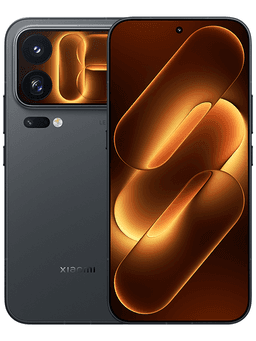
Xiaomi 18 Pro Max price in Pakistan
Xiaomi 18 Pro Max price in Pakistan is Rs. 375,999 (last updated 23 Oct 2026). See all Xiaomi phones.
The Xiaomi 18 Pro Max chooses raw hardware over restraint. A 2 nm Snapdragon 8 Elite Extreme Gen 6, an 8500 mAh silicon-carbon battery and two 200 MP rear cameras top almost any spec sheet, while an iPhone-like shape and interface make switching from Apple painless. The catch is that big numbers do not guarantee the most polished daily experience, and some software choices still feel unfinished.
Who it's for
- Heavy users: the huge battery and the 100W charger in the box turn short top-ups into real hours of use.
- Zoom photographers: the 200 MP 3.2x telephoto uses a sensor as large as many phones' main cameras, so crops keep their detail.
- Privacy-conscious professionals: the privacy display hides the screen from side angles with one button and warns you when someone else is looking.
Where it falls short
Privacy mode blocks only left and right views and adds a rainbow tint off-axis. The ultrawide camera lags clearly behind the other two, the side button is locked to AI functions, and China units need Google Play added by hand.
Worth comparing
The Samsung Galaxy S26 Ultra costs slightly less and adds a less reflective screen and a seven-year update promise, but its 5,000mAh battery and slower charging cannot match Xiaomi's endurance. The Google Pixel 11 Pro XL costs far more and suits buyers who value clean software over gaming power, where its Tensor G6 trails Snapdragon rivals.
| Network | Technology | GSM / HSPA / LTE / 5G |
|---|
| Launch | Announced | 2026, September 23 |
|---|---|---|
| Status | Available. Released 2026, September 23 |
| Body | Dimensions | 163.4 x 77.6 x 8.4 mm |
|---|---|---|
| Weight | 235 g or 240 g | |
| Build | Glass front (Dragon Crystal Glass 3), aluminum frame | |
| SIM | Nano-SIM + Nano-SIM |
| Display | Type | LTPO AMOLED, 68B colors, 2160Hz PWM, 120Hz, Dolby Vision, HDR Vivid, HDR10+, BT.2020, 4000 nits (peak) |
|---|---|---|
| Size | 6.9 inches (~91.6% screen-to-body ratio) | |
| Resolution | 1208 x 2624 pixels, 19.5:9 ratio (~418 ppi density) | |
| Protection | Xiaomi Dragon Crystal Glass 3 |
| Platform | OS | Android 17, HyperOS 4 |
|---|---|---|
| Chipset | Qualcomm SM8975 Snapdragon 8 Elite Extreme Gen 6 (2 nm) | |
| CPU | Octa-core (2x5.01 GHz Prime + 3x4.03 GHz Performance + 3x3.74 GHz Performance) | |
| GPU | Adreno 850 |
| Memory | Internal | 256GB 12GB RAM, 512GB 12GB RAM, 512GB 16GB RAM, 1TB 16GB RAM |
|---|---|---|
| Card Slot | No |
| Main Camera | Modules | 200 MP, f/1.7, 23mm (wide), 1/1.28", 0.61µm, dual pixel PDAF, OIS 200 MP, f/2.4, 75mm (periscope telephoto), 1/1.56", PDAF (10cm - ∞), OIS, 3.2x optical zoom 50 MP, f/2.4, 17mm, 102˚ (ultrawide), 1/2.88", 0.61µm, PDAF |
|---|---|---|
| Features | Laser AF, color spectrum sensor, Leica lens, Dual-LED dual-tone flash, HDR, panorama | |
| Video | 8K@30fps (HDR), 4K@30/60/120fps (HDR10+, 10-bit Dolby Vision HDR, 10-bit LOG), 1080p@30/60/120/240/960fps, 720p@1920fps, gyro-EIS |
| Selfie Camera | Modules | 50 MP, f/2.2, 21mm (wide), 1/2.88", 0.61µm, PDAF |
|---|---|---|
| Features | HDR, panorama | |
| Video | 4K@30/60fps, 1080p@30/60fps, HDR10+, gyro-EIS |
| Sound | Loudspeaker | Yes, with stereo speakers (3 speakers, with Dolby Atmos) |
|---|---|---|
| 3.5mm Jack | No |
| Comms | WLAN | Wi-Fi 802.11 a/b/g/n/ac/6e/7, dual-band, Wi-Fi Direct |
|---|---|---|
| Bluetooth | 6.0, A2DP, LE, aptX HD, aptX Adaptive, LHDC 5 | |
| GPS | GPS (L1+L5), BDS (B1I+B1c+B2a), GALILEO (E1+E5a), QZSS (L1+L5), NavIC (L5), GLONASS | |
| NFC | Yes | |
| Radio | No | |
| USB | USB Type-C 3.2, Display Port, OTG |
| Features | Sensors | Fingerprint (under display, ultrasonic), accelerometer, proximity, gyro, compass, barometer |
|---|
| Battery | Type | Si/C Li-Ion 8500 mAh |
|---|---|---|
| Charging | 100W wired, PD3.0, QC3+, 100W PPS 50W wireless 27W reverse wireless |
| Misc | Colors | Black, White, Pink, Red, Blue |
|---|---|---|
| Models |
Similar Price Range




Top Trending Mobiles
More from Xiaomi
See more


Other Xiaomi models
- Xiaomi 17TIn storesRs. 218,999
- Xiaomi 17T ProRs. 249,999
- Xiaomi 18Rs. 309,999
- Xiaomi 18 ProRs. 322,999
- Xiaomi 18 Pro MaxThis phone
- Xiaomi 18 UltraRs. 457,999
- Xiaomi Black Shark 2
- Xiaomi Black Shark 3Rs. 73,999
- Xiaomi Black Shark 3 ProRs. 101,999
Xiaomi 18 Pro Max: Buyer's Guide
Is It Value for Money?
At Rs. 375,999, the Xiaomi 18 Pro Max sits almost level with the Samsung Galaxy S26 Ultra (Rs. 387,495) and well below the Google Pixel 11 Pro XL (Rs. 469,999). For that money it brings a newer 2 nm chip, a much larger battery than Samsung's 5000 mAh cell, 100W charging with the charger in the box and two 200 MP cameras.
The compromises are mostly about software and support rather than hardware:
- Units built for China ship without Google Play and with many preinstalled apps.
- Xiaomi's official update commitment for this model is not confirmed, while Samsung promises up to 7 major OS updates.
- PTA status and local warranty depend on the version a seller offers.
Verdict: strong value for buyers who want the biggest battery, fastest charging and best zoom at this price and are happy with Xiaomi's software. Buyers who put long-term updates and a fully polished experience first should look at Samsung.
How Is the Display?
Official specs: a 6.9 inches LTPO AMOLED panel with 1208 x 2624 resolution, 120Hz refresh rate, Dolby Vision and HDR10+, 2160Hz PWM dimming and up to 4000 nits peak brightness.
Real-world use: the panel is very bright, which helps outdoors and offsets the main trade-off of its headline feature, the privacy display. With one button it hides the screen from people sitting beside you, and it can turn on automatically for selected apps, notifications or locations. Gaze detection uses the front camera to warn you when another person is looking at your screen.
Xiaomi's HyperRGB layout keeps a full red, green and blue set for every pixel, so sharpness drops less in privacy mode. The limits:
- It only blocks left and right views, not views from above or below.
- Viewing angles are slightly worse overall, with a rainbow tint when seen at an angle.
- The setting sits under privacy settings rather than display settings.
The small hole-punch cutout and the fast ultrasonic fingerprint reader round out a front that is easy to live with.
How Is the Performance?
The phone runs the Qualcomm Snapdragon 8 Elite Extreme Gen 6, a 2 nm chip whose two prime cores run at about 5 GHz. It is the higher-clocked version of the chip used in the Xiaomi 18 Pro.
Real-world use: benchmark results are roughly 15 to 20% higher than last year's flagship chips, and everyday use is very fast, even on the China version loaded with preinstalled apps. The top models pair the chip with 16GB of LPDDR5X RAM and UFS 4.1 storage, cooled by a large vapour chamber, so multitasking and app loading should not be a concern.
Limitations: sustained gaming, heat under long loads and battery drain while gaming have not yet been measured in full testing. Raw power is not in doubt; how smoothly Xiaomi's software uses it over months of ownership is the open question.
How Is the Camera?
Official specs: a 200 MP f/1.7 main camera, a 200 MP periscope telephoto with 3.2x optical zoom, a 50 MP ultrawide and a 50 MP selfie camera, with Leica lenses and video up to 8K@30fps.
Real-world use:
- The main camera uses a large sensor and produces excellent results again.
- The telephoto is the biggest upgrade. Its sensor is about as large as the main camera on many phones, so photos cropped beyond 3.2x keep a lot of detail.
- The ultrawide is clearly the weakest of the three.
- There is no variable aperture; Xiaomi relies on larger sensors instead.
- Leica colour profiles, a full 200 MP mode and 8K video are all included.
The small rear screen works as a viewfinder, so you can take selfies with the main cameras instead of the front one. The camera rings now sit flush with the glass, which makes the back easier to swipe but also easier to smudge.
Low-light photos and video stabilisation have not yet been judged in a full review.
How Is the Battery?
The Xiaomi 18 Pro Max uses an 8500 mAh silicon-carbon battery, larger than last year's model, without dropping the dual nano-SIM tray or becoming heavier than the iPhone it competes with.
Charging:
- A 100W charger comes in the box. In five minutes the phone held around 80 watts and went from 12 to 25%.
- 50W wireless charging works with the right charger.
- 27W reverse wireless charging lets it charge another phone, including an iPhone.
Full battery life tests are not available yet, and a big capacity alone does not guarantee the best endurance; efficiency matters too. Still, this is one of the largest batteries in any flagship sold in Pakistan, paired with charging that is far faster than Samsung's or Google's.
How Is the Software?
The phone runs Android 17 with HyperOS 4. The interface borrows heavily from the iPhone, with a Dynamic Island-style alert area, a control panel pulled down from the top-right corner and glass-like effects, so iPhone users will feel at home quickly.
Useful extras include a customisable rear screen (calendar, step counter, animated pets and more) and an AI assistant that works across Xiaomi's tablets, smart lights, appliances and cars.
Limitations:
- The new side button is reserved for AI: a short press does nothing or saves to Xiao AI memory, and only a long press can start a voice note, silent mode or the privacy display. It cannot open any app you choose.
- The China version has many preinstalled apps and needs Google Play installed manually.
- Xiaomi's official update commitment for this model is not confirmed yet, so check it before buying, especially against Samsung's 7-year promise.
Xiaomi 18 Pro Max: Questions Buyers Ask
Will the Xiaomi 18 Pro Max get a global release?
Signs point to yes. ProPakistani reported a benchmark listing for a global Xiaomi 18 Pro Max in October 2026, which usually comes before an international launch. Until a global version is officially on sale, check whether a unit is the China version and confirm PTA status before buying.
Does the privacy display stop someone looking over your shoulder?
Not fully. The privacy display blocks views from the left and right only, not from above or below, so someone standing directly behind you may still see the screen. Gaze detection helps here by warning you when another person is looking at your screen.
Why did a five-minute charge add only about 13% with a 100W charger?
Because the battery is very large and the phone did not draw the full 100W. During a five-minute charge it held around 80 watts and went from 12 to 25%. On an 8500 mAh battery that small percentage is still a lot of energy, roughly what many older phones hold in total after a short top-up.
Can it really charge an iPhone with reverse wireless charging?
Yes. The Xiaomi 18 Pro Max supports reverse wireless charging at up to 27W, and its 8500 mAh battery is large enough to fill another phone and still leave charge for you. Wireless transfer wastes some energy as heat, so your battery drops by more than the other phone gains.
